While the hall was burning, somebody went in and brought the fire out.
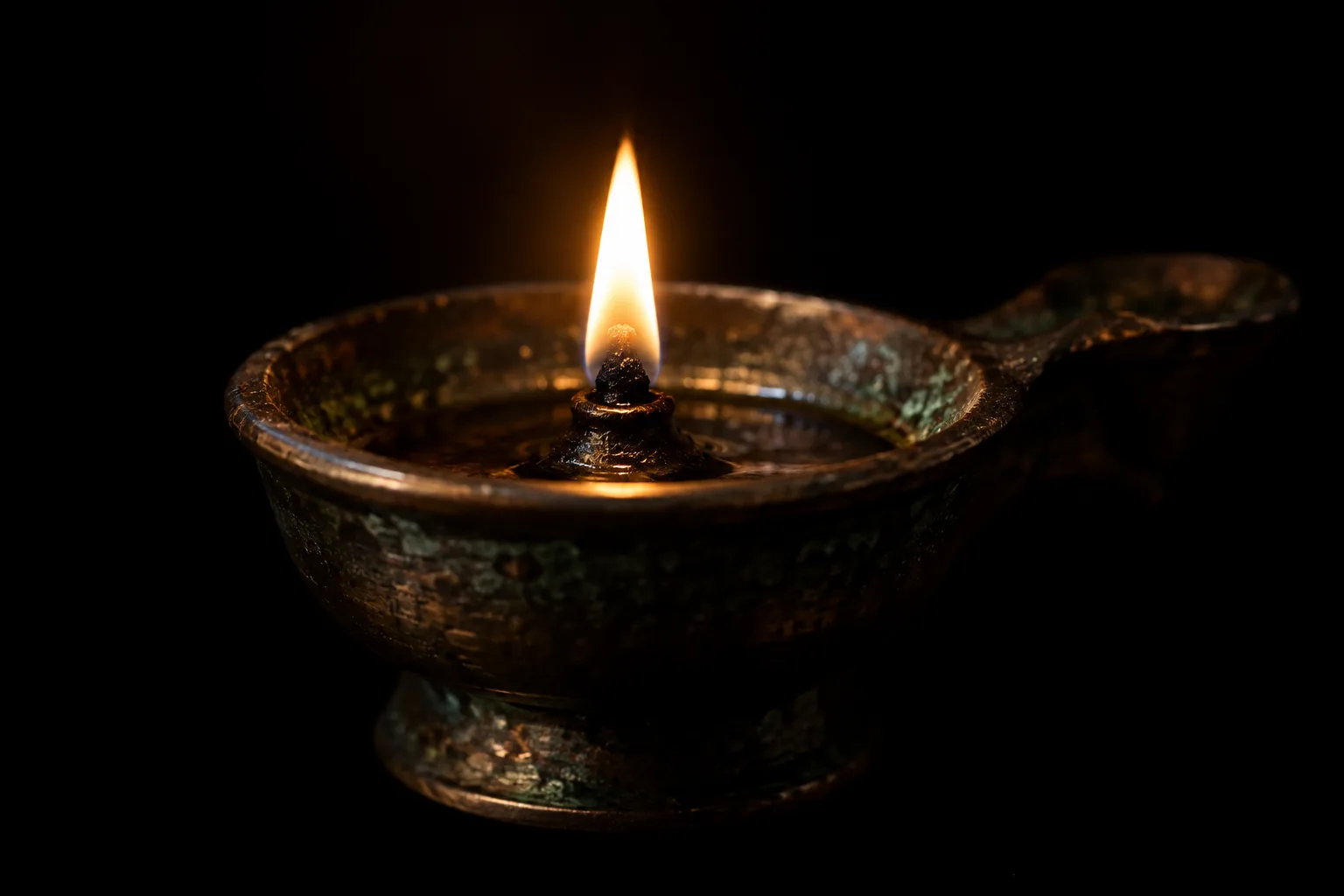
Not the fire that was destroying the building. The other one: the Kiezu-no-hi, the flame that has been kept alight in Reikado Hall near the summit of Mount Misen on Miyajima, and which the Shingon tradition holds was lit by Kukai in the ninth century and has not gone out since. It was moved to another location before the structure collapsed. Nobody was injured.
The hall itself, twelve hundred years old, burned completely on Wednesday.
The argument here is that a Western reader’s instinct about what has just been lost is wrong, that the reasons it is wrong are doctrinal rather than consoling, and that something real was nevertheless lost and should not be talked out of existence by the first two points.
The first test: what was actually continuous
Ask what the twelve hundred years were attached to.
Not the timber. A wooden building on a mountain in a country with typhoons, earthquakes and lightning does not contain much ninth century material, and nobody in the tradition has ever claimed it did. Structures like this are repaired continuously, and members are replaced as they fail, over centuries, which is why they are still standing.
The flame is the continuous thing. It has been fed and carried and tended by people whose job that was, without interruption, which is a claim about an unbroken sequence of human attention rather than about the persistence of an object.
And the decisive evidence for that reading is what the people there did on Wednesday. When a building is on fire you save what matters. They saved the fire.
The second test: rebuilding as continuity
The temple has already said it will rebuild immediately, and to an outside ear that sounds like a brave face. It is not. It is the ordinary practice.
The clearest case is Ise, where the shrine buildings have been dismantled and rebuilt on an adjacent site every twenty years for well over a millennium, using the same techniques, with the craft transmitted by doing it rather than by recording it. On the Western view the current buildings are a few years old. On the tradition’s own view they are the same shrine, because the shrine is the form and the practice, and the practice includes the rebuilding.
That position was eventually recognized in international heritage law. The Nara Document on Authenticity, agreed in 1994 and driven substantially by Japanese conservators, holds that authenticity cannot be judged by a single fixed standard and must be assessed within the cultural context that produced the thing. It was written partly because the prevailing framework, built around European stone, treated a rebuilt wooden temple as a replica.
The third test: what that does not excuse
Here the argument has to stop, because it is possible to take it too far and a great deal of writing about this does.
The building that burned was made by particular carpenters using particular joinery, and those members, however often repaired, carried the marks of the hands that cut them. That is gone and no rebuilding returns it. A new hall will be made by people alive now, to the same form, and it will be a new hall.
Nor is the tradition infinitely elastic. Repairing a roof is not the same as a total loss, and continuity maintained across a rebuild depends on the craft surviving to perform it. Where the knowledge has thinned, a rebuild is a reconstruction from drawings, which is a different thing again.
So the honest position is that a real loss occurred, and that it is a different loss from the one a headline about a twelve hundred year old building destroyed will produce in most readers’ minds.
The verdict
What was lost is the fabric, which mattered and which the tradition has always expected to lose eventually. What was not lost is the flame, the form, the site, the craft and the community that maintains all four, and those are what the tradition locates the twelve hundred years in.
Which is why the temple’s response can be immediate without being glib. There is nothing to deliberate. The thing that had to be saved was carried out of the building, and the thing that burned is the thing this tradition has always understood it would one day rebuild.
Hiroshima
One more fact, and it is the reason this particular flame is not only a temple’s business.
When the Flame of Peace was lit in the Hiroshima Peace Memorial Park, the fire used to light it came from this hall. The Peace Flame is intended to burn until the last nuclear weapon on earth is destroyed, and it has been burning since 1964, and it was started from a flame that a ninth century monk is said to have lit on a mountain twenty kilometers away.
So on Wednesday there were two of them, both descended from the same fire, one of them in a city park with a plaque explaining it and one of them in a wooden hall on a mountain with a roof that was coming down. The older one was the one at risk.
It is now in a temporary place on the mountain, in whatever vessel they had to hand on the day, being watched by somebody whose turn it is. That is what it has been for twelve hundred years, and for most of those years it was not news.