
Hours before the vote, the owner representative on the board resigned. Christina Smyth said the board had crossed a “legal line” by moving toward a freeze that, in her view, the financial data did not support.
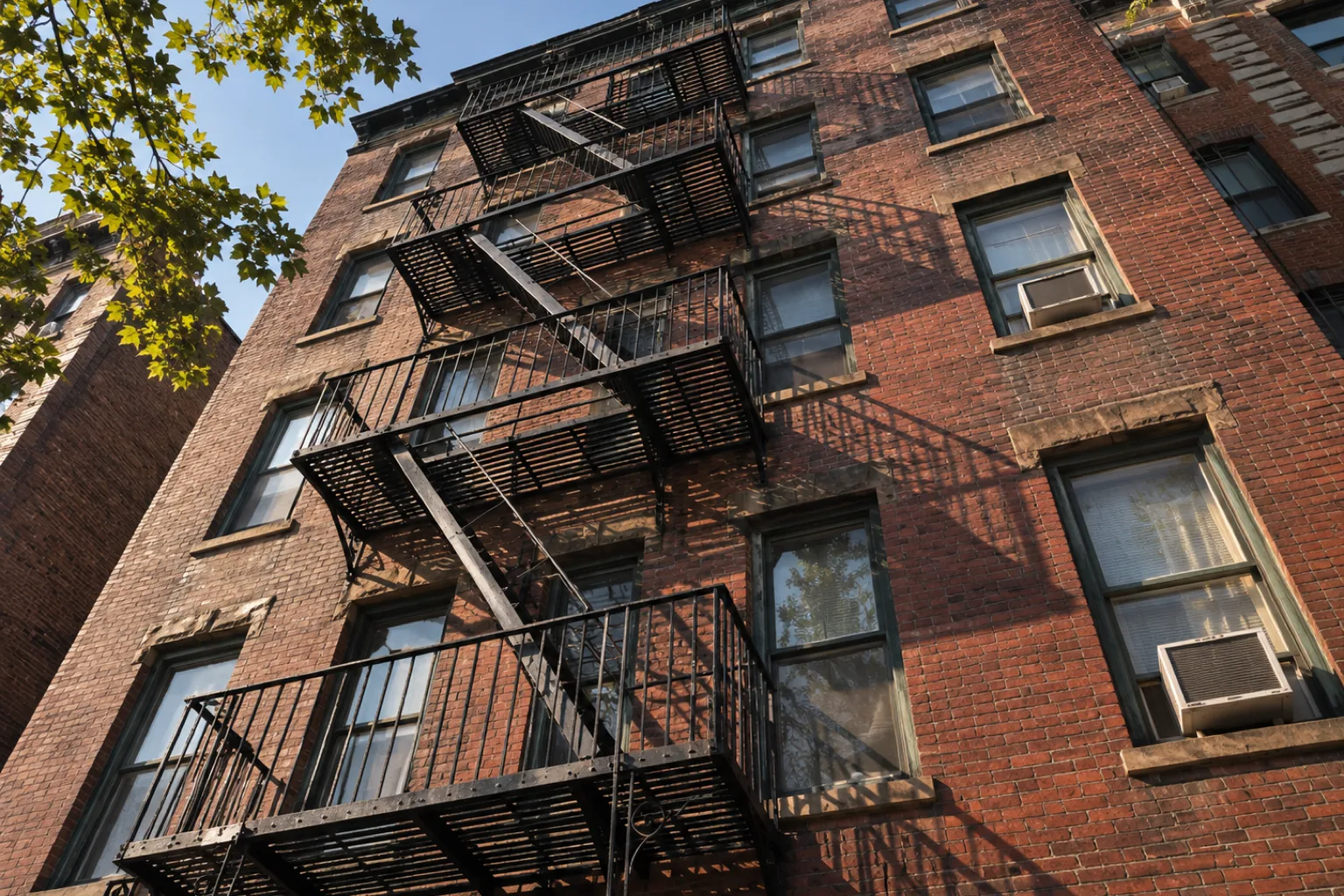
The Rent Guidelines Board then voted seven to one to set increases at zero percent on one and two year leases for roughly a million rent stabilized apartments in New York, covering renewals signed between October and the following September. It is the first time the board has frozen a two year lease as well as a one year one.
A mayor who took office on the first of January has delivered his central promise in under six months. It is worth setting that against the other instrument he has, because the comparison explains both why this happened so fast and why very little else will.
The first lever: the board
The mayor does not set rents. He appoints the nine people who do, and by June he had appointed six of them.
That is the entire mechanism, and its properties are unusual in government. It requires no legislature. It requires no money. It has no implementation phase: a decision taken in June is a legal rent in October. And it affects a million apartments and something over two million people immediately.
There is almost nothing else in American municipal government with that combination of reach and speed, which is why it was the promise that could be kept.
The second lever: everything else
The other route to housing cost is supply, and every part of it is slow.
Rezoning requires a public review process measured in months and a city council vote. Construction requires financing, which requires interest rates nobody in City Hall controls. A building approved this year is occupied in four or five. Subsidy requires a budget, and the budget requires Albany for a substantial part of the revenue.
So the second lever produces results on a timescale longer than a mayoral term, which means the person who pulls it is rarely the person who is credited with it.
What the comparison teaches
Three things, and the third is the uncomfortable one.
Speed selects the policy. A politician with four years and two instruments will use the fast one, and would be foolish not to. That is not a criticism of this decision; it is an observation that the menu is shaped by the clock rather than by the analysis.
The two levers touch different housing. The freeze applies to stabilized units, which are existing buildings, most of them old. Supply policy applies to buildings that do not exist yet. A tenant in a stabilized apartment is helped today and a household looking for somewhere to live is not helped at all, and those are different people with different problems who are both described as facing a housing crisis.
They interact, and the direction is disputed. This is the argument that has run for fifty years and it is worth stating honestly rather than settling by assertion. The case against is that holding rents below what a building costs to maintain leads owners to defer maintenance, exit the sector, or take units off the market, reducing supply over time. The case for is that stabilized buildings are already built, their supply is fixed regardless, and the alternative to a freeze is not more housing but the same housing at a higher price.
Both arguments have literature behind them and the honest summary is that the effect depends heavily on the specific regime: how increases are set, what happens on vacancy, and what capital improvement recovery is permitted. New York’s rules have changed substantially in the last decade and the older studies were measuring a different system.
What a freeze does to a building’s arithmetic
Worth setting out the owner’s side properly, because the argument is usually conducted in slogans and the mechanics are specific.
An older stabilized building has a cost structure dominated by things that are not negotiable: property taxes, heating fuel, water and sewer charges, insurance, and labor for supers and porters. Those move with the wider economy and several of them have moved sharply in the past two years.
Against that sits rent roll, which under a freeze does not move at all. The gap is absorbed by whatever margin existed, and where the margin was thin it is absorbed by deferring things that can be deferred: the roof, the boiler, the pointing.
That is the mechanism critics describe and it is real. The reply is equally real: the board’s own research staff produce annual figures on operating costs and owner income precisely so that the decision can be made against evidence rather than against assertion, and a majority of the board concluded those figures supported this.
Both sides are arguing about the same numbers, which is why the argument does not resolve and why a resignation was available to somebody who read them differently.
The resignation
Smyth’s objection deserves to be taken at its strongest, because it is a claim about process rather than about policy.
The board is constituted with two tenant representatives, two owner representatives and five public members, and the design assumes the public members weigh evidence rather than execute an instruction. The board’s own research staff produce annual reports on operating costs and owner income, and the statutory scheme contemplates that the decision follows from them.
Her position, as reported, is that the data did not support a freeze and that a board reaching one anyway is not exercising judgment but carrying out a policy decided elsewhere.
The counter is that the statute gives the board discretion over how to weigh that evidence against tenant circumstances, that the public members are appointed precisely to exercise that discretion, and that an appointment power used as intended is not interference.
Which of those is right is a question for a court, and somebody will put it to one.
What is unresolved
The freeze is for one year. That is the thing least discussed this week and it is the whole of what happens next.
A single year of zero is absorbable by most owners. A second is harder. A third, against costs that have not stopped rising, becomes the scenario the critics describe, and the board will face that decision again next June with the same appointees and a stronger argument on the other side.
Meanwhile the second lever has not been pulled, because it cannot deliver inside a term. Which leaves a city where the fast instrument has been used to its limit and the slow one has barely been started, and no obvious answer to what the administration does in June of next year except the same thing again.