FIFA pays a participation fee to every nation that reaches the group stage of a World Cup, and it is the same figure for all forty eight of them. For several of the federations receiving it this month, it is a line item. For others it is more money than the organization has handled in its entire history.
Cape Verde drew 0-0 with Spain in Atlanta last Monday, in their first match at a World Cup, and took the first point the country has ever had. The population of Cape Verde is somewhere around half a million people, spread across nine inhabited islands in the Atlantic off the coast of Senegal.
How that happens is a more interesting question than it is usually given credit for, and the answer is two mechanisms rather than a miracle.
The first mechanism: the tournament got bigger
This is the one that actually made it possible and it is a piece of committee arithmetic.
The World Cup expanded from thirty two teams to forty eight for this edition. That expansion was distributed across the confederations, and Africa’s allocation of direct places went from five to nine.
Five places for a confederation of more than fifty member associations meant, in practice, that qualification was contested between the same dozen or so countries every cycle: the North African sides, Nigeria, Senegal, Ghana, Cameroon, Ivory Coast. A nation outside that group needed to beat one of them over two legs, which happened, but rarely.
Nine places changes the shape entirely. It does not lower the standard required; it widens the band of countries for whom a good campaign is enough. Cape Verde qualified on 13 October last year with a 3-0 win over Eswatini, at home, having finished top of a group, which is a route that did not exist under the old allocation.
Every argument against expanding the tournament, and there are good ones about dilution and fixture congestion, has to be set against that: a country of half a million people is at a World Cup because of it.
The second mechanism: the diaspora
The other half of the answer is where the players come from, and it is not principally the islands.
Cape Verde has one of the largest diasporas relative to population of any country on earth. There are more Cape Verdeans and people of Cape Verdean descent living in Portugal, the Netherlands, France, the United States and elsewhere than there are living in Cape Verde.
Eligibility rules allow a player to represent a country through descent, and so a substantial part of this squad learned the game in European academies, in professional systems with facilities the islands could not build, and then chose to play for the country their parents or grandparents left.
That is not a loophole and it is not unusual. It is how most small nations in world football assemble a competitive squad, and the choice belongs to the player: many of them were eligible for the country they grew up in and picked the other one.
What the federation actually does
Which makes the job of a federation like this quite different from the job most people imagine.
It is not principally developing players, because the best of them are being developed by clubs in Europe at somebody else’s expense. It is identification, persuasion and logistics: finding eligible players across several countries, convincing them to commit before they are capped elsewhere, and then assembling a squad drawn from six or seven leagues into one place, for a competitive fixture, several times a year.
That is an administrative achievement more than a coaching one, and it runs on relationships and air travel rather than on facilities.
What the money changes, and what it does not
Back to the check, because the participation payment is the part that outlasts the tournament.
For a federation of this size it is transformational in a specific and limited way. It funds things that have no other funding source: pitches, coaching qualifications, a women’s program, youth competition across islands separated by water. Those are the investments that might, in fifteen years, mean the squad is less dependent on the diaspora.
What it does not do is change the structural position. The islands will not develop a professional league that competes with Portugal’s. The next generation of eligible players will still mostly be born in Rotterdam and Lisbon and Boston. The money buys a floor, not a ladder.
And it arrives once. Qualification for the next tournament is not guaranteed by anything that happened last Monday, and the nine African places will be contested by the same fifty odd associations, several of whom have now watched this and drawn the obvious conclusion about what is possible.
Atlanta
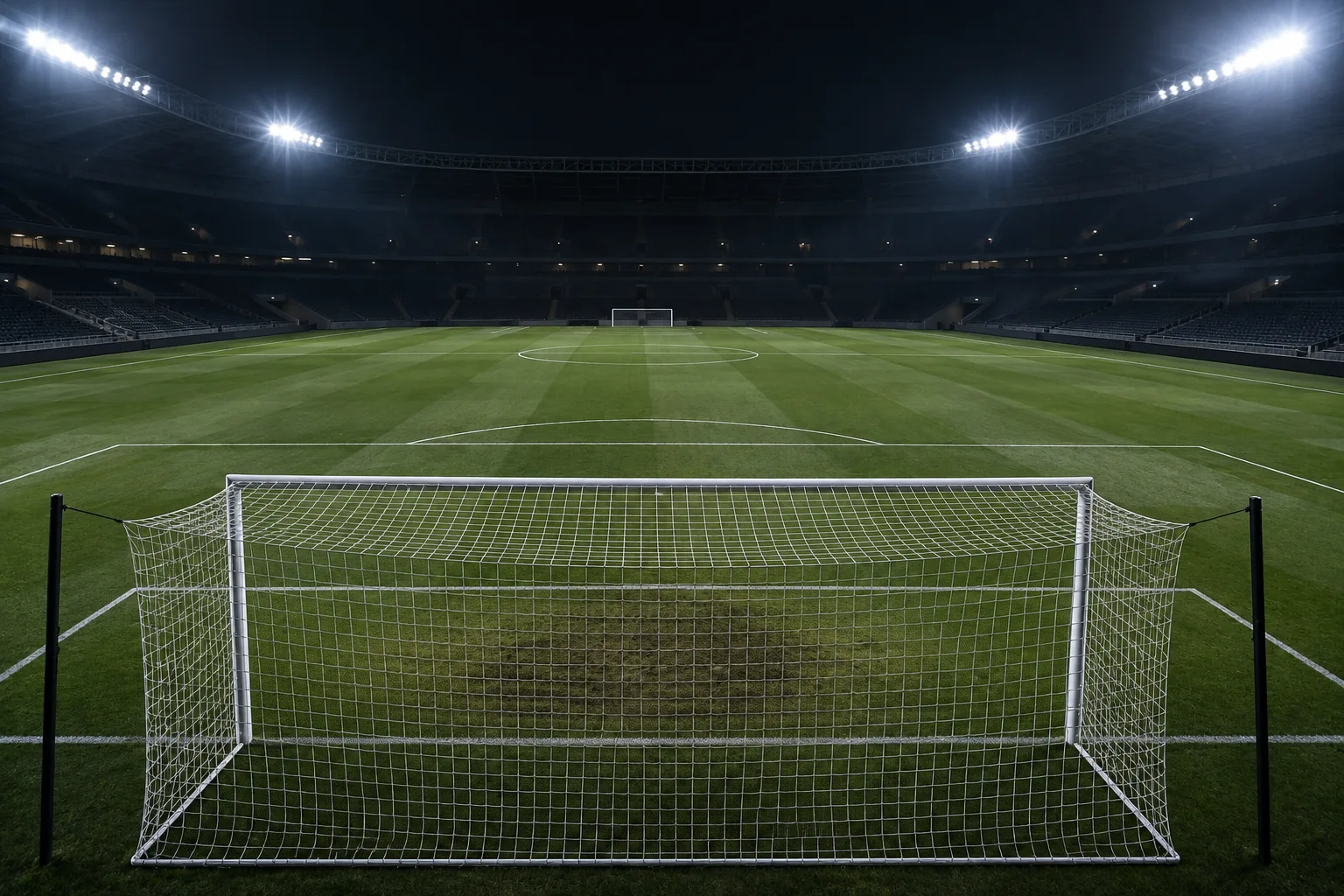
The match was played indoors, in a stadium with a retractable roof and a capacity of about seventy thousand, on a Monday afternoon in Georgia, against the European champions.
The contrast is the point and it does not need decorating, though it is worth holding in mind against every argument about whether the tournament should have been made larger. Dilution is a real cost and it is not the only entry in the ledger.
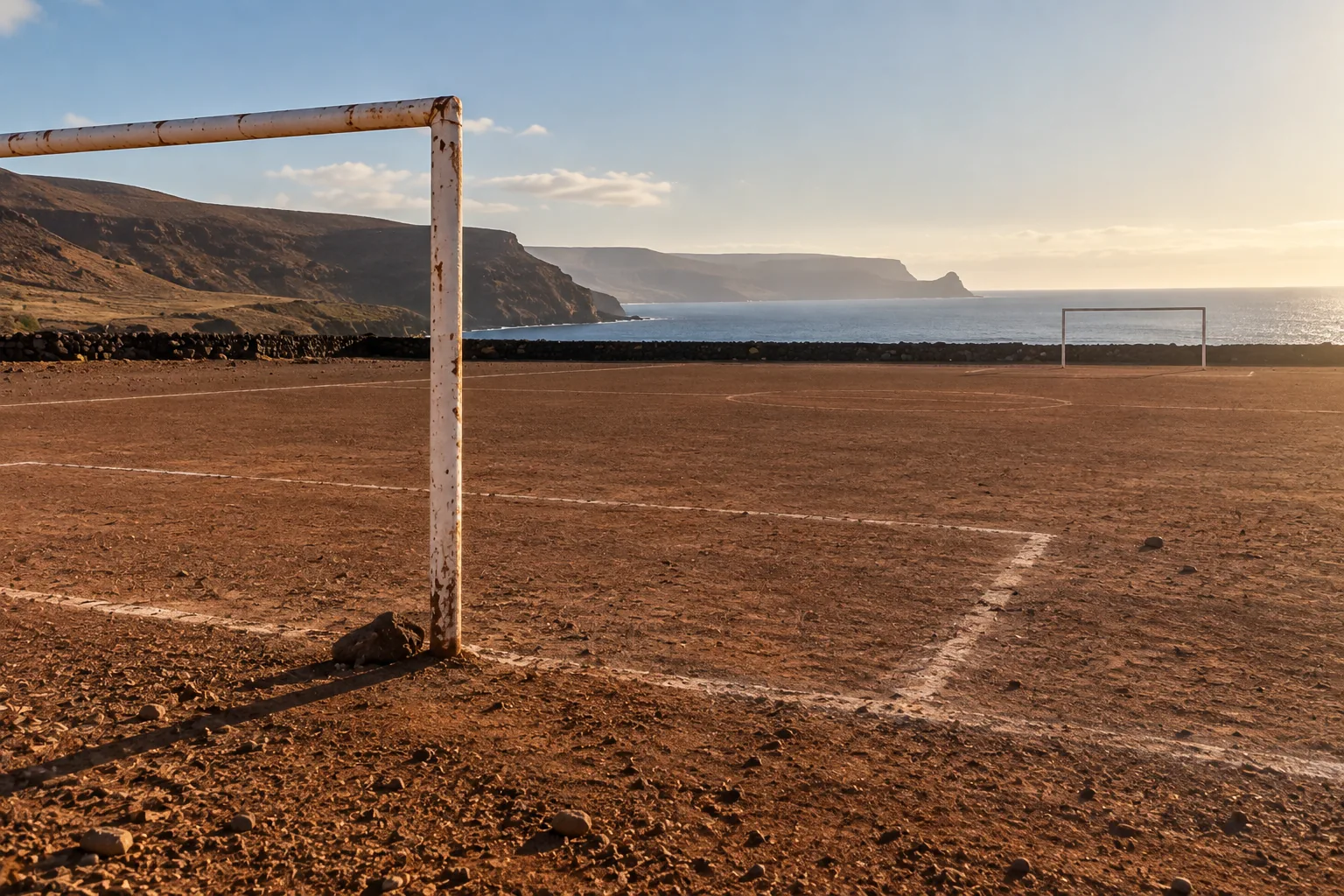
Cape Verde have a national stadium in Praia that holds around fifteen thousand, which is roughly three percent of the country’s population, and which is where the qualifying campaign was won in October. On that evening a meaningful fraction of everybody who lives in the country was either in it or standing outside it.