The survey estimate that underpins all of this puts more than sixteen million tonnes of rare earth elements in the seabed around Minamitorishima, a speck of Japanese territory about 1,900 kilometers southeast of Tokyo. It is a large number, it is inside Japan’s exclusive economic zone, and it has been sitting in the literature for years while nobody could reach it.
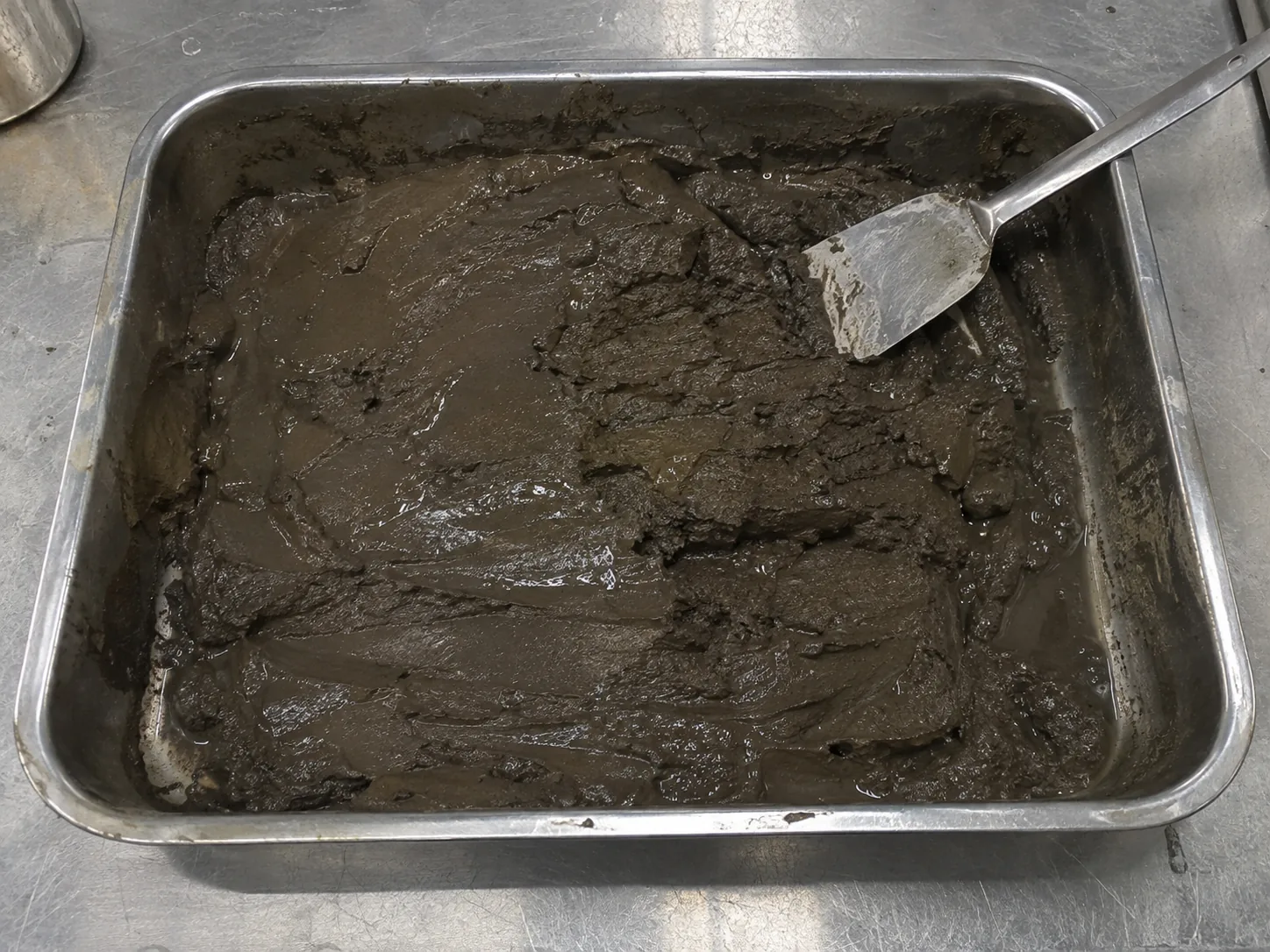
On 2 February the Japan Agency for Marine-Earth Science and Technology announced that the drilling vessel Chikyu had continuously lifted rare earth bearing mud from roughly six thousand meters down. The vessel is still on station as this goes out; the campaign runs to the middle of the month.
The claim made about this, in a great many places, is that Japan has found a way out of its dependence on China for rare earths. That claim is wrong, and it is wrong in a specific and instructive way: it mistakes the part of the problem that was already solved for the part that is not.
The first test: is the engineering real
Yes, and it should not be undersold because the conclusion here is skeptical.
Lifting solids continuously from six kilometers of water is genuinely difficult. The pressure at that depth is roughly six hundred times atmospheric. A riser pipe that long has to be held under tension from a vessel that is moving, the mud has to stay fluid enough to travel the whole distance without settling and plugging the pipe, and the whole system has to survive weather on the surface while the bottom end stays put. Doing that once is an achievement. Doing it continuously, which is what was announced, is the thing that separates a demonstration from a process.
Nobody had done it at this depth for this material before. That is a first, and Japan is entitled to it.
The second test: the number that is not in the announcement
Here is where a practitioner should start asking questions.
The follow up is a larger trial planned for February 2027, running a month and aiming at 350 tonnes of mud a day. Take that at face value and the campaign moves something on the order of ten thousand tonnes of mud.
Mud is not metal. The quantity that matters is the grade: how many kilograms of rare earth oxide come out of a tonne of this sediment. That figure is what converts an impressive dredging rate into an industrial output, and it is not in the announcement, and it is not in most of the coverage either.
It is not a detail. It is the entire economics. At a rich grade the 2027 campaign is a meaningful pilot. At a poor one it is a very expensive way to move wet sediment across an ocean. Anyone quoting the sixteen million tonne resource figure without the grade is quoting the numerator of a fraction and leaving out the denominator, and the denominator is the one that decides whether a mine exists.
Worth being clear that the grade is likely known to the researchers and simply has not led the coverage. The point is not concealment. It is that the reported story has been assembled out of the two numbers that sound largest.
The third test: where the dependency actually sits
This is the part that makes the headline claim untenable regardless of how the first two tests come out.
Rare earth elements are not rare. They are reasonably common in the earth’s crust and there are deposits on land in the United States, Australia, Brazil, India and elsewhere. If having the ore were the constraint, the problem would have been solved decades ago.
The constraint is separation. The seventeen elements in this group are chemically almost identical to one another, which is why they occur together and why telling them apart is hard. Commercial separation runs the dissolved mixture through solvent extraction: two liquids that do not mix, a partition that slightly favors one element over its neighbor, repeated through hundreds of stages in sequence until the streams are pure enough to sell. It is a chemical plant, not a mine. It is capital intensive, it is slow to commission, it produces waste streams including low level radioactive residues that have to be permitted and managed, and the accumulated operational knowledge of running it well is concentrated in relatively few places.
That is where the dependency lives. A country can own the ore, dig the ore, and still send it abroad to be turned into anything usable, which is roughly the position several Western producers have been in for years.
So the seabed program, even if it works perfectly, delivers feedstock to the front of a process whose bottleneck is three steps further along and located on land.
Why Japan in particular
The program makes more sense once you know what it is a response to.
In 2010, following a collision between a Chinese trawler and Japanese coastguard vessels near the Senkaku islands, rare earth shipments from China to Japan stopped. The interruption was not long and was never formally acknowledged as a policy, and it did not need to be either of those things to be effective. Japanese manufacturers who had treated these elements as a commodity discovered in a fortnight that they were a dependency, and prices moved accordingly.
Everything since has been downstream of that fortnight. Japanese industry reduced its usage per unit, substituted where substitution was possible, built recycling streams, and funded exactly the kind of long horizon seabed survey that produced the Minamitorishima estimate in the first place. Sixteen years is a long memory by the standards of industrial policy, and it is the correct amount of time to still be worried about something that happened once.
Which reframes the seabed work. It is not a commercial bet placed this year. It is the current installment of a program that has been running since a supply stopped without warning, and programs of that kind are judged by whether the option exists, not by whether the ore is cheap.
The verdict
Japan has solved an access problem nobody else had solved, for a resource it already knew it had, in a supply chain where access was not the binding constraint. That is worth doing and it is not what it is being sold as.
The generous reading, which is probably the right one, is that this is a long horizon sovereignty play rather than a commercial one. A state that can reach its own seabed has an option it did not have, and options have value even when they are not exercised. Governments buy those routinely and are seldom candid about it.
What would actually change the picture
Three things to watch, in order of how much they would tell you.
The grade, when it is published. Until that number is public, nobody outside the program can say whether this is a mine or an experiment, and the confidence of the commentary should be discounted accordingly.
Separation capacity, anywhere outside China. Announcements about extraction are common and cheap. Announcements about a commissioned, permitted, operating separation plant are rare and are the actual measure of whether a dependency is shifting. If the next twelve months bring a great deal of the former and none of the latter, the position has not moved.
And the waste question, which is the one that has historically killed these projects in democracies. Somebody has to decide where the residues go, and the answer has to survive a planning process. That decision has not been made yet, and it will be the one that is argued about locally, at length, long after the engineering has stopped being news.