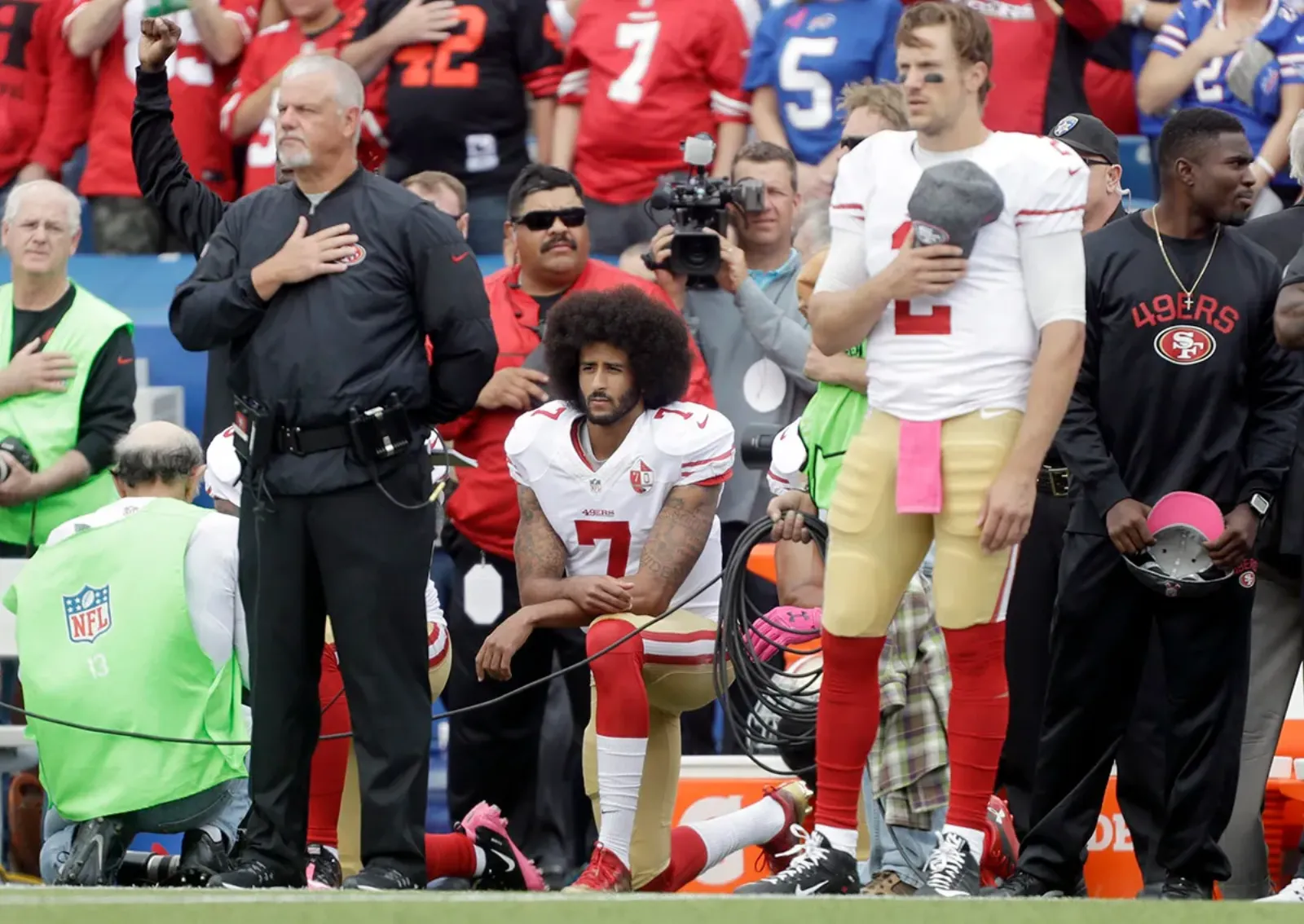
The most famous moments in sports are not always plays. Some of them are pauses. On August 26, 2016, Colin Kaepernick stayed on the bench during the national anthem, and within weeks a preseason football game had become a referendum on race, patriotism, and who gets to speak. Nearly half a century earlier, Tommie Smith and John Carlos raised gloved fists on an Olympic podium in Mexico City and were sent home for it. The gesture cost them almost everything. It also outlived everyone who punished them for it.
Athlete activism works because sports are one of the last places where a whole society is watching the same thing at the same time. A protest on that stage cannot be scrolled past. It interrupts the entertainment, which is precisely the point, and precisely the offense.
The price of the pause
The pattern repeats across generations. Muhammad Ali lost his prime fighting years for refusing the draft. Kaepernick never took another NFL snap. Yet the ledger has another column: Nelson Mandela handing the 1995 Rugby World Cup to Francois Pienaar in a Springbok jersey did more for reconciliation in a single afternoon than years of speeches. The lesson is not that protest is free. It is that its bill is often paid by one person while the benefit is collected by millions.
A protest on that stage cannot be scrolled past. It interrupts the entertainment, which is precisely the point.
Leagues have learned to manage the optics: approved slogans, painted end zones, scheduled gestures. Whether that represents progress or absorption is the live question. What is settled is this: the athletes will keep finding the pause, because the pause is the one moment the whole stadium is listening.