
At twenty past six on a Tuesday morning at Frankfurt, an aircraft that has been on the ground for six hours pushes back for a fifty minute sector to somewhere in the middle of Europe. It carries perhaps a hundred and thirty people, forty of whom are going to that city and ninety of whom will get off, walk to another gate, and fly somewhere much further away on a much larger airplane later in the morning.
Lufthansa announced this week that it is cutting twenty thousand short haul European flights because of fuel prices. The interesting question is which twenty thousand, and the answer is more determined than it looks.
Why short haul first
Because of where the fuel goes.
A flight does not burn fuel evenly. The expensive part is getting a heavy aircraft from the ground to cruising altitude, which takes twenty minutes or so and consumes a disproportionate share of the trip’s total. Once at altitude, in thin air, the engines are efficient and the burn per mile falls sharply.
So on a long sector the costly climb is spread across several thousand miles. On a fifty minute sector the aircraft has barely levelled off before it starts down again, and the climb is a large fraction of the whole flight. Fuel per passenger mile on short haul is therefore substantially worse than on long haul, and it gets worse as the sector gets shorter.
When fuel doubles, that difference stops being a margin issue and becomes the operating question. Short sectors are where the pain concentrates, and they are the first place any airline looks.
The number in context
Twenty thousand sounds catastrophic and is not, which is worth saying plainly.
A group of this size operates on the order of a million flights a year across its airlines. Twenty thousand is therefore a low single digit percentage of the operation, concentrated in one region and one aircraft category.
It is a real reduction and it will be visible to passengers. It is not a retrenchment from Europe, and reporting that presents it as one is reading the absolute number instead of the ratio.
What actually gets cut
Here the constraint is the hub, and it eliminates most of the obvious candidates.
A network carrier’s short haul operation is not principally a business. It is a feeder system. Those ninety people walking to another gate at Frankfurt are the reason the long haul flight is full, and the long haul flight is where the money is. Cut the feeder and you do not save the feeder’s losses; you empty the profitable aircraft it was filling.
So the cuts cannot fall on hub feed, which is most of the network. What is left is a narrower set.
Frequency, first and mostly. A route with six departures a day becomes four. The connecting bank still works, the destination is still served, and a third of the flying disappears with no route closed and no press release naming a city. This is where the great majority of twenty thousand flights will come from.
Then thin point to point flying that does not feed anything: city pairs served for their own sake, often inherited from an acquisition, where the aircraft could be earning more somewhere else.
Then seasonal and marginal timings. The first departure and the last, which exist for the convenience of a small number of business travelers and carry the worst loads.
What passengers will actually notice
Not cancellations of the kind that make news. Something subtler and more annoying.
Fewer departures on the same route means less slack. A missed connection that would previously have been solved by the next flight ninety minutes later is now solved by one four hours later, or the following morning. Recovery from disruption gets slower across the whole network, because recovery depends on spare seats and spare seats are what has been removed.
It also means less choice of timing and, in practice, higher fares on what remains, because the same demand is being carried on fewer seats. That is not opportunism; it is what happens when capacity comes out of a market.
What gets tried before flights are cut
Canceling capacity is the last lever, not the first, and the ones pulled before it are worth knowing because they are all still being pulled.
Weight comes off first, because every kilogram carried costs fuel to carry. Lighter trolleys, less potable water loaded, thinner seats on refurbishment, and in some cases carrying less contingency fuel where the regulations and the weather allow. None of these is dramatic and together they are worth a low single digit percentage.
Then speed. An aircraft has a cost index setting that trades time against fuel, and in a high fuel environment airlines dial it down: the flight takes a few minutes longer and burns measurably less. Passengers do not notice and schedules absorb it.
Then tankering, which goes the other way. Where fuel is cheaper at one end of a route than the other, carrying extra from the cheap airport saves money even accounting for the fuel burned carrying it. That calculation changes constantly with prices, and this month it will have changed for a great many city pairs at once.
Only when all of that is exhausted does an airline start removing flights, because a canceled flight is the only one of these that loses revenue as well as saving cost.
The bit that is not about fuel
One honest caveat, which applies to every capacity announcement made during a cost shock.
Airlines carry routes they would like to be rid of, and a shock is the moment when cutting them is explicable. Some fraction of these twenty thousand flights were on a list somewhere before fuel moved, and the fuel price has provided both the reason and the cover.
That is not a scandal. It is how difficult decisions get made in any business with unions, slot obligations and political relationships attached to individual routes. It does mean the announcement describes a cause with more confidence than the underlying reasoning would support, and that when fuel falls, not all of this comes back.
The aircraft
What happens to the airplane that was going to operate that fifty minute sector at twenty past six is the part nobody asks about.
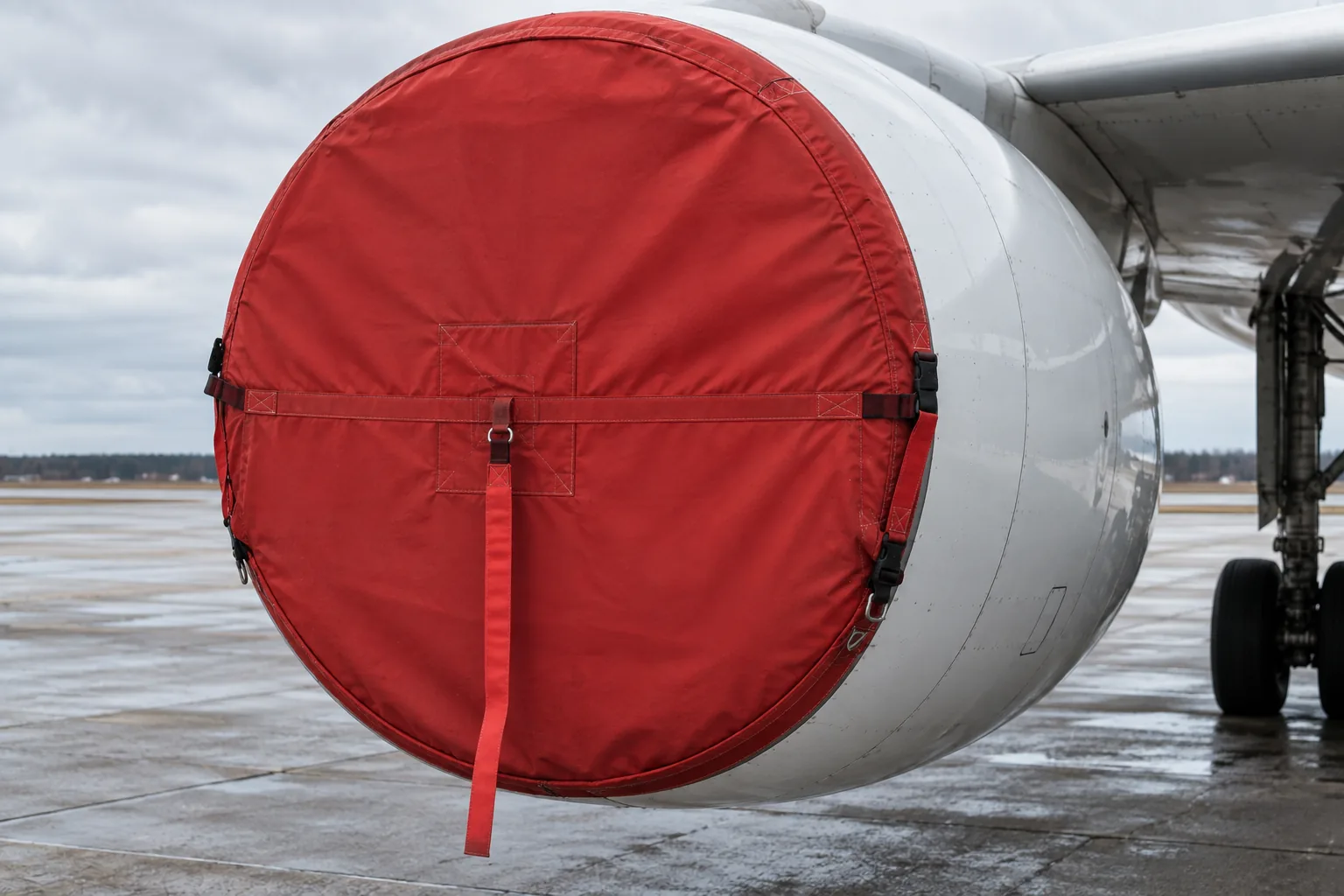
It does not go anywhere. A short haul jet in a European fleet is owned or leased on terms measured in years, and there is no spot market that absorbs a few dozen of them in a quarter. So it sits at a stand at Frankfurt with covers on the engine intakes and somebody turning it over periodically to keep it airworthy, costing the airline its lease payment every month, waiting for the fuel price to make it worth starting again.