A ticket to see The Odyssey in a proper IMAX auditorium costs roughly twice what a ticket to see it in an ordinary screen costs. Not a few dollars more. Roughly double, and in some cities more than that, for the same running time, the same cast and the same story, which is a story most of the audience has known since school.
People paid it. That is the argument of this piece: the premium was not a surcharge on the film. For a large part of the audience it was the film, and the numbers from the opening weekend say so more clearly than any review could.
The claim
Christopher Nolan’s adaptation opened in the United States and Britain on 17 July, having premiered at the Odeon Luxe in Leicester Square eleven days earlier. It took $123.5 million domestically and $263.7 million worldwide in its first weekend, the biggest global opening of his career.
It is also the first feature shot entirely with IMAX cameras. Not partly, as several films have been, including his own. Entirely.
The claim here is that those two facts are the same fact, and that the film is best understood as an argument about where a work should be experienced, made in the only way such an argument can be made, which is by building something that does not survive being watched anywhere else.
Test one: what the audience actually bought
Premium large formats accounted for 53 percent of the domestic gross. IMAX alone took $51.8 million, which is 23 percent of the worldwide total.
Those proportions are extraordinary and they are worth sitting with. A majority of American ticket revenue came from a minority of screens, because the people buying chose to pay more and, in many cases, to travel further and wait longer for a specific auditorium rather than see it locally on Friday.
That is not how audiences usually behave. For most releases the premium formats are an upsell taken by people already going. Here the format appears to have been the reason for going, and the ordinary screens were the fallback rather than the default.
Test two: what shooting entirely on IMAX costs you
The second test is the production decision, and it matters because it was not a free upgrade. Shooting on those cameras is a set of constraints, not a set of advantages.
The bodies are large and heavy, which limits where they can go and how quickly they can be moved. They are loud, loud enough that dialogue recorded near them needs care and sometimes replacement. Magazines run short, which shortens takes and shapes how scenes can be built. The format is expensive at every stage from stock through post.
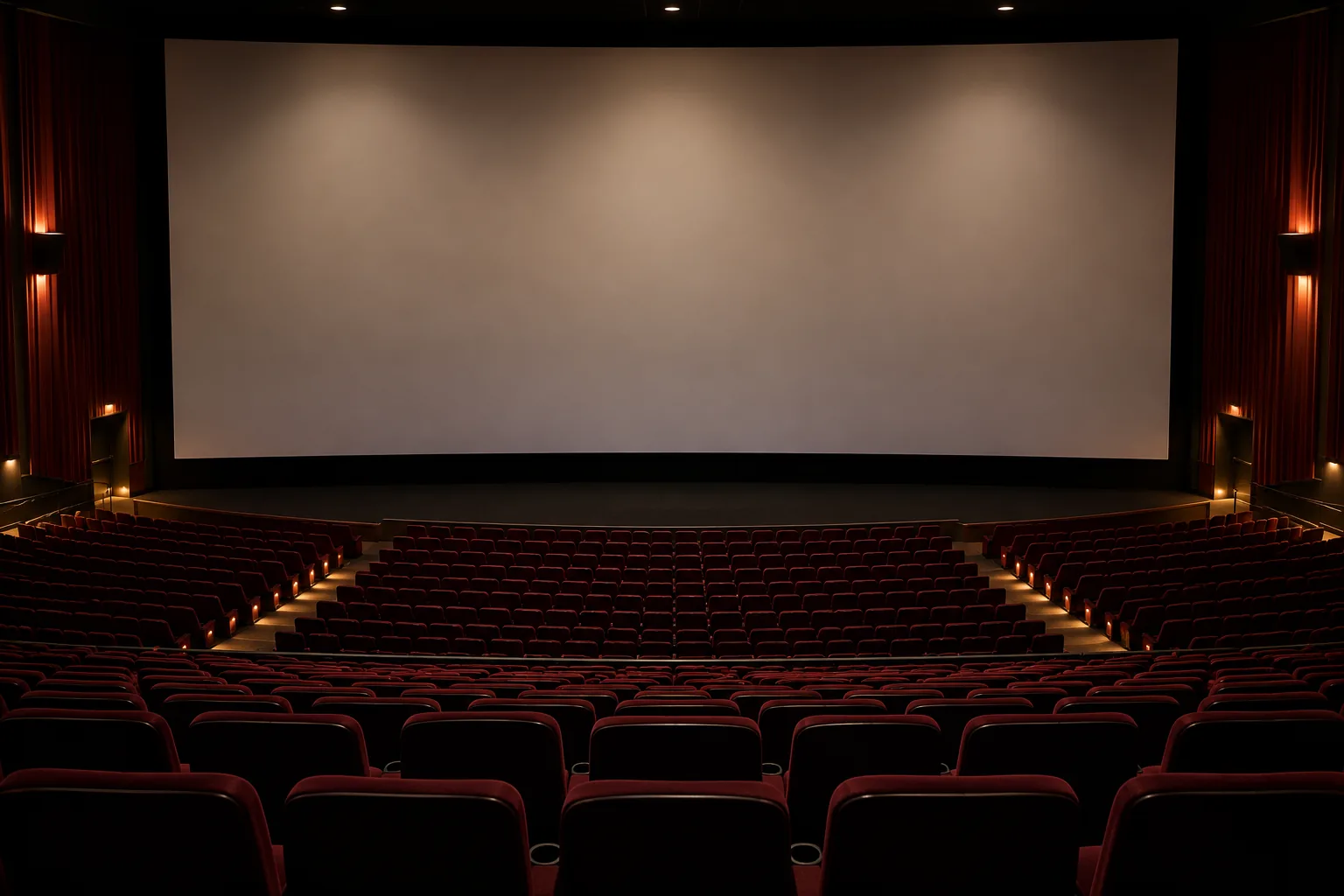
A director accepts all of that in exchange for one thing: an image with more information in it than any other capture format, presented on a screen tall enough to sit outside your peripheral vision. Every constraint listed above is a cost paid for an effect that only fully exists in the small number of auditoriums worldwide that have both the full height screen and the film projectors to match.
So the production was organized around a viewing condition that most of the audience would never get. That is either a serious artistic commitment or a marketing decision that happens to require enormous inconvenience, and the constraints are the evidence for the first reading.
Test three: where the praise landed and where it did not
The reception split in a way that supports the argument rather than undermining it. The film holds 94 percent on Rotten Tomatoes, tied for the best of Nolan’s career, and took an A CinemaScore from opening audiences.
The criticism that exists is not about the images. It concentrates on the writing, and on departures from the poem, which is the oldest complaint available about any adaptation of Homer and has been made about every one of them.
A work whose visual achievement is nearly unanimously praised and whose text is the contested part is a work whose center of gravity sits in the presentation. That is not an insult. Opera works that way. So does a good deal of theater. But it does tell you what the thing is.
The verdict, and the odd symmetry in it
The verdict is that the argument holds, and that it is a stranger one than it looks.
The Odyssey was not a text for most of its life. It was a performance, delivered aloud by somebody who had memorized it, to an audience assembled in one place for the occasion. You could not have it at home. You could not have it on demand. Its existence for you depended entirely on being in a particular room while a particular person was working.
Then it became a book, which is the most portable form any work has ever had, and stayed one for most of three thousand years.
What has happened this month is that the best regarded version of it in a generation has been deliberately engineered to be worse everywhere except in a room you have to travel to, on a night when it is showing, among strangers. The film will eventually stream, and when it does, a majority of its effect will not arrive. That is not a failure of the streaming version. It is the point of the theatrical one.
Whether that is a defensible way to make films is a real question, and the honest answer is that it is only available to about four directors alive. Nolan can build a work that requires an auditorium because enough people will go to one for him. Nobody else can finance that, which makes this less a direction the industry can follow than a demonstration of what it gave up.
Notice the shape of the return. A poem that began as something you had to go somewhere to receive spent three millennia becoming something you could have anywhere, and has now been rebuilt, at enormous expense, as something you have to go somewhere to receive.