
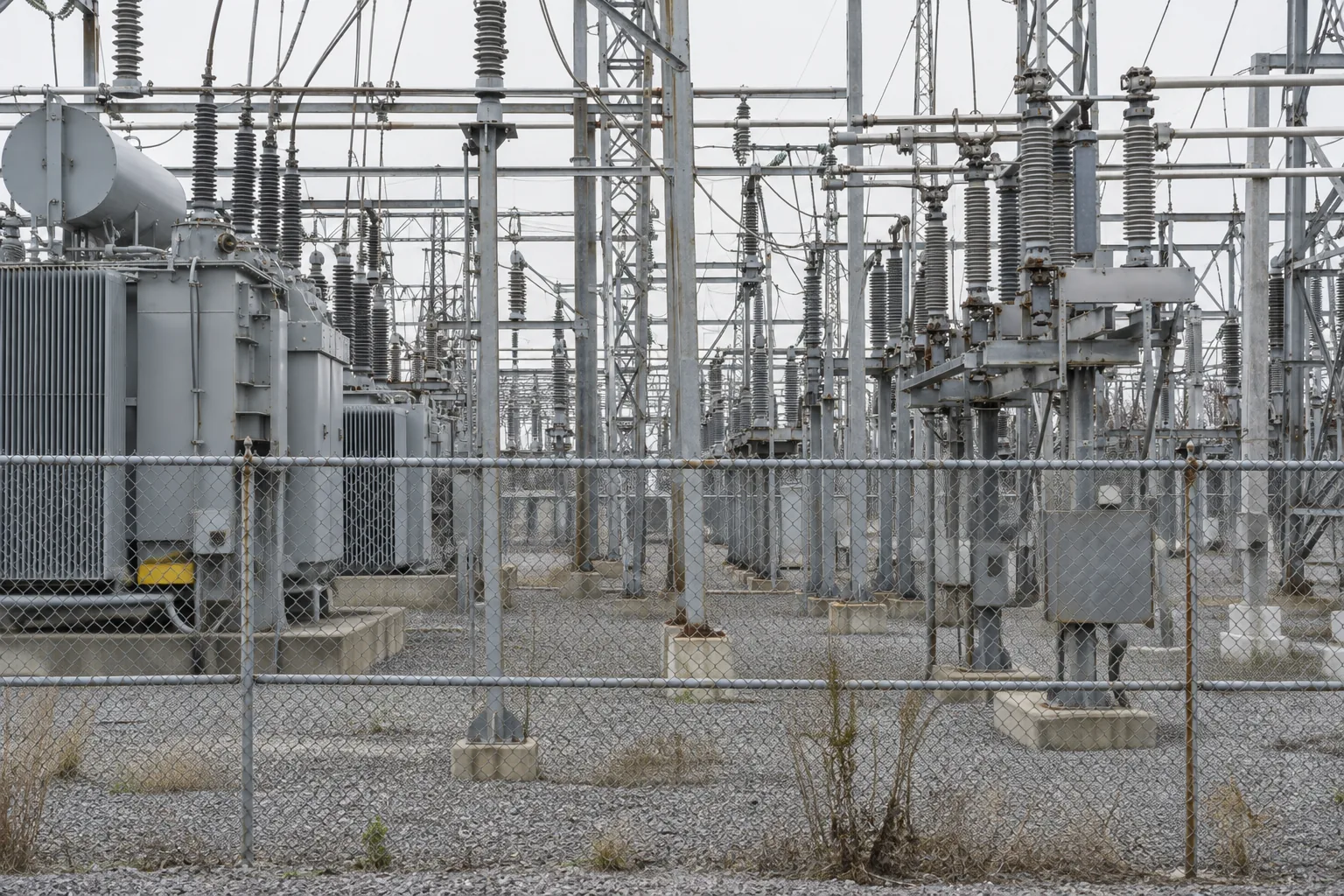
In the 2024 to 2025 delivery year, capacity in the PJM market cleared at 28 dollars and 92 cents per megawatt-day. For 2026 to 2027 it cleared at 329 dollars and 17 cents. That is not a rise. That is the same product costing eleven times what it cost two auctions earlier.
Capacity is not electricity. It is a promise: a payment made to generators to guarantee they will be available when demand peaks, bought years ahead in a forward auction. It is one of the least visible lines in an electricity bill and one of the fastest moving, and it is where the argument about data centers is actually being settled.
What everyone knows, and what the record says
The settled view is that data centers raise your electricity bill. It is repeated so consistently that it has stopped being examined, and a Consumer Reports survey found roughly four in five Americans now believe it.
For most of the last decade it was wrong, and there is a number on it. A working paper from the Electric Power Research Institute, using federal regulatory and energy agency data across 2015 to 2024, found that every doubling of data center capacity was associated with average retail electricity prices falling by 3.5 percent. Not rising slower. Falling.
The reason is arithmetic rather than generosity. A utility carries enormous fixed costs: wires, substations, transformers, poles, the crews who maintain them. Those costs barely move whether the system delivers a lot of electricity or a little, and they are recovered across every kilowatt hour sold. Add a customer drawing a large, flat, predictable load around the clock and you have added a great many kilowatt hours without adding much peak strain. The fixed costs divide across a bigger number and everyone’s unit price edges down.
There is a second effect underneath it. Sustained demand growth pulls newer and more efficient generation onto the system, and a more efficient fleet is cheaper to run per unit for everybody on it, not only for the customer who prompted the build.
That is why utilities courted these customers for years, and why economic development offices competed for them. It was not a favor. A high load factor customer is genuinely good for a rate base, in the same way a tenant who pays on time and never uses the lift is good for a building.
What broke it
The mechanism depended on a condition that has quietly stopped holding: that the load being added was real, and that the system already had room for it.
Neither is true at current scale. PJM projects peak demand across its territory growing by 32 gigawatts between 2024 and 2030, and all but two of those gigawatts are data centers. That is not a new customer fitting into spare capacity. That is a demand curve being redrawn, and the grid answering by paying almost anything to secure supply.
The auction results show exactly that. Data center load accounted for 6.5 billion dollars of the 16.4 billion in costs from PJM’s December auction, roughly 40 percent. And the most recent auction, for the 2028 to 2029 delivery year, cleared at 325 dollars per megawatt-day, which is the price cap. It hit the ceiling. So did the two before it.
An auction that clears at its cap three times running is not reporting a price. It is reporting that the ceiling is the only thing stopping the number going higher, which means the market has stopped doing the job a market is for. Whatever is being discovered, it is not the value of capacity.
The number to be careful with
The figure attached to all of this in most coverage is the scale of the AI buildout, quoted in trillions. Treat that number the way you would treat any announced capital plan, which is to say as an intention with a press release attached.
Announced capacity is not built capacity, and built capacity is not utilized capacity. The distinction matters here more than usual, because the grid is being asked to commit real generation, real transmission and real ratepayer money against demand that is currently a projection in somebody’s model. If a meaningful share of that demand does not arrive, the capacity still gets paid for. The contracts do not have a clause for enthusiasm that did not pan out.
This is the part that should interest anyone running a business with a meter. You are not being billed for the electricity data centers use. You are being billed for the readiness to serve electricity they might use.
On a commercial bill that arrives as a capacity or demand charge, usually a rate applied to your own peak, set by an auction result you had no part in and cannot hedge against. It is the line most businesses have never examined closely, because for two decades it was small and it barely moved. It is neither of those things now, and it is the line to put in front of whoever signs off your energy budget.
Where it lands
PJM’s own estimate is that these capacity prices will add somewhere between 1.5 and 5 percent to customer bills, varying by state and utility. That range is wide because the pass-through rules are set locally, which is why the same regional cost produces very different outcomes in different places.
Those rules are now moving. New Jersey passed ratepayer protection legislation at the end of June. New York introduced a statewide moratorium on large data center permits in July. Several state commissions are working on tariff classes that would put more of the interconnection and capacity cost on the customer causing it rather than on the residential class.
That last idea is the one worth watching, because it is the fix that does not require anybody to be against data centers. If a large new load pays the cost of the capacity it requires, the old arithmetic comes back. A big steady customer that covers its own incremental cost is still good for a rate base. The problem was never the customer. It was a cost allocation designed for a world where no single customer could move the peak.
What to expect
Two things will decide how this resolves, and neither is in the hands of a utility.
The first is whether the announced demand shows up. Capacity contracted against demand that materializes is expensive but rational. Capacity contracted against demand that does not is a stranded cost, and stranded costs in a regulated industry have an established habit of ending up in the rate base.
The second is how many states rewrite their tariffs before the next round of auctions rather than after. A cost allocation rule changed in advance shapes what gets built. One changed afterwards only decides who pays for what already exists, and by then the bill has a name on it.
If you are budgeting energy for anything through 2028, the useful assumption is not a percentage. It is that the capacity component of your bill has become the volatile one, that it is being set in auctions you do not participate in, and that the ceiling it keeps hitting is a policy choice which can be raised.