The rule for humanitarian access into Gaza has been simple to state for seven months: aid arrives through two crossings, and the throughput of those two crossings is the ceiling on everything that reaches two million people.
The exception, as of Tuesday, is that one of the two is now held by a party to the war.
Israeli armor took the Gazan side of the Rafah crossing, the one that connects to Egypt, on the same days that ceasefire proposals were being carried between the parties in Cairo. This is an explanation of what that does, because a crossing is a piece of machinery and the machinery is where the consequences are.
What a crossing consists of
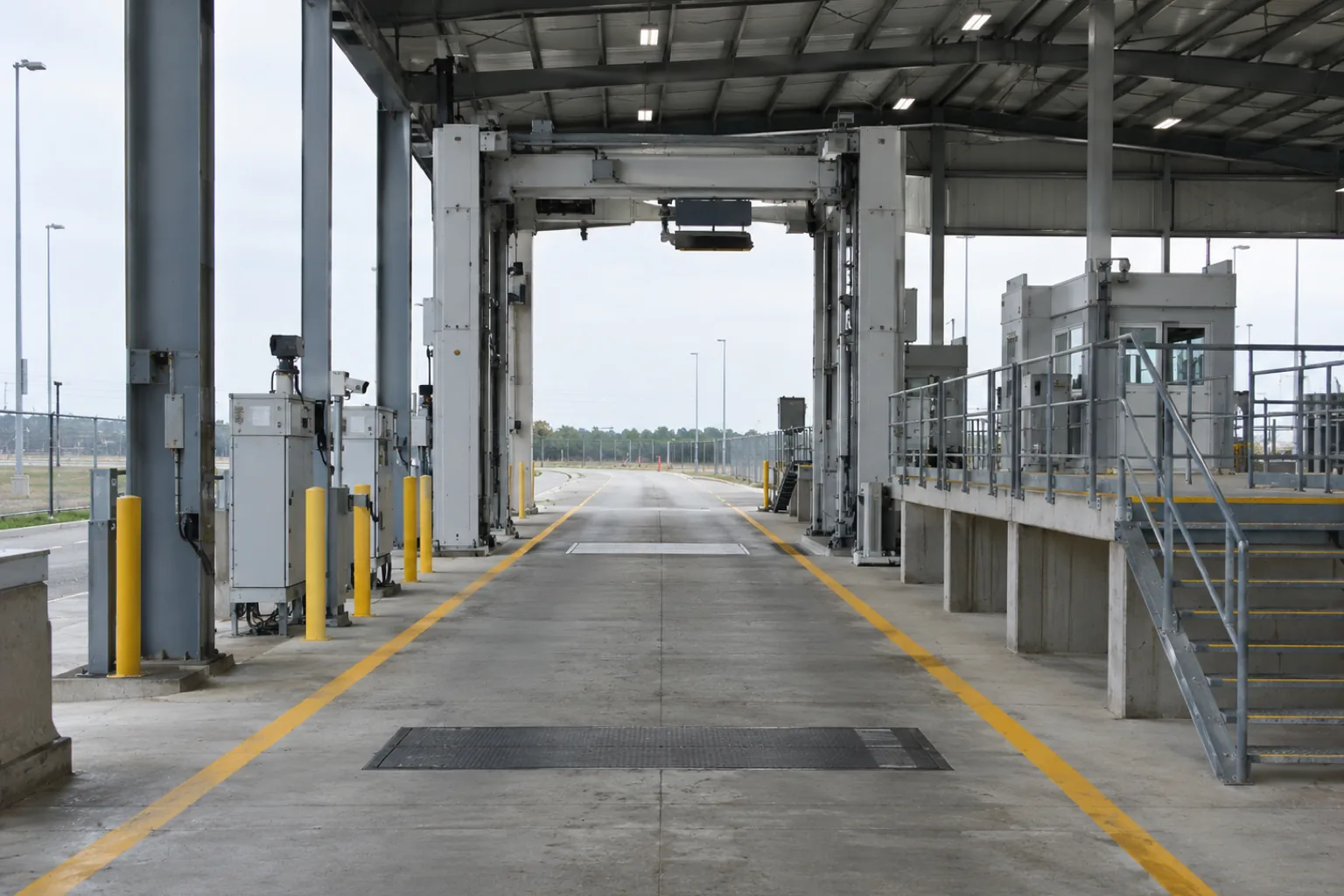
Not a gap in a fence. A functioning crossing is a facility: inspection bays where trucks are unloaded and searched, scanners, a manifest system, customs and security staff on both sides, a queuing area, and an agreed procedure for what may pass.
Aid moving through it is not simply driven across. It is inspected against lists of what is permitted, which requires people authorized to inspect and people authorized to accept, and the transfer is frequently back-to-back: goods are taken off one set of trucks and loaded onto another because the vehicles themselves may not cross.
Every one of those steps is a throughput constraint. The number of trucks a crossing passes in a day is set by the slowest step, and the slowest step is usually inspection.
Why two crossings is not twice one
Rafah connects Gaza to Egypt. Kerem Shalom connects it to Israel. They are a few kilometers apart and they are not interchangeable.
Rafah is the route for anything arriving through Egypt, which is most international aid, and it is the only crossing not controlled at both ends by Israel. That made it the route of last resort: a crossing that could function when the political relationship at the other one had broken down.
Kerem Shalom has greater inspection capacity but it is a commercial crossing designed for goods entering Israel’s controlled perimeter, and traffic through it is subject to Israeli approval at every step.
So the two crossings were not redundancy in the engineering sense. They were two different arrangements with two different sets of people able to say no, and the value of having both was precisely that they could fail independently.
What changes when one side holds both
With the Gazan side of Rafah under Israeli control, the independence disappears. Every route into the territory now passes a point at which the same party decides.
That is a change in structure rather than in volume, and it may or may not reduce the number of trucks. The volume question depends on whether the crossing keeps operating and under what procedure. The structural question does not: a system with one decision point has different failure characteristics from one with two, regardless of how much passes through it on any given day.
There is also an Egyptian dimension that is easy to miss. A crossing has two sides, and the Egyptian side is operated by Egypt. A change in who holds the other end is a change to an arrangement Egypt is a party to, and Egypt has said so.
What a crossing does besides admit goods
Two functions that are easy to miss and that a closure ends immediately.
The first is medical evacuation. Rafah has been the route by which patients leave Gaza for treatment elsewhere, in small numbers, under arrangements negotiated case by case. A hospital system without supplies can sometimes still move a patient out; a hospital system with no exit cannot.
The second is people. Foreign nationals, dual citizens and holders of approved permits have left through Rafah throughout, which made it the only door out of the territory that did not lead into Israel. Closing it closes that too, and the population most affected is the one with somewhere else to go and no way to get there.
Aid organizations reported the crossing shut to traffic as the armor moved in, with trucks queued on the Egyptian side.
The timing, which is the part nobody will settle
The operation began while mediators were carrying a proposal between the parties, and within a day of Hamas saying it had accepted an Egyptian and Qatari formulation that Israel said did not meet its requirements.
Two readings are available and both are coherent. One is that seizing the crossing is pressure applied to a negotiation, a demonstration of what continues if no agreement is reached. The other is that the operation was scheduled and the negotiation was running alongside it, in which case the coincidence is a coincidence.
Nothing available publicly distinguishes them, and the parties have an interest in asserting whichever reading suits them. What can be said is that the two things happened in the same forty-eight hours and that the people who most need the outcome are not party to either.
The number that measures all of this
Trucks per day. It is a crude figure and it is the only one anybody has.
Before October the territory took several hundred trucks on an ordinary day, carrying commercial goods as well as aid, because a population of two million is fed by trade rather than by donation. Through the winter the figure ran at a fraction of that, and the argument about whether the constraint was inspection capacity, road conditions inside Gaza or political decisions was never settled, because each party had an interest in a different answer.
What a seizure does to that number is the only question that will be answerable in a week, and it will be answerable because trucks are countable and somebody counts them.
What is not resolved
Whether the crossing reopens, on what procedure, and with whose consent.
A crossing that is held but not operated is a closed crossing. A crossing that reopens under new arrangements is a different facility with the same name, and the throughput will be whatever the new procedure permits, which nobody has published.
What is also unresolved is the arrangement at the other end. Egypt has said it will not operate its side under the new configuration, and a crossing with one side open is not a crossing.
The population the crossing exists for was told to move northeast, into an area already holding people displaced several times. They will be waiting on a decision about a set of inspection bays, made by parties who are currently negotiating about something else, and the number of trucks that move next week is the only measure of it anybody will ever see.