A question that ought to be simple, and is not. How many people died attempting to cross from Morocco into Ceuta in the first days of this month?
There are at least four published answers and they do not differ by a rounding error. They differ by a factor of eight. Holding the question open for a moment is worth doing, because the reason the answers diverge is not that anybody is lying, and the mechanism that produces the divergence is the same mechanism that produced the deaths.
What happened, as far as anyone agrees
Ceuta is a Spanish city on the North African coast, about eighteen square kilometers, bordered on its landward side by Morocco and on the other three by the Mediterranean. With Melilla, a few hundred kilometers east, it forms the European Union’s only land border with Africa.
From late July, people began crossing in numbers that had no recent precedent. Spanish estimates put the total who breached the border at around eighty thousand, overwhelmingly young men, over a period of days. By 3 August the Spanish government said about seventy thousand had returned to Morocco voluntarily.
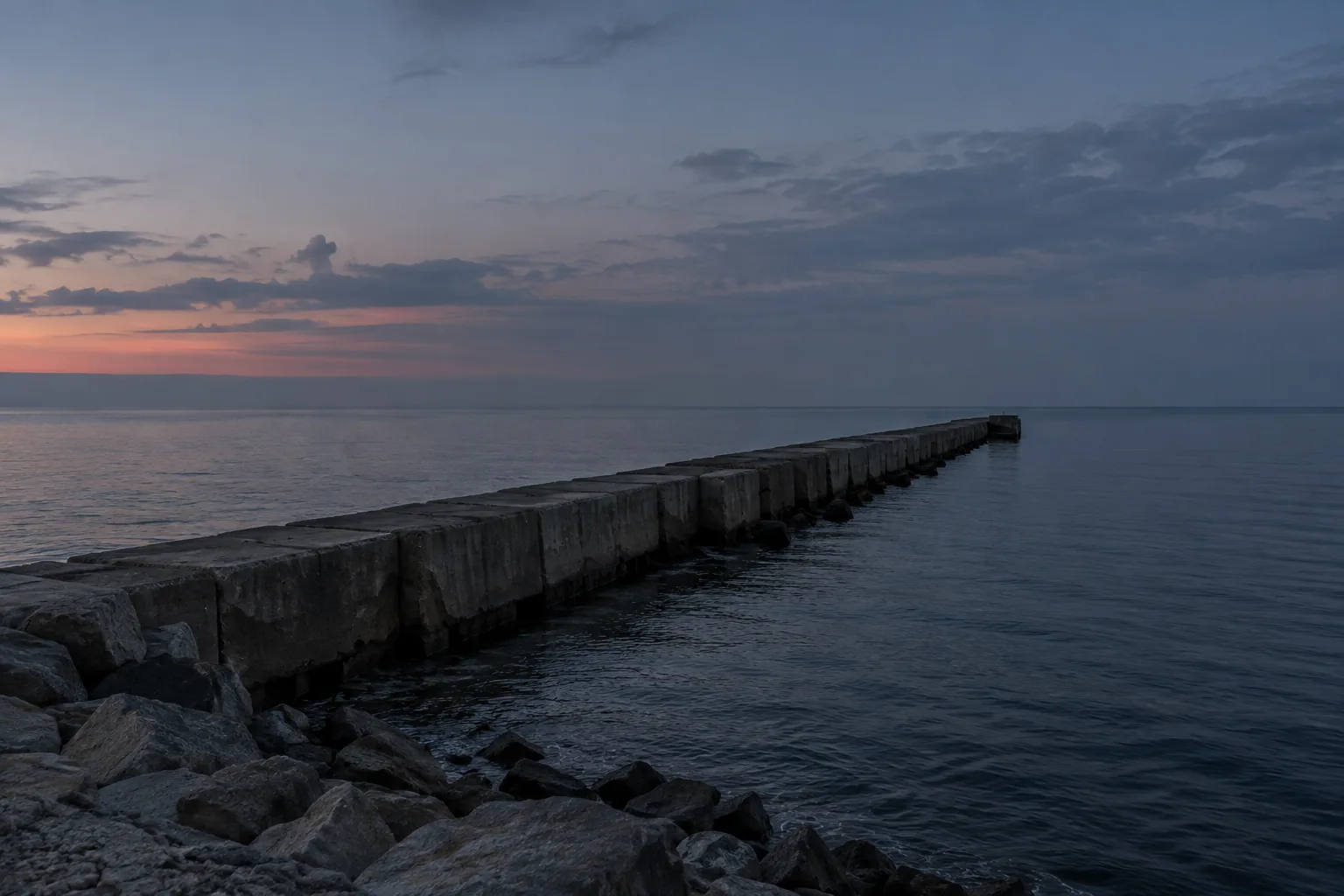
People died in two ways. Some drowned, attempting to come round the breakwater by water. Others were crushed at the breakwater itself, where the border fence runs out into the sea and a crowd moving forward has nowhere to go.
The four numbers
By 2 August, the confirmed toll stood at 72. Local government officials in Ceuta were reported as putting it at 86. Juan Jesus Vivas, who leads the city, said the morgue had received 88 bodies.
Morocco’s interior ministry published its own figure: eleven. Ten drowned and one fell from rocks.
Eleven and eighty eight are not competing estimates of the same quantity. They are counts of different quantities that are both being described with the same word.
What each number is actually counting
This is where the comparison does its work, because the two administrations are measuring from opposite sides of a line and each is measuring what it can see.
A morgue count is a count of bodies that arrived at a specific building. Ceuta’s figure is therefore precise about one thing: how many dead were recovered into Spanish custody and recorded there. It says nothing about anyone who died on the Moroccan side of the border, anyone recovered by Moroccan authorities, or anyone whose body the sea did not return.
Morocco’s figure is a count of deaths its own authorities recorded on its own territory and in the water it patrols. It is not obliged to include, and would have no mechanism for including, a body that came ashore in Ceuta.
So the same event produces two counts that overlap barely or not at all, and the sum of them is not the total either, because the category that is largest in a drowning event is the one neither administration can count. People who go into the water at night and are not recovered are not dead in any register. They are absent, which is an administrative status and not a fact about them.
The comparison that matters
Set Ceuta beside the other maritime routes into Europe and a pattern appears that explains why this is not incidental.
On the long crossings, from Libya toward Italy or from Senegal toward the Canaries, deaths are estimated rather than counted, and everyone involved says so. The figures published by international agencies for those routes carry explicit statements that the true number is unknown and higher, because vessels disappear with everyone aboard and nobody is left to report it.
Ceuta is the opposite case in every respect except the one that matters. It is the shortest crossing there is. It is overlooked by two police forces, covered by cameras, and happens within sight of a city. And it still produces a number that cannot be established.
The lesson is not that better counting is needed at the long crossings. It is that a death at a border is recorded by whichever administration takes custody of the body, and where a border runs through the middle of an event, the record splits along it. Proximity does not fix that. Only a single authority responsible for the whole space would, and the entire purpose of the line is that no such authority exists.
There is one more figure in this that deserves more attention than it has had, and it is the pair of round numbers rather than the death toll.
Around eighty thousand people crossed. Around seventy thousand went back within days, voluntarily, according to the Spanish government. Both figures are estimates and both are large enough that the error bars do not change the shape of what they describe.
An event in which seven eighths of the participants return of their own accord inside seventy two hours is not well described by the word migration, which implies an intention to arrive and remain. What it is instead has not been established publicly. A border that becomes briefly passable will draw people through it for many reasons, including the discovery that it is passable, and some of those reasons resolve on their own within a day.
The reason this matters for policy is that the response being designed is a response to the first number. Eighty thousand people crossing a European Union land border is the fact that will be cited in Brussels. Seventy thousand going home unprompted is the fact that would have to be explained before anyone could say what the first one meant, and it has not been.
The part that does not resolve
What follows from this is uncomfortable in a specific way.
The European Union was preparing talks on the crossings while the counts were still being published. Those talks will proceed from figures, because that is how policy is made, and the figures available are the ones described above: a Spanish number, a Moroccan number, and no reconciliation between them.
Whichever figure a given government prefers is available to it honestly. Nobody has to fabricate anything. A minister who wishes to describe a catastrophe can cite eighty eight, and a minister who wishes to describe a manageable incident can cite eleven, and both can say, accurately, that the number comes from an official source.
Underneath all of it sits the thing neither government disputes and neither has explained. People died at the breakwater, in a number nobody can state, and they are being counted by two administrations who agree on nothing except that from the point where the fence enters the water, the counting is somebody else’s responsibility.