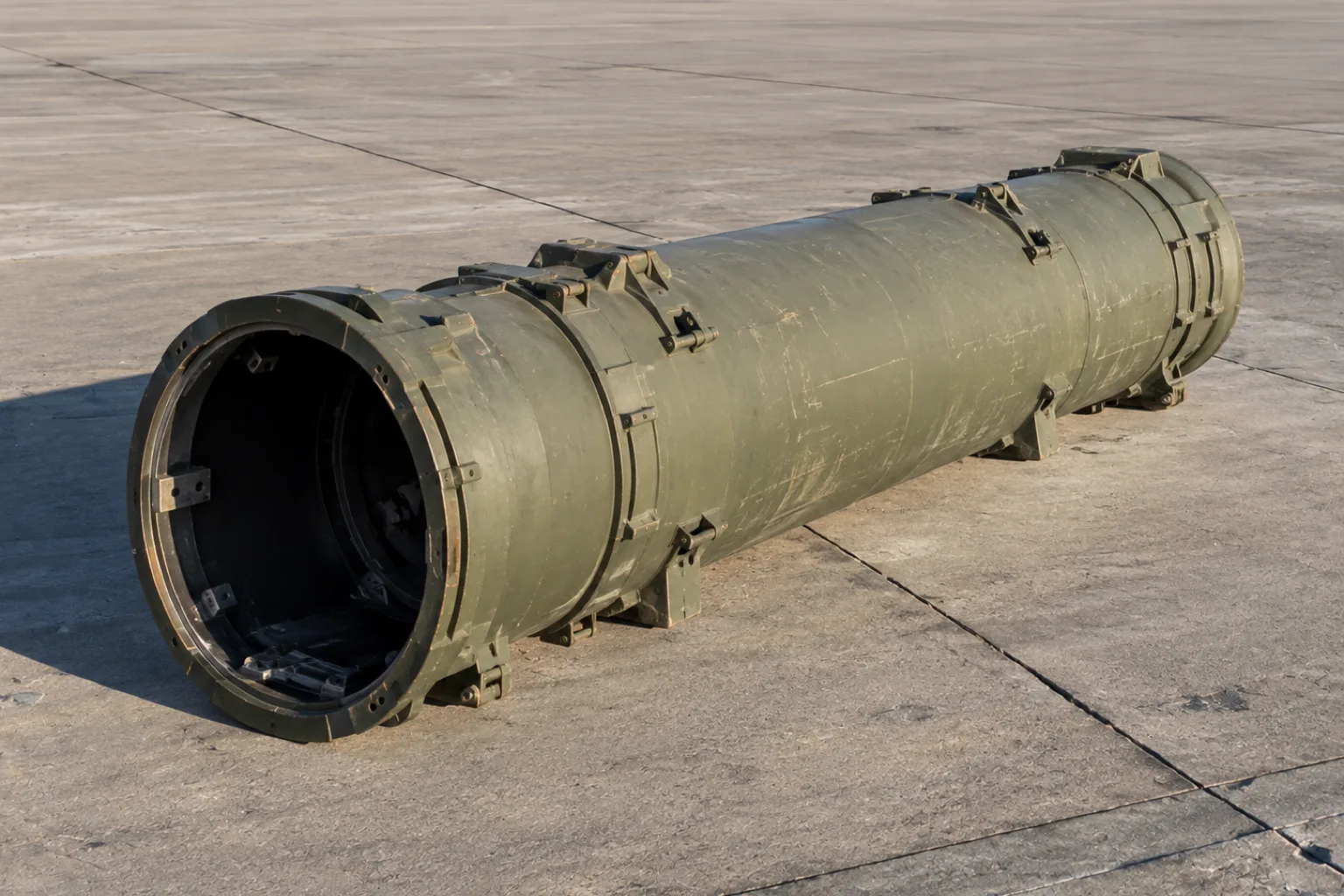
Three and a half million dollars. That is the reported unit cost of one Arrow interceptor, the system used against a ballistic missile, and about a million for one David’s Sling round used against the slower incoming.
Against which: a Shahed drone, the type used in the majority of Saturday night’s launch, is put at around a hundred and ninety thousand dollars at export prices and rather less than that to build at home.
Those two numbers are the whole subject. This is a ledger of Saturday night: what was spent, by whom, and what was purchased with it.
What was launched
More than three hundred projectiles were fired toward Israel overnight, in the region of one hundred and seventy drones and over one hundred and twenty ballistic missiles, with cruise missiles making up the rest. Israel and its partners report that about ninety-nine percent were intercepted.
What got through caused minor damage to infrastructure at a military base in the south. A girl was wounded by shrapnel from an intercepted drone.
By the standard that governs an air defense system, that is close to a perfect night. By the standard that governs a budget, it is the expensive column.
The cost of the defense
Israeli media put the cost of the night’s interception at between four and five billion shekels, which is somewhere between about one and one point three five billion dollars.
That figure is made of three things and it is worth separating them.
Interceptors are the largest line. An Arrow round at three and a half million against a ballistic missile, a David’s Sling round at about a million, fired in quantity across several hours, and frequently more than one round per incoming object because a single-shot doctrine is not how anybody defends a city.
Aircraft are the second. Fighters flew sorties through the night against the slower drones, which is a cheaper way to kill a drone than a missile and is not free: flight hours, fuel, munitions, and the crews.
The third is the part that has no invoice. A stock of interceptors is a finite thing with a production rate measured in months. A night that consumes a meaningful share of it has bought time at the cost of readiness, and that cost is not payable in the same currency as the first two.
There is a fourth line and it is the one that recurs. Every interceptor fired has to be replaced, and replacement is a procurement decision taken against a defense budget that has other claims on it. The night’s bill is therefore not a one-off charge but an obligation, and it arrives in a later year under a different heading.
The cost of the attack
Put the other side of the ledger next to it and the asymmetry is the point.
A hundred and seventy drones at export price is somewhere in the region of thirty million dollars, and considerably less if built domestically. Ballistic missiles are far dearer per unit than drones and still, on any published estimate, a fraction of what it costs to stop them.
So a launching state spends an amount and a defending state spends several times that amount to be unharmed. Repeat it and the defender runs out first, not of will but of inventory, which is a fact of arithmetic rather than of resolve.
That asymmetry is not a flaw somebody failed to notice. It is the structural property of missile defense and it has been understood since the field existed. What has changed is that cheap, mass-produced, long-range drones made it possible to exploit at scale.
Who else paid
A significant share of the defense was not Israeli, and this is the entry most easily lost.
American, British, French and Jordanian forces participated in intercepting incoming projectiles. Each of those governments spent its own munitions and flight hours, and each made a political decision to be visibly involved, which is a different kind of expenditure and in some cases a larger one.
Jordan is the instructive case. A government intercepting objects over its own territory is protecting its own airspace, which is both an obvious sovereign act and, in this instance, one that required defending it against an argument at home.
The line that is not on either side of the page
Between the two columns sits something neither government paid for and both relied on: warning time.
Slow drones launched from Iranian territory take hours to cross the intervening airspace. That transit is what allowed an air picture to be assembled, aircraft to be positioned, partner forces to be coordinated and civilians to be told to shelter. A defense achieving ninety-nine percent did so against an attack it could see coming for most of a night.
Which means the ninety-nine percent is a figure about this attack rather than about the system in general. The same interceptors against the same number of objects arriving without hours of notice would produce a different number, and nobody should read Saturday as a demonstration of what happens in a war conducted at shorter range.
What was purchased
The credit column has three entries and they are real.
Almost nobody was hurt, which is the entry that matters more than everything else on this page and is not reducible to money.
A capability was demonstrated in conditions nobody had tested it in, against a saturation attack of a size the system had never faced. That demonstration has a value to Israel and a separate value to the manufacturers of every system involved.
And a coalition performed in public. Four other air forces operating over a single night, in coordination, is an intelligence and command achievement that is normally asserted and was here shown.
The entry that decides whether it balances
All of that is settled and one thing is not, which is the question of what the launch was for.
An attack telegraphed hours in advance, launched with slow drones that take the better part of a night to arrive, against a defense known to be capable, is not obviously an attempt to destroy anything. It is also not nothing: three hundred projectiles is a real launch, and a defense that had performed worse would have produced a different morning.
If the objective was to answer the Damascus strike visibly, at the lowest achievable risk of a war, then the night was cheap for the launching state and expensive for the defending one, and the ledger balances in a direction that has nothing to do with what was destroyed.
Which is the uncomfortable thing about this page of accounts. The side that spent thirty million and hit almost nothing may have bought more than the side that spent a billion and stopped almost everything, and neither total tells you which.