The statement issued by Pakistan’s foreign ministry on Thursday is careful in a way worth reading closely. It describes a series of strikes conducted inside Iran, names the targets as terrorist hideouts, and specifies which organizations were being struck: the Balochistan Liberation Army and the Balochistan Liberation Front.
What it does not say is that Pakistan attacked Iran. Iran’s account of the strikes it conducted two days earlier is constructed on exactly the same principle, and the symmetry is not an accident. It is the mechanism by which two nuclear armed neighbors exchanged missile strikes on each other’s territory and then stopped.
What happened, in order
On Tuesday, Iran struck what it said were positions of Jaish al-Adl inside Pakistan’s Balochistan province. Jaish al-Adl is a Sunni militant group that operates across the border and that Iran holds responsible for attacks on its security forces. Pakistan said two children were killed.
Those strikes came days after Iran had conducted similar operations in Iraq and in Syria, which it presented as retaliation for the bombings in Kerman at the start of the month that killed a large number of people and were claimed by Islamic State.
Pakistan responded diplomatically first. It expelled Iran’s ambassador from Islamabad and recalled its own from Tehran, which is a serious step and a reversible one.
Then on Thursday it struck targets inside Iran, in Sistan and Baluchestan province. Iran said nine foreign nationals were killed, including three women and four children.
The mechanism
Here is the part that explains why this did not continue, and it lies entirely in how both governments described what they were doing.
Neither said it had attacked the other state. Each said it had struck a non state armed group operating from the other’s territory, and in each case the group named is one the host government also disowns.
Iran does not defend Jaish al-Adl. Pakistan does not defend the Baloch separatist groups; it has conducted its own operations against them for years. So each strike was framed as doing something the other government claims to want done, in a place that government does not fully control.
That framing performs a specific function. It allows each side to say it acted, which domestic audiences require, without asserting that the other state was the enemy, which would require a response of a different order. And it allows the other side to accept the account, or to appear to, without conceding anything.
This is not a trick either government invented. It is close to the standard grammar of cross border strikes between states that do not want a war, and it works precisely because it is legible to both parties as a formula rather than as a claim.
Why the territory makes it available
The formula needs a particular geography to be usable, and this border supplies it.
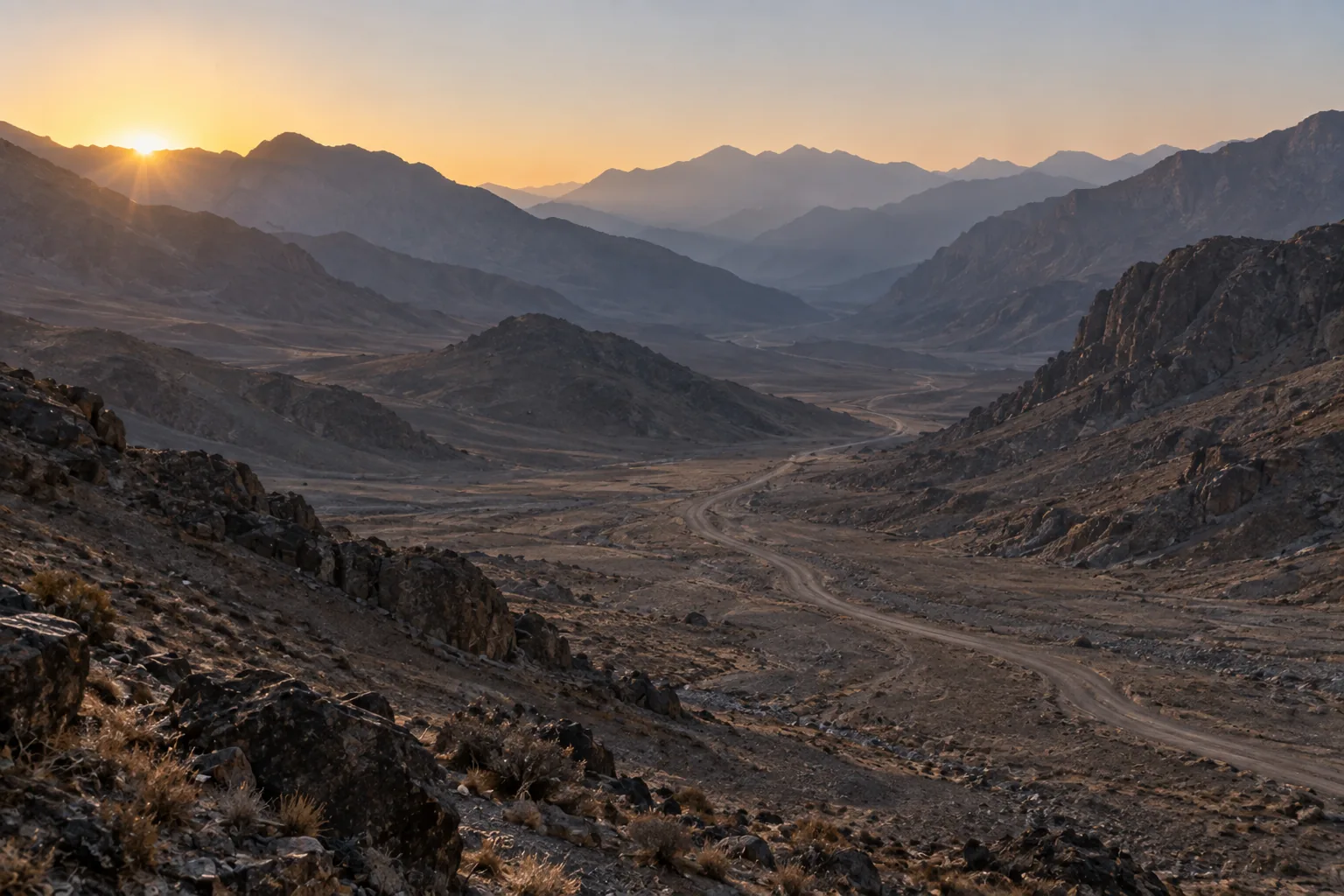
The Baloch population lives on both sides of a frontier drawn across it, in terrain that is mountainous, sparsely populated and difficult to police. Both states have armed groups operating in their own Baloch regions, both accuse the other of tolerating those groups, and both are substantially telling the truth about the limits of their own control.
A border region that neither government fully administers is therefore a space where each can act while describing the action as aimed at something other than the neighbor. The same geography that produces the grievance produces the exit from it.
Compare a border where that is not available. A strike across a densely administered frontier, on a target unambiguously belonging to the other state, admits no such description. There is no third party to name, and the event is simply what it looks like. Which is also why neither government could run this formula on any other stretch of the frontier between them, and why nobody expects either to try.
What the formula costs
It is worth being clear that the mechanism is not free, and the price is paid by people who are not party to any of it.
The strikes killed children. Two on the Pakistani side by Islamabad’s account, four on the Iranian side by Tehran’s. Those deaths are real whatever either foreign ministry calls the operation, and the diplomatic formula that contains the crisis does nothing for the families in either province.
There is also a longer cost to the populations in the border districts, who have now been on the receiving end of both governments’ operations within a single week and who were already the subject of security campaigns by both. A region described by two capitals as a lawless space from which bad actors emanate is a region whose ordinary inhabitants are permanently available as an explanation.
There is a second condition the formula depends on, and it is about capability rather than language. Both strikes were presented as precise and limited, aimed at specific compounds rather than at cities or at military installations. That claim has to be broadly credible to the other side’s own analysts, because a government deciding how to respond is reading the impact locations rather than the press release.
A strike that lands where the announcement says it landed, on the kind of target the announcement describes, confirms the framing physically. One that does not forces the receiving government to treat the words as cover, and the formula collapses. So the restraint in the targeting is not separate from the restraint in the language. It is what makes the language usable.
How to read what follows
For anyone watching this from outside, and it is being watched closely in several capitals with their own restive border provinces, the signal is not whether more strikes occur. It is whether either government revises its description.
As long as both continue to say they struck non state groups, the formula is holding and the exchange is closed, whatever the rhetoric around it. The moment either says it struck the other country, the available descriptions have run out, and what follows has to be a different kind of response.
The ambassadors are the second thing to watch, and the more reliable one. Expelling an ambassador is loud and cheap. Returning one is quiet and expensive, because it requires a government to be seen accepting that the matter is over. Diplomatic restoration usually arrives after the fighting stops and before anybody admits that is what has happened, which makes it a better indicator than any statement issued during the week itself.
What neither capital has said, and neither will, is the thing the whole arrangement rests on: that the groups each of them struck will still be there next month, in the same valleys, and that both governments know it.