At about ten past nine on Wednesday morning, in a strip mall in a town I will not name because it could be any of about four thousand of them, a woman pulled on the door of the post office and it did not open.
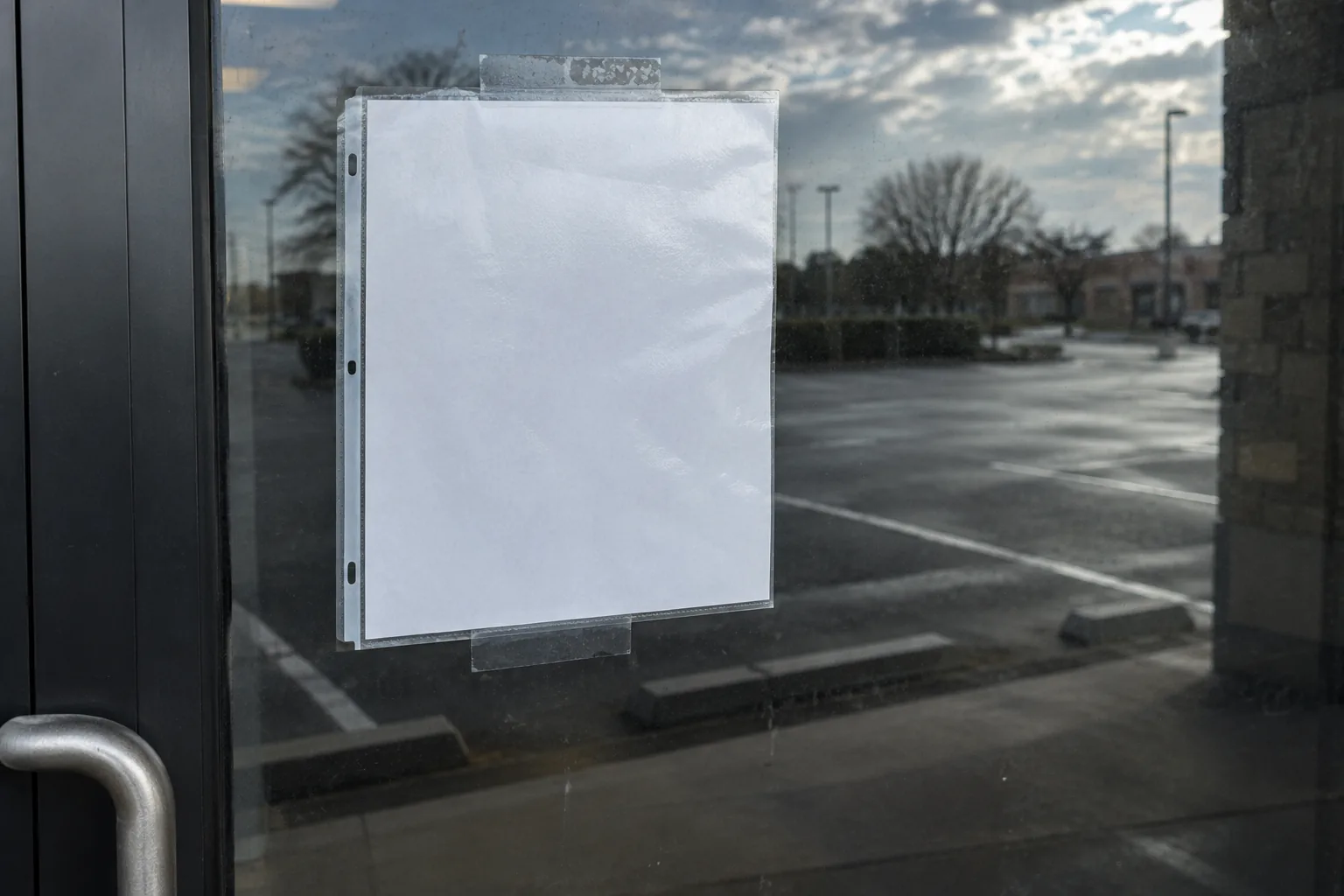
There was a printed sheet taped inside the glass. She read it, said something to herself, and went back to her car with the package still under her arm.
That is roughly what a new federal holiday looks like in its fourth year. This is a profile of one: what a federal holiday actually is, who it applies to, and why the answer surprises people every single June.
What a federal holiday is
It is a day on which federal government offices close and federal employees are paid without working. That is the whole of the legal content.
It is not a national holiday in the sense most countries mean. It does not close private businesses, it does not oblige any private employer to give anybody the day, and it does not apply to state or local government except where those governments separately adopt it.
What it does do, in practice, reaches further than the text. Banks close, because the Federal Reserve closes and the settlement system with it. The postal service closes. Markets close. And a large number of employers who follow the federal calendar close along with them, because their payroll systems and their holiday schedules were built around that list.
So a federal holiday is a small legal fact with a large gravitational field, and how far the field reaches is a matter of custom rather than law.
Why the fourth year is the interesting one
Juneteenth became a federal holiday in June 2021, which makes this the fourth observance, and the fourth is where the custom either sets or does not.
A new holiday goes through a predictable sequence. The first year nobody has planned for it and the closure surprises everybody. The second and third, employers decide one at a time whether to adopt it, and the decisions are made quietly by people in human resources departments comparing themselves to competitors.
By the fourth, the pattern is mostly set, and the pattern that has set is uneven. Large employers, universities, and companies with a formal diversity function largely observe it. Smaller employers, retail, hospitality, manufacturing and most of the service economy largely do not.
Which produces the specific modern experience of this day: a holiday that a substantial number of people have and a larger number have never had, existing side by side in the same town, with no visible marker of which is which until somebody pulls on a door.
How it got onto the list
Federal holidays are created by statute, one at a time, and the list is shorter than people assume: eleven of them.
Adding one is not a formality. The last addition before this was Martin Luther King Jr Day, signed in 1983 and not observed by every state until 2000, seventeen years later. Before that, nothing had been added since 1968.
Juneteenth passed the Senate unanimously and the House overwhelmingly in June 2021, and was signed two days before the date itself, which meant the first observance happened within forty-eight hours of the law existing. Federal offices closed on a Friday that nobody had planned for.
That compressed beginning is part of why the custom has been slow to settle. A holiday that arrives with two days’ notice gives no employer time to decide anything, and the decision then gets made a year later, quietly, by somebody updating a calendar.
What it does to a week
A midweek holiday is the awkward kind and this one fell on a Wednesday.
Monday and Friday holidays produce long weekends and the whole apparatus of travel and family that goes with them. A Wednesday produces two two-day weeks, which is worse for productivity and better for nothing, and it is why several older holidays were legislatively shifted to Mondays in 1968.
Juneteenth has a fixed date and cannot move, because the date is the content. It commemorates 19 June 1865, the day the news of emancipation reached Galveston, Texas, more than two years after the proclamation it was announcing.
That gap is the point of the holiday and it is the thing most likely to be lost as the observance settles. A commemoration of delayed news becoming a floating Monday would be a strange outcome, and the fixed date is a deliberate refusal of it.
The uneven adoption has a measurable proxy, which is whether a state has made it a paid holiday for its own employees. Several did within a year; a number still have not, and a handful observe it only by proclamation, which is a statement without a day off attached.
That patchwork is the ordinary condition of American holidays rather than a peculiarity of this one, and it is why the question “is it a holiday” has no single answer anywhere in the country.
What the day looks like where it is observed
Cookouts, mostly. Which sounds like a diminishment and is not.
The Texas tradition it comes from was always largely a family and community event: food, church, music, a parade in some towns, red drinks and red food that carry their own long history. It was observed in Black communities for a hundred and fifty years before any federal government took an interest.
What federal recognition added was not the observance. It was the closure, and the closure is the part that reaches people who had never marked it.
The awkwardness nobody quite names
A holiday commemorating the end of slavery, observed most reliably by salaried professional employees and least reliably by the lowest-paid workers in the service economy, is carrying an irony that everybody notices and almost nobody says out loud.
It is not anybody’s fault in particular. It follows from the structure of who gets paid holidays in the United States, which was true before this holiday existed and will be true after. But it means the day is observed in inverse proportion to something, and the something is uncomfortable.
What was on the door
A sheet of paper in a plastic sleeve, printed on an office machine, listing the federal holidays for the year in a column with the dates beside them.
Juneteenth National Independence Day is on it, between Memorial Day and Independence Day, in the same typeface as the rest. It is the eleventh entry. The sheet has been on that door since January and will be there until December, and Wednesday was the first time in months that anybody stood and read the whole thing.