Somebody in your house got up on Saturday night, went round the rooms, and moved the hands on the things that do not move themselves. The one in the hall. The little travel one that lives on the bedside table and has not traveled in nine years. The microwave, which requires holding a button and pressing another one and is therefore attempted by exactly one person per household, always the same person, usually while complaining.
On Sunday morning at two o’clock, American clocks went forward, and an hour was taken out of the year.
This is about that hour, which is a genuinely strange object: a period of time that is legally defined not to have happened, twice a year, by agreement.
What it actually is
Between two and three in the morning on the second Sunday in March, nothing occurs. Not nothing in the sense that everyone is asleep. Nothing in the sense that the interval is not in the calendar. A clock reading 01:59:59 advances to 03:00:00, and the sixty minutes in between are simply not part of that day.
It has legal consequences that are more entertaining than they sound. A person cannot be born at half past two on that morning in a jurisdiction observing the change, because the moment does not exist to be recorded. Contracts that specify a duty at that hour have nothing to attach to. Systems that log timestamps have to decide what to do about a gap, and the ones that decide badly are how you end up with a shift roster that pays someone for a night that was an hour shorter than the previous week’s.
And it is not symmetrical, which is the part people forget. In November the hour comes back, and that is worse for the machines, because an hour is then repeated: one thirty in the morning happens, and then one thirty in the morning happens again, and a computer that assumed timestamps only ever increase now has two records that disagree about which came first.
The things that changed themselves, and the things that did not
Your phone did it silently, overnight, because it takes its time from the network rather than from a battery and a quartz crystal. So did your laptop and your television. The change is invisible on anything that is connected to something.
Everything else is a small inventory of domestic archaeology.
The oven and the microwave, which are computers pretending not to be, and which have interfaces designed by someone who assumed this would happen twice a year and you would simply learn it. The car, which on older models involves a sequence in a submenu that has to be looked up annually. The clock on the boiler, which controls when the heating comes on, and which if forgotten quietly runs your house an hour behind for seven months. The watch in the drawer that is now wrong and will stay wrong.
There is a particular species of clock that gets changed only when somebody notices, and then only if the changing is easy. Those clocks are a map of what a household has given up on.
What it does to people, honestly
The research literature on the spring change is real and it is also more cautious than the headlines derived from it.
The consistent finding is that the shift produces a brief, measurable disturbance to sleep timing, concentrated in the first working week, and that it is worse for people who were already short of sleep. The associations reported around that week, in traffic incidents and in some cardiac measures, are genuine associations found in more than one dataset. They are also small in absolute terms, they vary between studies, and the mechanisms proposed for them are plausible rather than demonstrated.
What is not seriously disputed is the ordinary version, which does not need a study. The first Monday is harder. Children who do not care what the clock says wake at the same point in the light and are therefore an hour early for a week. The evening is suddenly long, which is the whole point, and in exchange the morning is dark again for a while.
The bargain
Because that is the trade, and it is worth naming rather than assuming.
Nothing is created. The daylight on Sunday was the same length as the daylight on Saturday. The change moves a portion of it from a part of the day when most people are asleep to a part when they are not, by relabelling the hours. The argument for it has always been about what people do with a light evening, and the argument against it has always been about what a dark morning does to people who have to be somewhere at eight.
Both are real. Neither is settled by evidence, because it is not really an empirical question. It is a question about whose morning and whose evening.
The oven
By Wednesday everything in the house has been corrected except the oven.
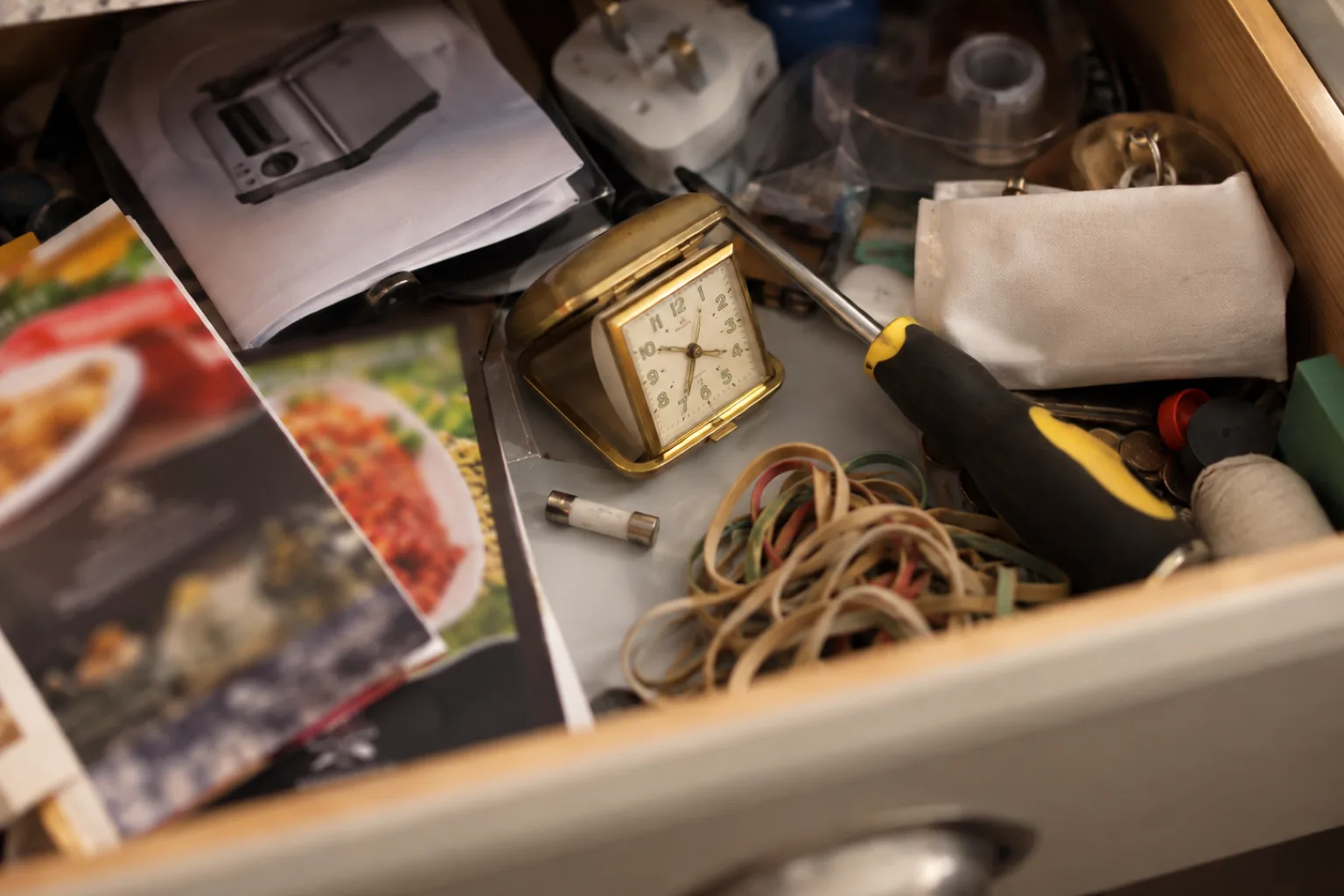
Nobody can remember the sequence. It involves holding the clock button and turning the dial, or holding two buttons, or a combination that worked once and has not worked since. The manual is in a drawer in the kitchen with the takeaway menus and the spare fuse, or it is not, in which case it is online and nobody is going to look.
So it stays an hour behind, and everyone in the house learns to add one when they glance at it, which takes about four days to become automatic and about two seconds to do. In October it will be right again for one day, entirely by accident, and briefly nobody will trust it.