Six dollars and twenty-nine cents, or whatever it is where you are. It is printed above the counter, in a column with about forty other numbers, and it is the same on Tuesday morning as it was on Saturday night.
That last part is the subject here. Not the price. The sameness.
This is a profile of the menu board, which is one of the last posted prices most of us encounter in an ordinary week, and which spent this week being publicly argued about after Wendy’s described what it planned to do with its own.
The object, as it has been
A menu board is a rectangle above a counter, backlit, and until recently it was made of translucent plastic strips slotted into a frame.
Changing one meant a person on a stepladder with a box of replacement strips, usually before opening, occasionally in front of a queue. Changing all of them meant a print run, shipped to every location, installed over a week. The physical difficulty was not a design failure. It was the whole reason the number stayed still.
A price that costs money to change is a price that does not change often. Everybody on both sides of the counter learned the rhythm of that without ever being told it: prices move once or twice a year, at every branch at once, and if the number is different today something unusual has happened.
What replaces it
Wendy’s said it would spend about twenty million dollars putting digital menu boards into its company-operated restaurants in the United States by the end of 2025, and described the capability they would bring in terms that included dynamic pricing, offerings that vary by time of day, and suggestive selling.
The screen is the same rectangle in the same place. What changes is that the number on it stops being a printed object and becomes a setting: a field in a system, changeable from an office, at no cost, as often as anybody likes.
That is the entire transformation and it does not require anything else to be true. Whatever a company intends, a screen has removed the friction that made the price stable, and the friction was doing work nobody had assigned to it.
The week the word did the damage
The phrase people heard was surge pricing, which the company had not used.
Within about forty-eight hours a hashtag calling for a boycott was circulating, a competitor had run a promotion about having no urge to surge, and the company had issued a clarification saying it had never intended to raise prices at busy times and that the flexibility was meant for discounting when restaurants are quiet.
Take the clarification at face value, because it is plausible and because the interesting thing survives it. A system that can lower a price at two in the afternoon is, mechanically, the same system that can raise one at six. The company is describing an intention. The screen is a capability, and capabilities outlast the people who introduce them.
The speed of the reaction is the part worth noticing. A five word phrase about a fast food chain produced a boycott campaign, a rival’s marketing response and a corporate retraction inside a working week, which is not a proportionate response to the price of a hamburger and was never about the price of a hamburger.
Why this one landed
Most prices in ordinary life already move and we have absorbed it. A plane ticket is a different number every hour. A hotel room in the same city costs what the weekend demands. A ride across town is priced by the minute it is requested in, and the app tells you so, and nobody organizes a boycott.
What those have in common is that the price arrives privately, on a screen in your hand, addressed to you, at the moment of purchase. Nobody standing beside you can see it.
A menu board is the opposite. It is a public number, posted, visible to the whole queue, identical for the person in front and the person behind. Everyone in the room is being offered the same thing on the same terms, and that is legible at a glance without anybody having to think about it.
Turn it into a screen and that guarantee stops being structural. It becomes a promise, which is a different kind of thing, and the difference is what a week of shouting was actually about.
What is left of it
Not much is left, and none of it is going to be reversed by a clarification.
The boards are being installed. The company has said what it will not do with them, which is a statement about current intentions by current management, and the twenty million dollars is being spent on the capability rather than on the intention.
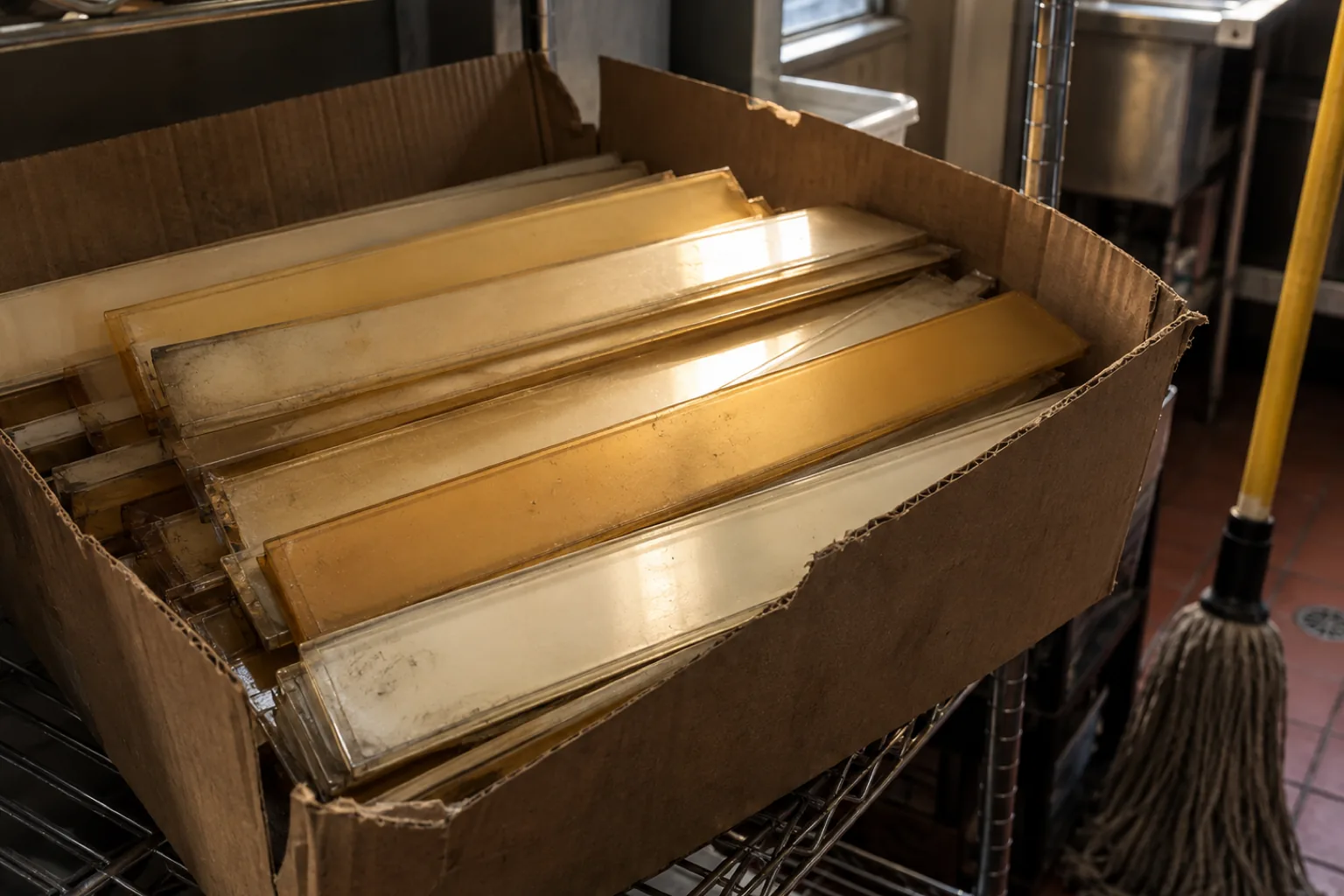
The plastic strips are the part that is actually ending. Every one of these restaurants keeps a flat cardboard box of spares in the back, a jumble of numerals and dollar signs in a font chosen in the eighties, because a strip cracks now and then and a manager needs a six. When the screen goes up the box has nothing to be for. It will sit on the shelf above the mop sink for a while, the way things do, and then one week somebody clearing space will look at it, fail to think of a reason, and put it out with the cardboard.