You get up in the dark, or nearly. You put the kettle on and then forget about it. You find the shoes, you find the pass, you get into a car or onto a train, and you spend between forty minutes and an hour and a half moving your body across a city to a desk, so that you can sit at the desk. Then in the evening you do it backward.
From the fifteenth of this month, a large number of Malaysian government employees will stop doing that, because the government has told them to work from home to reduce the country’s fuel consumption.
We have all done this before, and the last time it felt like nothing on earth.
Two orders, six years apart
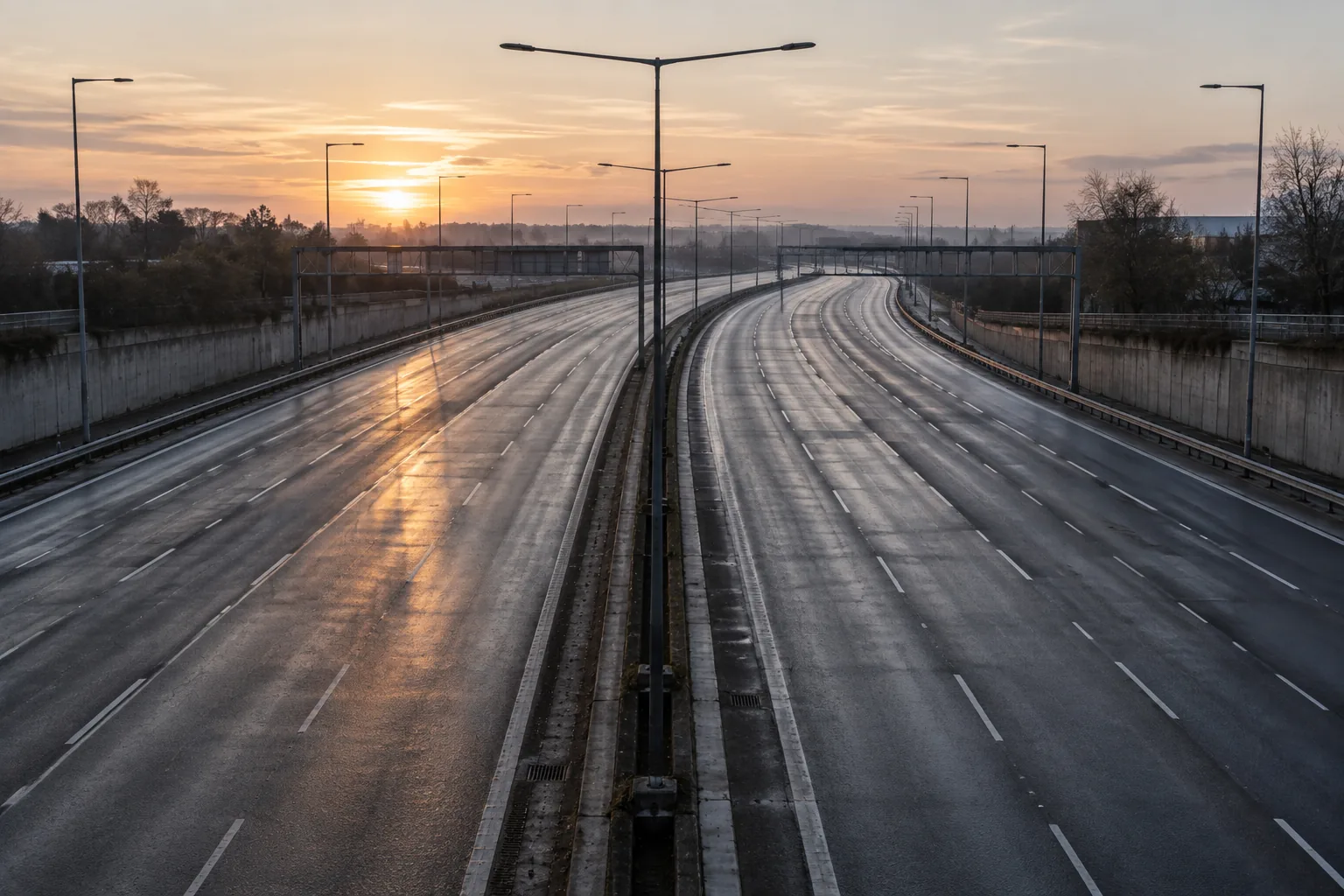
In 2020 the instruction was the same in its mechanics and unrecognizable in everything else. Stay at home. Work from there if you can. The motorways emptied, the trains ran nearly vacant, and the air over a great many cities became briefly and eerily clean.
The reason was a virus, the mood was fear, and the horizon was unknown. Nobody experienced it as a transport policy. People set up laptops on ironing boards and cried in stairwells and learned what their colleagues’ kitchens looked like.
This one is an energy measure. The reason is a war several thousand kilometers away that has made fuel expensive, the mood is inconvenience rather than dread, and the horizon is explicitly temporary. The mechanism is identical. The experience will not be.
What the difference actually is
Three things, and the third is the one that will cause trouble.
The first is that in 2020 the alternative to staying home was danger, and this time the alternative is expense. That changes the moral texture of compliance completely. A person who went into an office in 2020 was taking a risk with other people’s lungs. A person who drives to an office this month is spending their own money. One of those is a public act and the other is not, and people will treat them differently because they are different.
The second is that everything is open. In 2020 there was nowhere to go, which made the house bearable, because the house was not competing with anything. Now the restaurants are full, the schools are running, the cinemas are showing things, and the person at the kitchen table can hear all of it through the window.
The third is that this order applies to government employees and not to everybody else. In 2020 the instruction fell on an entire society at once, and whatever else was miserable about it, it was shared. This one splits the workforce down a line that has nothing to do with the job and everything to do with the employer.
What that split will feel like
Consider two people who live on the same street and leave at the same time.
One works in a ministry. From Wednesday she does not commute, she saves whatever the fuel and the parking were costing her, she gets an hour and a half of her day back, and she will spend some of it at home with people she lives with and some of it working, because that is what happens.
The other works for a private company two streets from the ministry. Nothing has changed for him. He still leaves at the same time, still pays for the same fuel at the same higher price, and now does it on a road that is measurably emptier, which will make the journey slightly faster and considerably more annoying.
That is the ordinary experience of a targeted policy, and it is not an argument against the policy. Governments can instruct their own employees and cannot instruct everyone. It is simply what it will be like on that street.
The thing nobody can say in advance
What I genuinely do not know, and I have looked, is whether this ends when the fuel price does.
The 2020 experience established something that has not gone away: a very large amount of office work can be done from a kitchen table, and the people doing it mostly know that now, and so do their managers. Every return to office argument of the last six years has been conducted against that knowledge.
So a government that sends its civil service home for a fuel reason is not running the experiment for the first time. It is reopening a settled argument under a new heading, in a country where the finding from the last round is available to everybody.
If fuel falls in the autumn and the order lapses, some proportion of those people will have spent six months demonstrating that the commute was optional, and they will be asked to resume it for reasons that will have to be stated out loud rather than assumed. Some managers will state them well. Others will discover they do not have a reason so much as a preference.
And a few thousand people will go back to getting up in the dark and finding the shoes and finding the pass and moving their body across a city to sit at a desk, having had six months of not doing it. Six months is exactly long enough to stop being used to it, and not long enough to have arranged a life around the alternative, which is the worst available length for a thing like this to last.