The authorization is the document that matters. On 18 April the president of Columbia University stated publicly that she had asked the New York Police Department to enter the campus and clear an encampment that students had put up on a lawn the previous day. More than a hundred people were arrested.
A university is private property and the police do not enter it uninvited. Somebody has to ask, in writing, and the asking is an act with a name attached to it.
The date to look back at is April 1968, the last time Columbia did this.
What happened in 1968
Students occupied buildings on the Columbia campus over the university’s involvement in military research and its plan to build a gymnasium in Morningside Park. The occupation ran for about a week.
The administration asked the police to clear the buildings. They did, at night, and the clearance was violent: several hundred arrests and a large number of injuries, including to students who had not been occupying anything.
The immediate objectives of the protest were substantially achieved. The gymnasium was not built. The research affiliation was ended.
What the 1968 clearance turned out to mean
Here is the part that took years to become visible, and it is the reason the precedent is invoked rather than merely remembered.
The clearance did not end the protest. It converted a dispute between students and an administration into a dispute about the administration, and it did so by producing images. A campus that had been arguing about a gymnasium spent the following year arguing about what had been done to the people arguing about a gymnasium.
The university’s president left within a year. The institution spent a decade rebuilding a relationship with its own students and faculty, and it adopted procedures intended to make a repeat require a deliberate decision by a named person rather than an operational reflex.
Which is why the 1968 comparison is not decoration. The procedures that made this month’s authorization a documented, attributable act exist because of what happened in 1968.
There is a second inheritance from 1968 and it is administrative. The clearance produced an inquiry, and the inquiry’s central finding was about how a decision of that kind gets made: quickly, under pressure, by people who had not defined in advance what would trigger it. Universities across the country wrote protocols afterwards, and those protocols are the reason a president in 2024 has to authorize this personally and on the record.
Which means the thing making this month legible is itself a product of the last time. The document exists because of 1968.
What is the same
The structure of the sequence is close to identical, and that is not a coincidence so much as a property of the situation.
A protest occupies space the institution controls. The institution asks it to leave. It does not leave, because leaving would end the protest, which is the point of occupying space rather than marching past it. The institution is then choosing between tolerating an indefinite occupation and removing it by force, and there is no third option that anybody has ever found.
And removal by force generates the images that expand the protest. Encampments appeared on campuses across the country in the days after the Columbia arrests, which is the same mechanism operating on a faster medium.
What is different
Three things, and they cut in different directions.
The speed is different. In 1968 the images traveled by newspaper and network news over days. The Columbia arrests were being watched live, from inside the encampment, by people on other campuses who set up their own within seventy-two hours. The replication cycle has gone from weeks to days.
The legal exposure is different. Universities now operate under federal civil rights obligations that create liability in both directions: for permitting a hostile environment, and for suppressing protected expression. An administration is therefore choosing between two risks rather than between a risk and safety, which narrows its options considerably and is not widely understood by people demanding it act decisively.
And the demand is different in kind. The 1968 demands were about things the university itself controlled: a building, a contract. Divestment demands are also about things a university controls, but the thing controlled is an endowment whose holdings are largely indirect, and a commitment to divest is not a single act that can be performed on a Tuesday.
What a divestment demand requires, in practice
The substance of the dispute deserves more precision than it usually gets, because the operational difficulty is a large part of why these negotiations stall.
A university endowment is not a portfolio of shares somebody can sell on a Tuesday. A large one is mostly held indirectly: in commingled funds, private equity partnerships, hedge funds and index products, where the university is one investor among many and does not direct what the fund holds.
Exiting a commingled position is not selling a stock. It means redeeming from a fund, which may have lock-ups, gates and redemption windows measured in quarters or years, and which sells the university’s whole exposure rather than the part in dispute. Screening future commitments is much easier than unwinding existing ones, and the two are routinely conflated in a demand that sounds like a single decision.
None of that makes divestment impossible, and universities have done it before, over South Africa, over tobacco, over fossil fuels. It does mean that a university negotiator saying this cannot be done by Friday is usually describing a mechanism rather than refusing.
The counterpart is that an institution which has already decided not to do it can hide comfortably inside that complexity, and students have no way of telling the two apart from outside. Which is why these talks tend to founder on disclosure, on what the endowment actually holds, rather than on the divestment itself.
Where it stands this week
The first encampment was cleared and a second went up on an adjacent lawn within days, which is the outcome the 1968 record would have predicted.
Negotiations between the administration and the students ran through the following week. On Monday the president said those talks had ended without agreement and that the university would not divest.
So both parties have now arrived at the position they held before the arrests, minus a week, plus a hundred arrest records and a national wave of replications.
What is on the lawn
The encampment is nylon. Two-person tents of the kind sold for festivals, in greens and oranges and blues, pitched in rows on a rectangle of grass between library buildings, with a folding table at one end and a rota pinned to it.
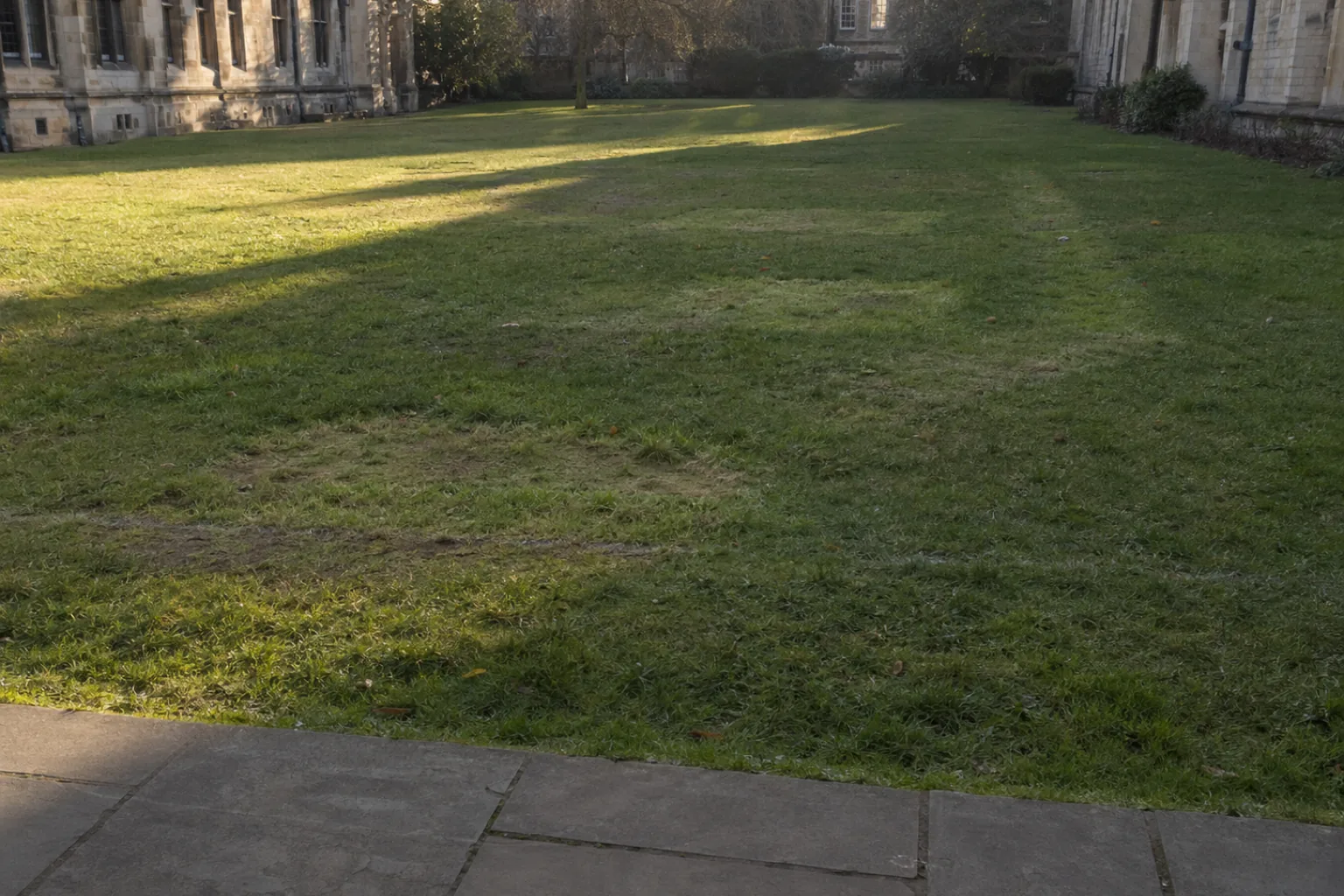
The lawn is the same lawn. The tents are new, the people in them were born thirty years after the last time this happened, and the document authorizing the police to walk across it was signed by a president who will be asked about 1968 in every interview she gives from now on.