The rule is that a company which stops manufacturing a product stops earning from it. That is what manufacturing is: you make the thing, you sell the thing, the money follows the thing.
The exception was announced on Tuesday. BioNTech is winding down its COVID-19 vaccine manufacturing entirely, handing production of Comirnaty to Pfizer, and will continue to take roughly half the revenue from every dose sold.
Understanding why requires understanding what the partnership was, which is not what most people think it was.
What each company actually brought
BioNTech brought the platform. The messenger RNA technology, the lipid nanoparticle formulation that gets the mRNA into a cell intact, and the specific construct encoding the spike protein. That is the intellectual property and it originated in Mainz over years of work on cancer vaccines that had nothing to do with a coronavirus.
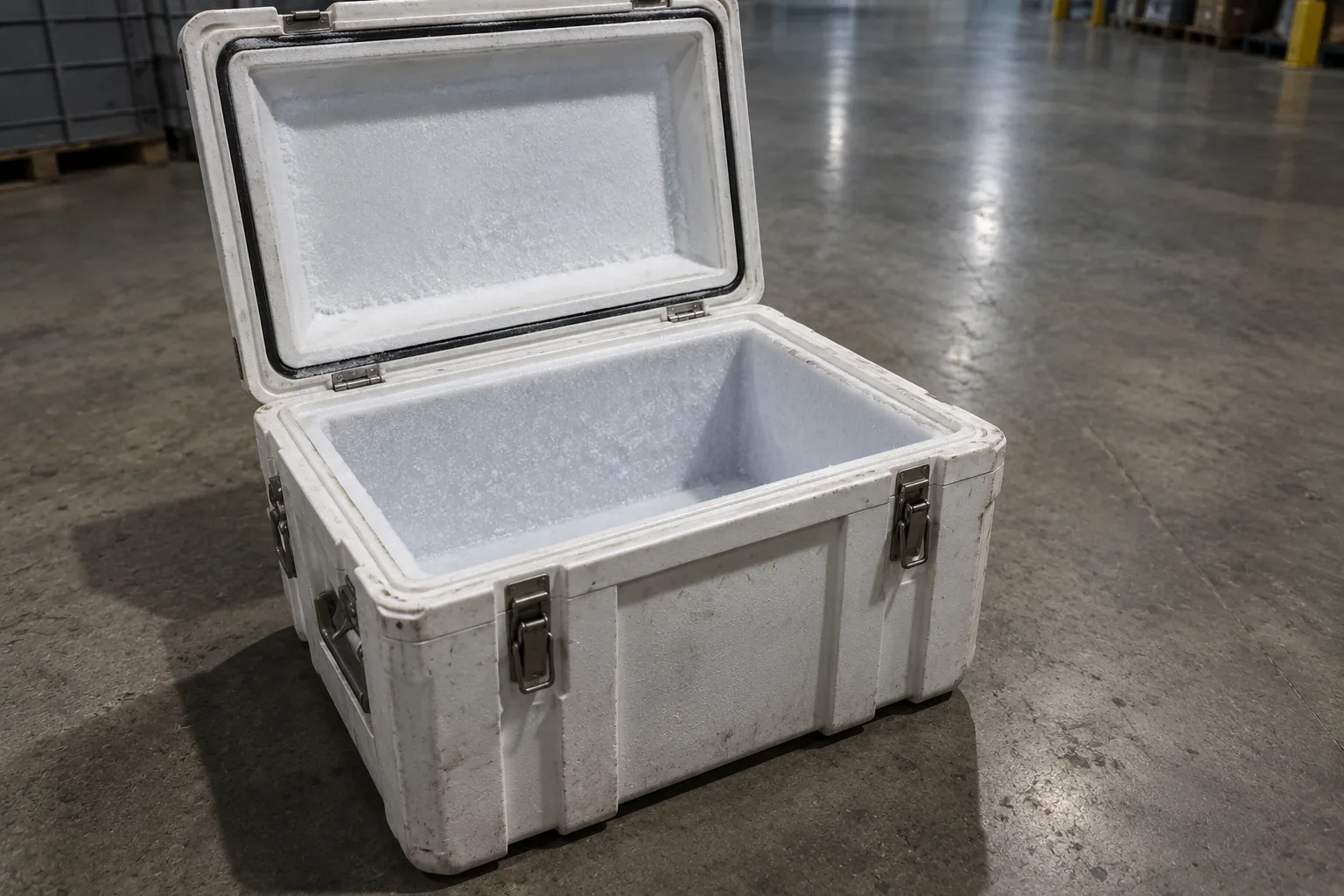
Pfizer brought everything required to turn that into billions of doses in a year: clinical development at scale, regulatory submissions in dozens of jurisdictions simultaneously, manufacturing capacity, and a cold chain distribution network that already existed.
The agreement between them shares revenue, and that share does not depend on who operates the filling lines. It depends on the underlying arrangement about whose product it is.
So manufacturing, for BioNTech, was never the source of the income. It was a cost incurred alongside it, and a company that can shed a cost without shedding the associated revenue will generally do so.
What is being shut
Three German sites, at Idar-Oberstein, Marburg and Tubingen, and the operation in Singapore. Up to 1,860 jobs, which is about 22 percent of a workforce of roughly 8,455. The wind down is expected to complete in the first quarter of next year, and the company is targeting around 500 million euros in recurring annual savings once it is fully implemented, which it does not expect before 2029.
The capital is being redirected to an oncology pipeline, which is where the company started.
Why now
Because demand fell, and the scale of the fall is the whole explanation.
Pfizer’s COVID related products generated something in the order of 56 billion dollars in 2022. By 2023 that figure was around 12 billion. A manufacturing base built to serve the first number is a very expensive thing to keep running against the second.
None of that is a judgment about the vaccine and it should not be reported as one. A pandemic requires a quantity of doses that an endemic disease does not, the transition from one to the other was always going to happen, and a capacity built for the first is stranded by the second by definition. This is the ordinary arithmetic of a market returning to a normal size, and it would have occurred on roughly this timetable whatever anybody thought about the product.
What the arrangement means for the price
One thing worth being clear about, because it is the obvious question and the answer is probably no.
Consolidating manufacturing into one company’s sites does not automatically reduce the cost of a dose, because the saving accrues to the company that closed the plants rather than to the buyer. Whether any of it reaches a health system depends on what the health system can negotiate, and a buyer negotiating with a single manufacturer has less to work with than one negotiating with two.
There is a reasonable counterargument. Running one efficient network rather than two partially idle ones genuinely is cheaper per dose, and in a competitive tender that can show up in the price. Whether it does is an empirical question that will be answered by procurement outcomes over the next two years, and I would not want to predict it.
Why a plant is not a building
The reason this matters more than an ordinary factory closure is worth setting out, because the intuition that you can simply reopen it later is wrong for specific technical reasons.
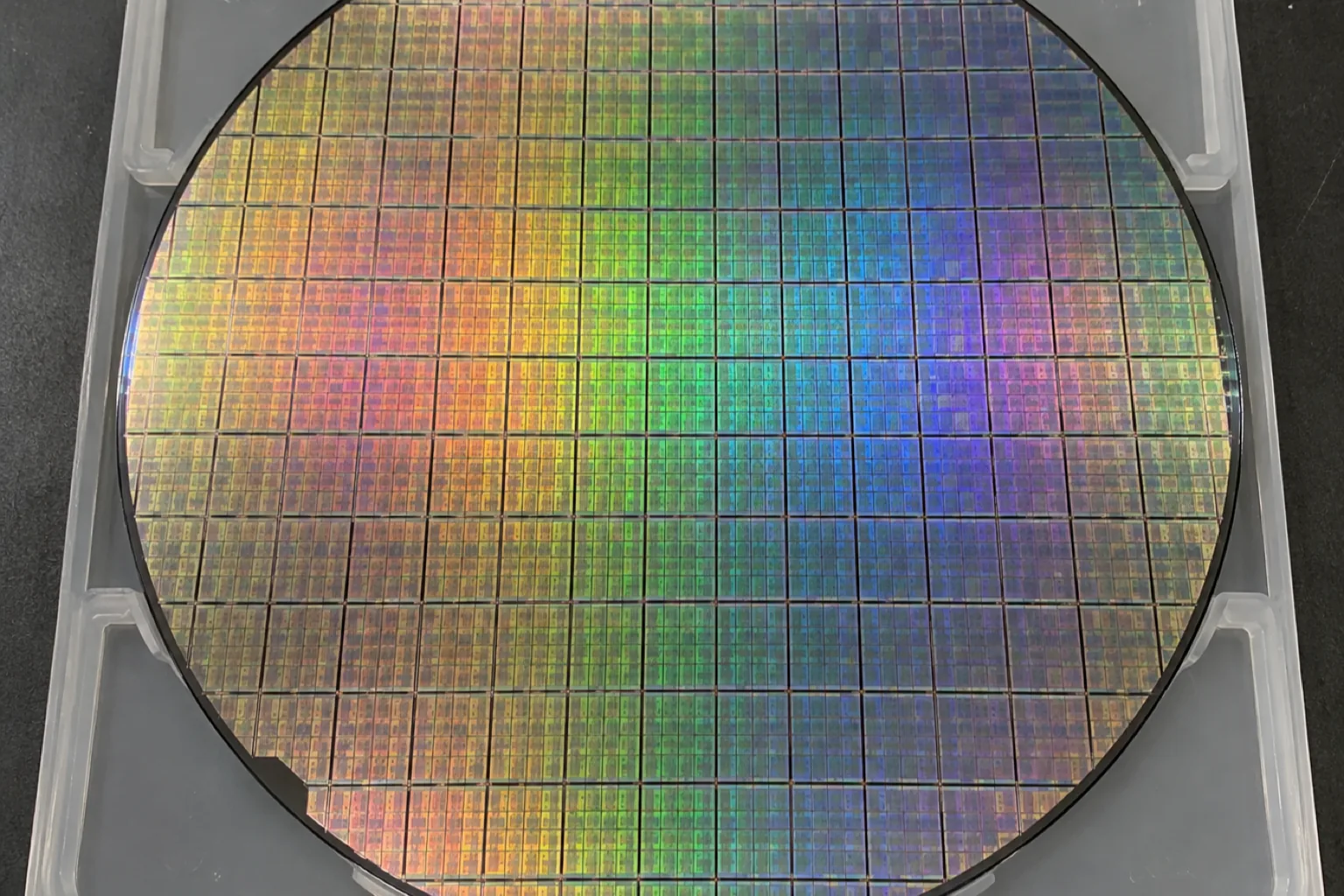
Manufacturing an mRNA vaccine is not one process. It is several, and each has its own failure modes. The messenger RNA is produced enzymatically in a reaction that has to be controlled tightly enough to avoid truncated or double stranded byproducts, both of which cause problems. It is then encapsulated in lipid nanoparticles by mixing two liquid streams under conditions where small changes in flow rate change the size distribution of the particles, and the size distribution determines whether the product works. Then it is filled, inspected and kept cold.
Every one of those steps runs on equipment that has been qualified, using a process that has been validated, in a facility a regulator has inspected and approved for that product. None of that transfers. A line that made something else, or the same thing five years ago, has to be requalified before a single dose can be released.
And the people are the binding constraint rather than the machines. The knowledge that keeps a biological process inside specification is substantially undocumented: it lives in operators and process engineers who know what the reaction looks like when it is drifting and what to do about it. That is built over years on a running line and it cannot be read out of a manual.
The part that does not resolve
What I keep coming back to is not this company or this vaccine. It is the question of who is supposed to hold surge capacity, and the fact that nobody has answered it.
In 2020 the world discovered that it could not manufacture vaccines at the speed it needed them, and then over about eighteen months it built the capacity to do so. That capacity is a physical thing: buildings, filling lines, bioreactors, and most importantly people who know how to run them and how to pass an inspection.
It is now being dismantled, rationally, by companies behaving as companies should, because nobody will pay to keep a factory warm against a pathogen that has not arrived. A plant kept idle costs money every year and produces nothing, and no board can justify that indefinitely to shareholders.
Which means the capacity exists only while there is demand, and demand exists only after the emergency has started. That is precisely the sequencing problem that made 2020 what it was, and the four years since have not produced an institution whose job is to solve it.
There are proposals. Standing contracts that pay a manufacturer a retainer to maintain readiness. Publicly owned facilities. Requirements attached to procurement. Some pilots exist. None of them is at a scale that would matter, and the people who know how to run these lines are being made redundant this quarter and will be working somewhere else by the autumn.
That last part is the piece that does not come back. A building can be reopened. A team that has dispersed has to be rebuilt from the beginning, and rebuilding it is measured in years, which is the one thing an outbreak does not give you.