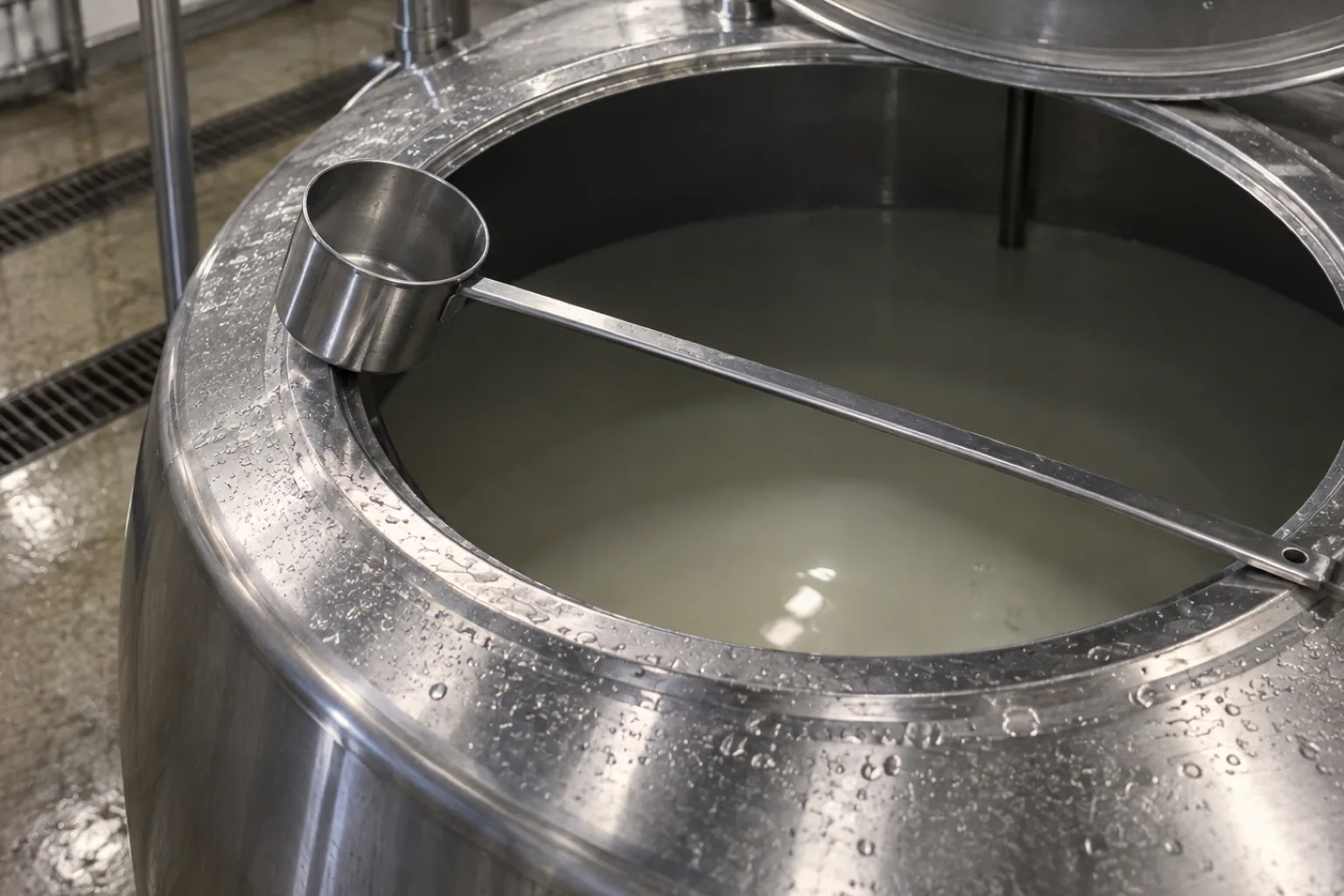
A tanker driver pulls up at a dairy, climbs the ladder, drops a dipper into the bulk tank and draws off a sample before a drop of anything is pumped. He does it at every farm on the route, seals the vials, and they go to a laboratory with the load. This is routine. It has been done for decades, for butterfat content, for antibiotic residues, for quality payment, and nobody involved thinks of it as disease surveillance.
It is currently the best disease surveillance the United States has on this outbreak, and that is a statement about the ledger rather than about the technique.
What is actually happening
Highly pathogenic avian influenza, the H5N1 lineage that has been moving through wild birds and poultry for years, is infecting dairy cattle. That is new. A virus adapted to birds establishing itself in a mammal kept in large numbers, in close contact with people, is the specific thing that virologists have spent two decades watching for.
A dairy worker in Texas tested positive at the start of April, with conjunctivitis as the only symptom, and recovered. That is one human case, with a mild presentation, and it should not be inflated into more than it is.
What matters more is how little anybody knows about the extent of it in the animals, and that is where the accounting begins.
Who pays for a positive test
Start with the farmer, because every incentive in this outbreak runs through that one balance sheet.
A herd that tests positive is a herd with a problem that has costs attached: milk discarded, animals off production, movement restrictions, buyers who ask questions, and in some arrangements a loss of the contract. The animals largely recover, which is the mercy here, but the interruption is real money in a business that runs on thin margins and fixed debt.
A herd that is never tested has none of those costs. The virus is present either way; only the consequences differ.
That is not an accusation of bad faith. It is the structure. Any voluntary testing regime in which a positive result is expensive and a negative result is worth nothing will be undertested, and it will be undertested most where the risk is highest, because the farms with the most animals have the most to lose.
Who pays for the information
Which is why the milk matters. Bulk tank sampling happens for commercial reasons, on every load, whether or not anybody is looking for a virus, and it therefore sidesteps the incentive problem entirely.
Testing retail milk is cruder still and has the same virtue. Pasteurization is expected to inactivate the virus, so finding genetic material in a carton on a shelf is not a food safety finding. It is an epidemiological one: it says the milk that went into that carton came from infected animals, somewhere upstream, in quantities large enough to show.
Sampling of retail milk in April found viral genetic material in a substantial share of it, across multiple states. Read that carefully: it is not evidence that the milk is dangerous. It is evidence that the outbreak in cattle is considerably wider than the count of confirmed herds.
What the federal order changed
At the end of April a federal order took effect requiring lactating dairy cattle to be tested before they are moved between states, and requiring positive results to be reported.
That is the first mandatory element in the whole arrangement and it is narrow by design. It applies to movement rather than to herds, which means it catches the animals that spread the thing furthest and leaves the rest of a herd untested.
Narrow is not the same as ineffective. Interstate movement of lactating cattle is one of the more plausible routes by which this got from one state to many, and closing it is a real intervention. But a rule keyed to movement produces a picture of moving animals rather than a picture of the outbreak.
The column nobody has filled in is people.
Dairy workers are the population in contact with infected animals, and they are testable, and testing them is where the surveillance is thinnest. The reasons are not scientific. A workforce that is substantially immigrant, frequently without paid sick leave, sometimes housed by the employer, has every reason not to present for a test whose positive result means being sent home without pay.
So the same structure that undertests the herds undertests the people, for the same reason and more sharply. The cost of a positive result falls on whoever produces it, and the benefit falls on everybody else.
Why this species jump is the one that was being watched for
A word about why virologists reacted to cattle specifically, because it is not obvious and it is not about the cows.
Influenza viruses are constrained by which receptors they can bind. Avian strains are adapted to receptors abundant in bird guts, human strains to receptors in the human respiratory tract, and the gap between them is most of what has kept H5N1 from becoming a human pathogen despite decades of opportunity.
What makes a mammal host significant is that it is an environment where a bird-adapted virus is under selection pressure to do something else. Every replication cycle in a cow is a chance at a change in that direction. The number of chances is the number of infected animals multiplied by time, which is exactly the quantity nobody currently knows.
What would actually settle it
Two things, both of which are money rather than science.
Indemnity for farmers, so that a positive herd is compensated rather than penalized, which converts testing from a liability into a claim. That is how foot and mouth and poultry influenza programs have been run, and the reason is precisely this incentive problem.
Paid leave and free testing for workers, structured so that a positive result costs the worker nothing. Without it, the human case count is a measure of who happened to visit a clinic.
What is not resolved
Whether this virus is acquiring the properties that would let it move between people is the only question that matters, and it cannot be answered by reasoning. It is answered by sequencing samples, and sequencing requires samples, and samples require somebody to have an incentive to produce one.
The current arrangement produces samples from bulk tanks, because milk is collected for reasons that have nothing to do with any of this. That is a real stroke of luck and it is not a surveillance system. It tells us that cattle are infected in more places than have been reported, and it tells us nothing whatever about the people who milk them.