“It is the public policy of this state to ensure the protection of the rights of the unborn child in all manners and measures lawful and appropriate.” That sentence has been in the Alabama constitution since voters put it there, and it is the sentence the state’s Supreme Court reached for on Friday.
The date to look back at is 6 November 2018.
What was on the ballot, and what it was understood to be
Amendment 2 was approved that day and added the language above to the state’s founding document.
It was presented, campaigned on and reported as a measure about abortion, and specifically as a contingency: a declaration of state policy that would have force if the federal constitutional protection then in place were ever removed. That was a reasonable reading in 2018 and it was the reading nearly everybody had.
What the text says is broader than that reading, and this is the ordinary way constitutional language works. An amendment is not a statute. It does not list the situations it governs. It states a policy, and the situations arrive later, brought by litigants nobody anticipated, in contexts the drafters were not thinking about.
What arrived, five years later
The case that reached the court was not about abortion. It was a wrongful death claim brought by three sets of parents whose frozen embryos, stored at a fertility clinic, were destroyed in an accident.
The court held on Friday that Alabama’s Wrongful Death of a Minor Act applies to those embryos, and that the statute’s coverage of unborn children is not limited by location. An embryo in a freezer is within it.
Be precise about what that does and does not decide. It is a ruling about who may sue under one wrongful death statute. It does not create a criminal offense, it does not regulate fertility medicine, and it does not by its own terms prohibit anything.
Its effect on clinical practice is nonetheless immediate, and the reason is about liability rather than about prohibition.
Why the mechanism of the treatment matters here
In vitro fertilization does not work by producing one embryo. It cannot.
The sequence is ovarian stimulation, retrieval of multiple oocytes in a single procedure, fertilization outside the body, and then several days of culture during which the resulting embryos are observed. A substantial proportion stop developing on their own. Of those that continue, typically one is transferred, occasionally two, and the remainder are cryopreserved for later attempts.
That surplus is not a byproduct of the technique. It is the technique. Retrieval is invasive and expensive, so it is done once and yields many; the alternative is repeating the whole procedure for each attempt, which is worse for the patient in every respect that can be measured.
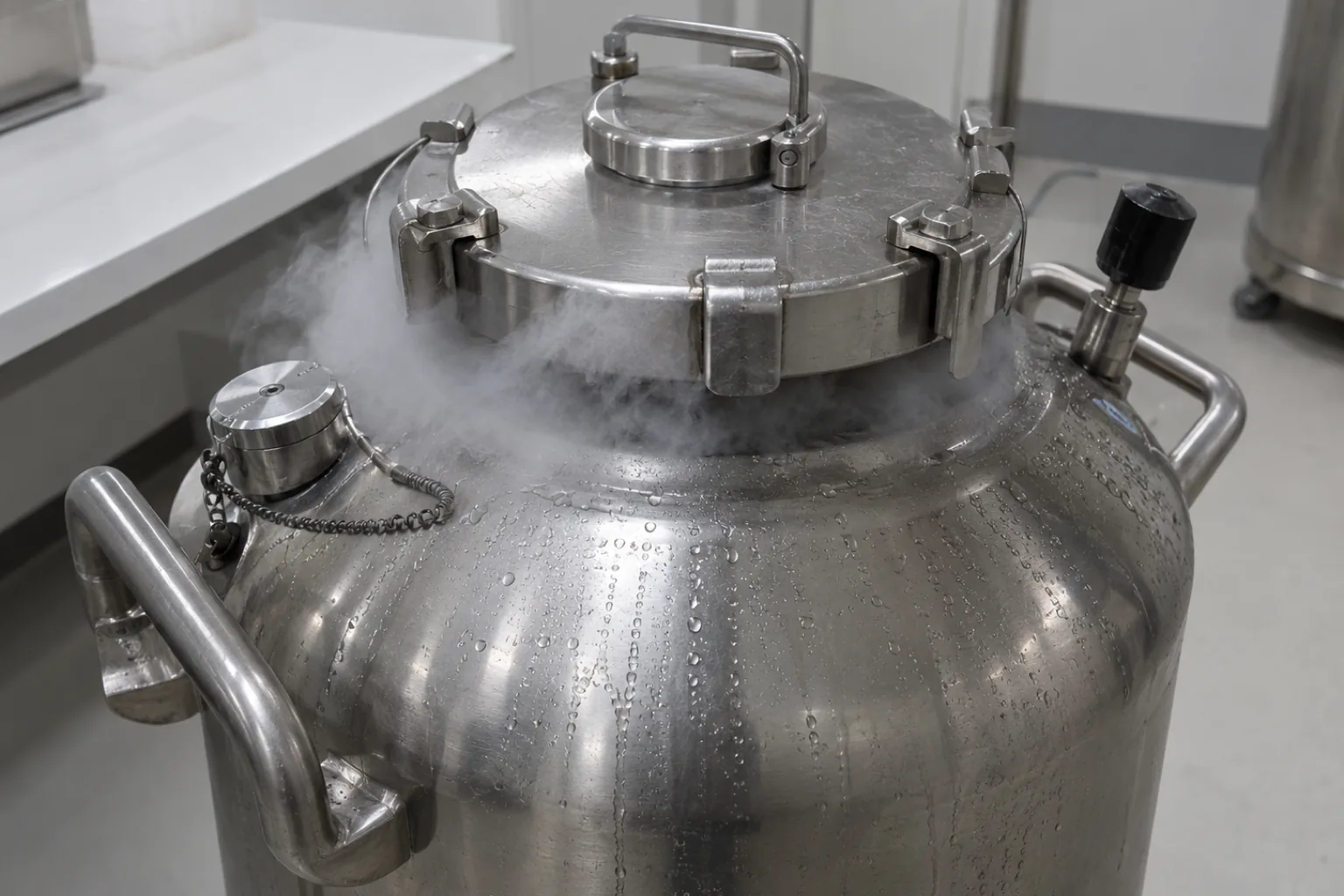
So a clinic holds embryos that will not all be transferred. Some are stored indefinitely, some are eventually discarded at the patient’s direction, and some are lost to freezer failure, handling error or the simple attrition of long storage.
What changes when each one is a child
Under the ruling, every one of those events is potentially a wrongful death, and the Wrongful Death of a Minor Act allows punitive damages.
Consider that from inside a clinic. A freezer malfunction that previously represented a property loss and a devastating conversation with patients now represents an unbounded liability, multiplied by the number of embryos in the tank. Nobody can price that, which means no insurer can write against it, which means the activity cannot be carried on in the ordinary way.
Clinics in the state began pausing treatment this week, including the largest hospital system’s program. That is not a political statement and it should not be read as one. It is what an institution does when it cannot quantify what it is exposed to.
It is worth being careful about the direction of causation. The court did not ban IVF and has been accurate in saying so. What happened is that a liability rule changed, and the treatment stopped where the rule applies. Those are different things, and only the second is observable.
The court was not unanimous about the consequences. A dissent recorded that no court anywhere in the country had reached this conclusion before and predicted that the decision would effectively end the creation of frozen embryos through IVF in the state.
That disagreement is not about the science, which nobody on the court disputed, and it is not really about the constitutional sentence either. It is about whether a judge should weigh the practical consequences of applying a statute to facts its drafters did not have in view. Reasonable judges divide on that question in every jurisdiction, and which way they divide decides cases like this one far more often than the underlying principle does.
What the 2018 vote turned out to mean
This is the part worth sitting with, because it generalizes well beyond Alabama and beyond this subject.
A voter in November 2018 was asked to approve a sentence about the rights of the unborn. Whatever that voter believed they were deciding, they were also deciding, without being told, the terms on which fertility clinics in their state could operate five years later. Nothing dishonest happened. The sentence simply did what constitutional sentences do, which is to wait.
The gap between what a measure is campaigned on and what it eventually reaches is not a failure of the drafters and not a trick played on the voters. It is a structural property of writing general principles into a document that courts must then apply to specific facts. The broader the sentence, the longer the list of things it will eventually govern, and the less any of them will have been discussed.
What is not resolved
The legislature is in session and there is pressure on it to act, and it may. A statute can change a liability rule quickly.
What a statute cannot easily do is change the constitutional sentence underneath it, and that sentence is the thing the court cited. Any legislative fix has to survive a challenge arguing that protecting clinics from liability is inconsistent with the policy the constitution states, which puts the fix in front of the same court.
Meanwhile the tanks are still running. Alabama clinics hold an unknown number of cryopreserved embryos belonging to patients who were midway through treatment on Thursday and are not midway through anything now. Nobody has said what those patients are supposed to do, and there is no legal category for a course of medical treatment that has been suspended by a ruling about damages.