
Twenty points. That is the figure that led most accounts of Tuesday night, and taken alone it describes a solid professional debut by a rookie guard.
It does not hold, and the reason is the other number in the box score. Ten turnovers, which is a record for a WNBA debut, and five of fifteen from the field, in a game the Indiana Fever lost to the Connecticut Sun by twenty-one points.
What follows is an accounting of that evening, because a debut of this kind is best read as a set of costs and who absorbed them.
What was spent on the floor
The final was 92 to 71. Clark was scoreless through the first quarter, missed her first four attempts, and got going midway through the second.
The ten turnovers are the entry worth sitting with, because turnovers are not primarily a measure of carelessness. They are a measure of how hard the defense is working on one player and how much of the offense is running through her.
A player who takes fifteen shots, creates for others, and handles the ball on most possessions is a player with a very large number of opportunities to lose it. The turnover count is partly a cost of volume, and volume is what she was drafted to provide.
What the defense cost
The specific expense on Tuesday was physical and legal.
Professional defenders are permitted contact that college officiating does not allow, they are stronger, and they are permitted to stay attached through screens in ways that make a college guard’s separation disappear. Every rookie pays this bill. A rookie who has arrived as the most discussed player in the sport pays it with the whole league’s best perimeter defender assigned to her and a game plan built around denying her the ball.
That is not an adjustment period in the sense of learning. It is an adjustment in the sense of physics, and it is measured in weeks rather than in games.
What the arena collected
Here is the other side of the page, and it is the reason the evening mattered to anybody beyond two rosters.
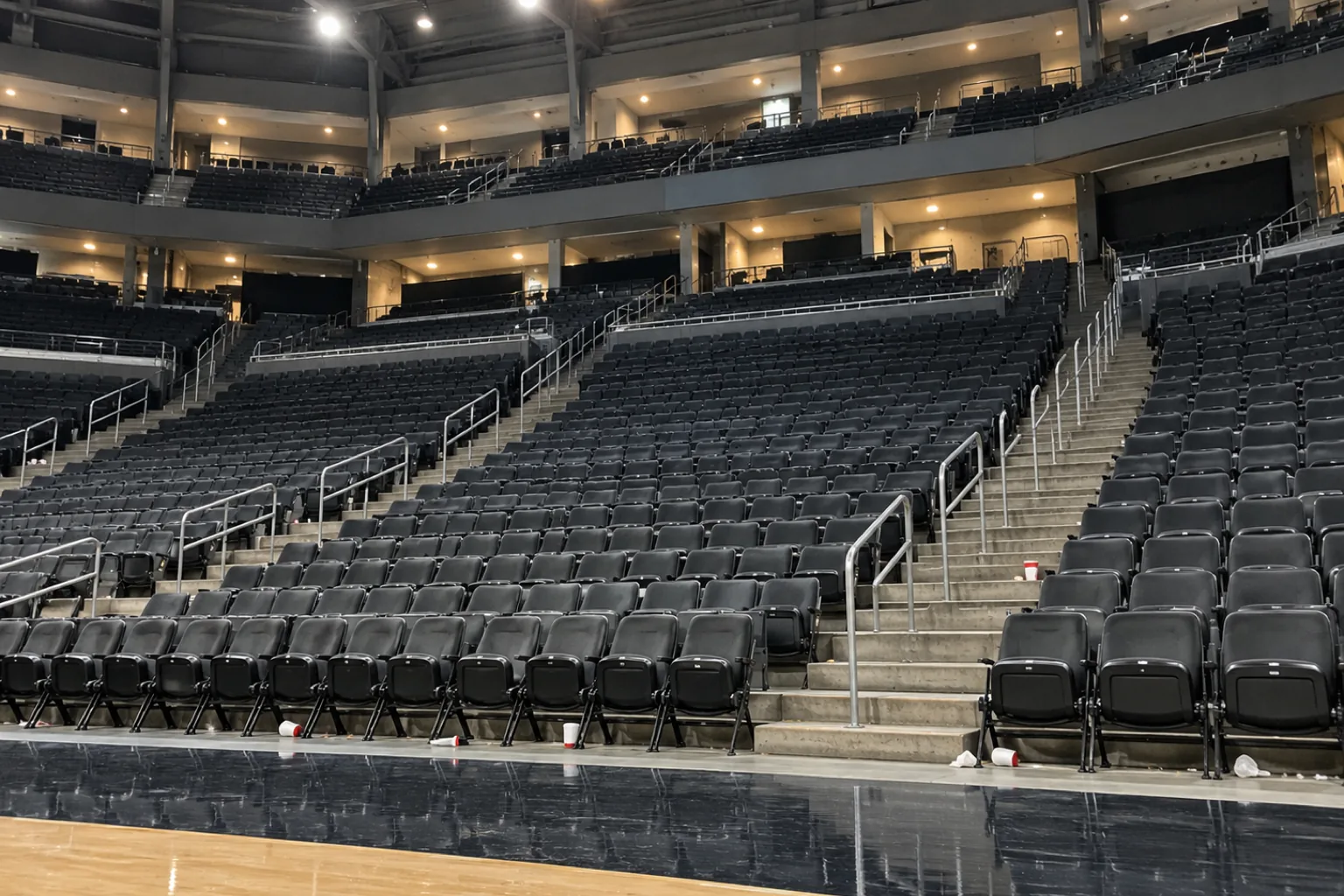
Mohegan Sun Arena sold out, all 8,910 seats, which the Connecticut Sun’s home opener had not done since the franchise’s first season in 2003. Twenty-one years, and the sellout arrived for a visiting rookie’s first professional game.
That is the transaction the league has actually entered into. A player who draws a crowd to a building she does not play in is producing revenue for a franchise that is not paying her, which is the ordinary condition of a touring attraction and an unusual one for a team sport.
What the schedule charges
The entry that will be paid over the season rather than on the night.
A WNBA season is compressed: far fewer games than the men’s league, played over a much shorter calendar, with travel arrangements that are a standing complaint. A rookie arriving from a college season that ran to April, into a professional season starting in May, has had no offseason at all.
Nothing about that is specific to one player, and it lands hardest on the one with the largest workload and the most attention on every possession.
What a debut is normally worth
For context rather than excuse: a rookie guard’s first professional game is close to the least predictive game of a career, and everybody inside the sport knows it.
The sample is one. The opponent is a specific team with a specific scheme. The player has had a handful of training sessions with new teammates, against a defense she has never faced, on a schedule that gave her no rest. Nothing in that produces a reliable measurement of anything.
Which is precisely why a debut is normally watched by a few thousand people and reported in two paragraphs.
What is not on the ledger
The thing that is hardest to price and will decide how the season is judged.
A debut that produces twenty points and ten turnovers will be reported two ways by two audiences, and both readings are available from the same box score. A new audience, arriving from the college season, sees twenty points and a loss. An audience that has followed the league for years sees a rookie guard getting a professional education in public, which is the ordinary experience of every rookie guard and is normally watched by nobody.
The gap between those readings is the actual story of this season, and it is not a basketball story. It is a story about what happens when a sport’s ordinary internal processes are watched by people who have not seen them before.
There is a second audience effect nobody has a mechanism for. A player under this much attention is watched by people with no reference points for what they are seeing, which means an ordinary rookie night gets read as a verdict and an ordinary rookie adjustment gets read as vindication. Neither reading survives the season, and both will be written this week.
What the box score keeps
One line, in the league’s permanent record. Thirty-five minutes, five of fifteen, twenty points, ten turnovers, and an L next to the team’s name.
The record does not have a column for the sold-out building, or for the twenty-one years since it last filled, or for the fact that most of the people in it had never been to a professional women’s basketball game before. Those will be in the league’s revenue figures at the end of the year, under a heading that does not mention her at all.