
“Solar activity and gravitational forces caused the stage’s unplanned return to the Moon.” That is NASA’s own description of what happened on Wednesday, and every word of it is doing work.
Unplanned. Not aimed, not disposed of, not deorbited. An object weighing three point nine tonnes arrived at the lunar surface at about two and a half kilometers per second, near the craters Einstein and Bell, and the agency’s position is that this was caused by the Sun and by gravity rather than by anyone’s decision.
This is an explainer on how that is possible, because the answer is not carelessness and it is not a failure of any particular system. It is a gap in what anybody is responsible for.
What the object was
The stage is cataloged as 2025-010D. The letter matters: A and B in the same designation were the payloads, Firefly Aerospace’s Blue Ghost 1 lander and ispace’s Hakuto-R Mission 2, launched together on a Falcon 9 on 15 January 2025 under NASA’s program for buying rides to the Moon from commercial operators.
Both landers separated and went on to do what they were built to do. D is what was left: the upper stage, its job finished, its tanks nearly empty, in a high orbit that crossed the Moon’s.
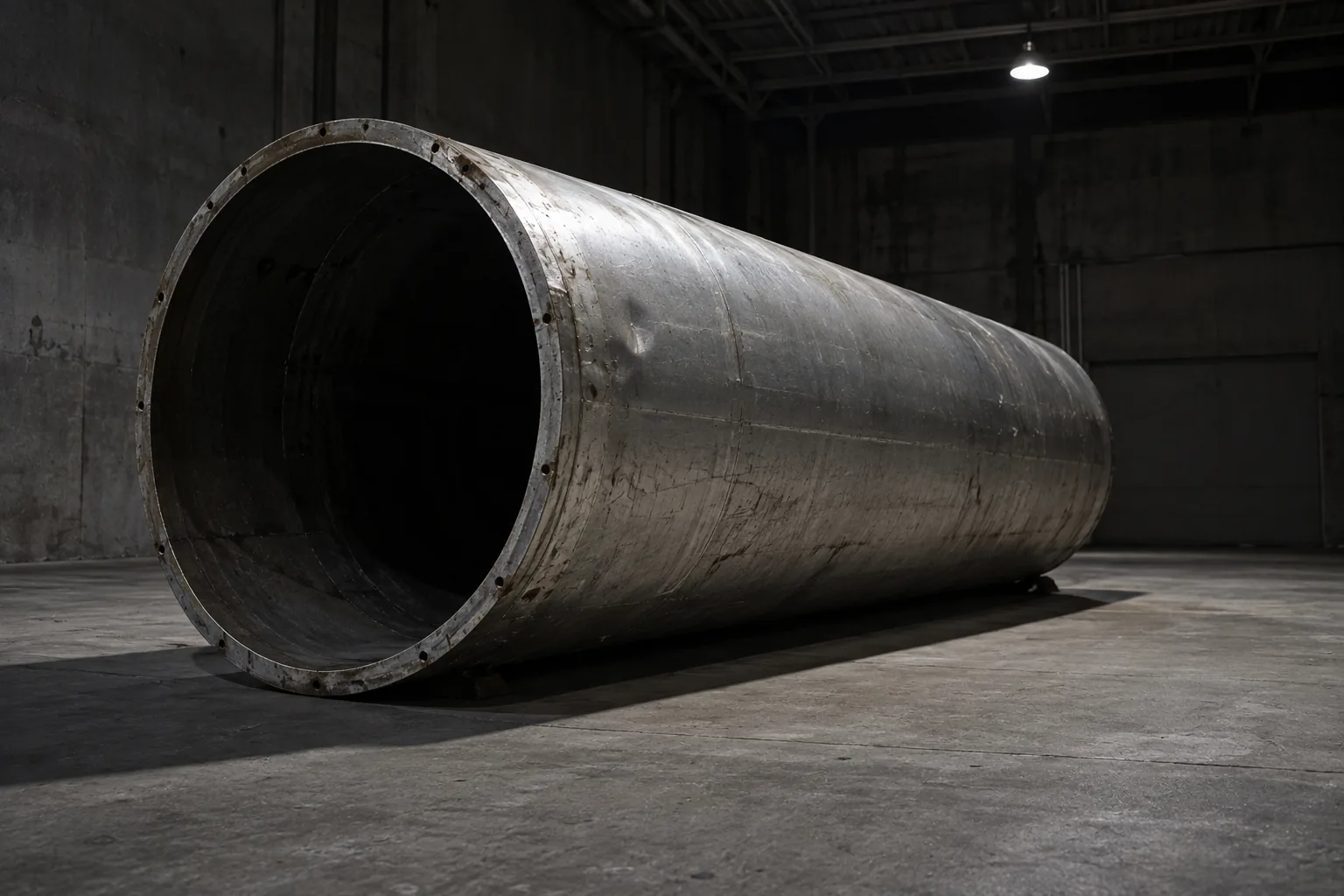
An upper stage is not a spacecraft in any useful sense once its burn is done. It has no meaningful propellant, no guidance authority, and in most cases no active transmitter. It is a large empty aluminum tube with an engine bell on it, moving fast.
Why nobody knew where it would go
Here is the part that is genuinely interesting, and it is a mechanics problem rather than a policy one.
An object in low Earth orbit has a predictable future. Atmospheric drag dominates, drag is modellable, and the answer to where it will be is a shrinking cone that eventually terminates in reentry. Tracking networks handle thousands of such objects routinely.
An object in a high, Moon crossing orbit has none of that. There is no atmosphere to provide drag. Instead its path is set by the combined pull of the Earth and the Moon, which is a three body problem, and three body trajectories are chaotic in the technical sense: tiny differences in starting conditions grow exponentially into completely different outcomes.
On top of that sits solar radiation pressure. Sunlight exerts a real force on a large, light, empty tank, and that force varies with the object’s orientation, which for an uncontrolled body tumbles unpredictably. It also varies with solar activity, which is why the agency’s sentence begins where it does.
The practical result is that a prediction of where such an object will be in eighteen months is not a small error bar. It is a different question with a different answer depending on inputs nobody measures precisely, and the people who do track these things are working from optical observations taken when somebody happens to point a telescope at them.
Whose job it was
So who should have prevented this. The honest answer is that the question does not have a clean owner, and the reasons are structural.
There are three standard ways to dispose of an upper stage after a lunar delivery. Send it into the Sun’s orbit, away from the Earth Moon system entirely. Put it deliberately into the Moon, at a chosen place and time. Or bring it back into the atmosphere to burn up.
All three cost propellant, and propellant is mass, and mass on the launch is payload that could have been sold. A disposal burn is therefore a line item that reduces the commercial capacity of the vehicle, and it is not free to anybody.
NASA’s own note observes that putting a stage into the lunar surface deliberately is, in its words, “a technically accepted and safe method”. Several missions have done exactly that, for scientific reasons as well as tidiness: a known impact at a known time can be observed by instruments that are waiting for it, which turns waste disposal into an experiment.
What happened here is the same physical event without any of that. The stage hit the Moon, which is an accepted disposal outcome, but at a place and time nobody chose, which meant the useful version of it very nearly did not happen.
What it leaves behind
The impact is expected to have produced a crater roughly sixty feet across and a dozen feet deep. On a body with no atmosphere and no weather, that crater is permanent on any timescale a person would use the word for.
It joins a growing inventory. The mass of human hardware on the lunar surface is now counted in the low hundreds of tonnes: descent stages, crashed landers, deliberately impacted stages, retroreflectors, rovers, and the debris fields around all of it. Almost none of it is going anywhere.
That is not yet a problem in any operational sense. The Moon is large, the hardware is scattered, and nothing on the surface interferes with anything else. It becomes a problem at the point where the surface has enough activity on it that an unpredicted arrival at two and a half kilometers per second is a risk to something that matters, and the current rate of lunar missions is heading that way rather than away from it.
The thing to fix, which is small
The useful conclusion is not that anybody behaved badly. It is that the accounting is incomplete in a specific and fixable way.
A launch contract prices the delivery of a payload to an orbit. It does not price what happens to the hardware afterwards, because nobody is billed for that, which means the cheapest option for every operator is to leave the stage where the mission ends and hope the mechanics are kind. When the mechanics are chaotic, hoping is the entire plan.
Requiring a disposal plan as a condition of a launch would cost real money, and it would be paid by whoever is buying the ride, which for the Moon is frequently a public agency. That is a decision somebody has to make explicitly, in a document, with a number attached.
Until then the record will keep producing sentences like the one NASA published this week. Near Einstein crater the surface now carries a shallow bowl of fresh regolith about sixty feet wide, thrown up in a ring that will never blow away, at the end of a three and a half tonne aluminum tube’s eighteen month fall. Nobody put it there, and everybody’s paperwork is in order.