Shipping chokepoints obey a rule that is easy to state and constantly forgotten: they are expensive rather than absolute. Close one and the cargo still arrives, later and dearer, because there is another way round and a ship is a thing that can take it.
The Strait of Hormuz is the exception, and the difference between it and the last chokepoint the world worried about is worth setting out precisely, because a great deal of the commentary this week has been applying lessons from the wrong one.
Maersk suspended all transits on Sunday. QatarEnergy halted production at Ras Laffan on Monday after a drone attack.
The chokepoint everyone learned on
For most people the reference case is the Red Sea. When attacks on shipping made the Bab el-Mandeb strait unsafe, the great majority of container traffic between Asia and Europe stopped using it and went around the Cape of Good Hope instead.
That was genuinely disruptive. It added something like ten to fourteen days to a voyage, burned a great deal more fuel, tied up vessels that were then not available for the next sailing, and pushed freight rates up sharply. Schedules built around a canal transit had to be rebuilt.
But note what it was: a detour. Every ship that wanted to make the journey could still make it. The goods were late and the shipping was expensive and the cargo arrived. The problem had a price, and once the market had paid the price the problem was contained.
Why Hormuz is a different kind of object
There is no Cape of Good Hope for the Gulf, and the reason is geography rather than politics.
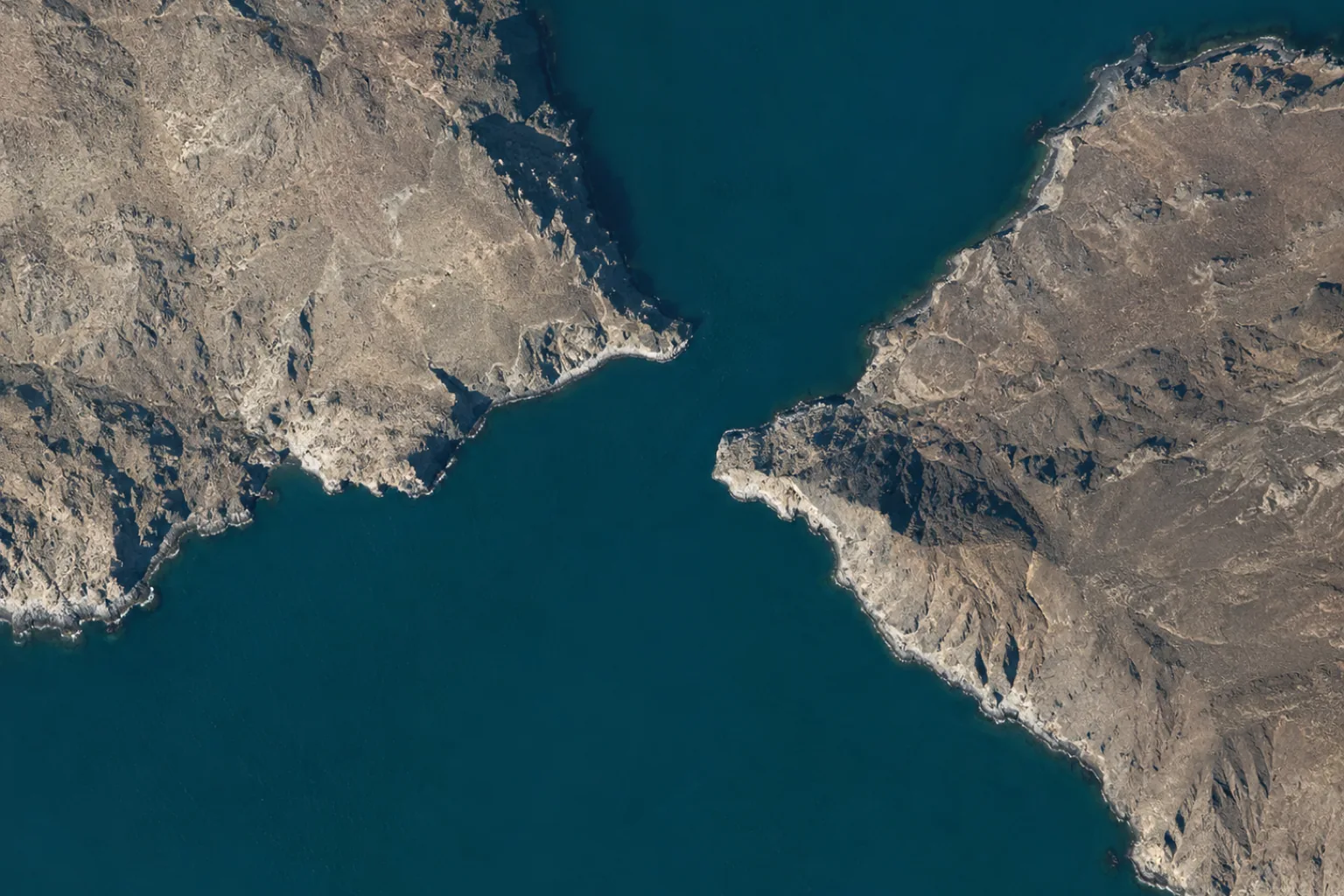
The Red Sea is a corridor. It has an opening at each end, and a ship declining to use it can go the long way around a continent. The Persian Gulf is a basin with one mouth. Oil loaded at Ras Tanura or Kharg Island or Basra has exactly one sea route to anywhere, and that route is twenty one miles wide at its narrowest.
Around twenty million barrels of crude and products a day moved through it in 2025, which is roughly a quarter of all seaborne oil trade and about a fifth of everything the world consumes. Most of it goes east: the large majority to Asia, with China, India, Japan and South Korea taking the bulk.
A ship cannot go around that. The only alternatives are pipelines that carry crude overland to a coast outside the Gulf, and there are two that matter. Saudi Arabia’s East-West line runs to Yanbu on the Red Sea. The UAE has a line to Fujairah, outside the strait, rated around 1.8 million barrels a day.
Add the realistic available capacity of both and analysts put the total somewhere between three and a half and five and a half million barrels a day. Against twenty. So even with every bypass running flat out, something like three quarters of the normal flow has no route at all.
How a strait actually closes
One correction to the language everyone is using, including me above. Nobody has closed the strait. There is no barrier, no mined channel, no declared blockade. The water is open and a ship that sails into it will in all likelihood come out the other side.
What has happened is that it has become uninsurable, or close to it, and for commercial shipping those are the same thing.
Every laden tanker carries hull and machinery cover, protection and indemnity cover, and a separate war risk policy for voyages into designated areas. War risk is priced as a percentage of the value of the hull, per voyage, and it is repriced constantly. When underwriters judge the risk to have changed, the premium moves within hours, and it can move by an order of magnitude.
At some level of premium the voyage stops making money. Above that, no charterer will fix the vessel and no owner will send it, and the strait is shut without anyone having done anything to the water. That is what a suspension of transits by a major carrier is: not a safety announcement, a commercial one.
Which matters for how this ends, because it means the strait reopens the same way. Not when the shooting stops, but when underwriters are persuaded the risk has fallen, and underwriters move later than diplomats and require more than an announcement. Expect the physical situation to improve some distance before the shipping does.
What the comparison actually teaches
Three things follow, and they are the practical content of the difference.
The first is that the Red Sea disruption was absorbed by paying more for shipping, and this one cannot be, because the constraint is not vessel availability or transit time. You cannot charter your way out of a closed basin. The adjustment has to happen in the commodity price instead, and it happens fast, because the physical shortfall is immediate.
The second concerns liquefied natural gas, which is the part that gets least attention and may matter most. Qatar is among the largest LNG exporters in the world and every cargo leaves through the strait. Crude has some substitutes: other producers can lift more, reserves can be released, and a barrel from one place is broadly like a barrel from another. LNG does not work like that. The supply is contracted years ahead, the ships are purpose built and scarce, and the receiving terminals are matched to specific arrangements. A missing cargo cannot simply be replaced by somebody else’s cargo next week.
The third is about who feels it. Because most of the flow goes east, the direct physical exposure is Asian rather than European or American. But oil is priced globally, so a barrel unavailable to a refinery in Japan raises the price of a barrel in Texas within a day. The physical shortage and the financial pain land in different places, and that gap is where most of the political confusion about who should do what comes from.
The thing itself
Look at the object at the center of this and it is unimpressive.
The shipping lanes through the strait are two miles wide in each direction, with a two mile buffer between them, running between Omani territorial waters and Iranian ones. A large tanker takes a couple of hours to pass through. On an ordinary day something like a hundred ships do it, in an orderly queue, monitored and uneventful, and have done every day for decades without most people who depend on it having heard of it.
It is a strip of water narrower than many rivers are long, and the whole arrangement rests on it.