Crude closed above $100 a barrel this week, and it did so after the announcement rather than before it.
On Wednesday the International Energy Agency approved a coordinated release of 400 million barrels from the strategic reserves of more than thirty countries, of which the United States is contributing 172 million. That is among the largest coordinated interventions the agency has ever organized. The price went up anyway.
This is a ledger of that intervention: what it consists of, what it can and cannot do, and what it costs to use.
What a strategic reserve is for
Worth establishing, because the reserve is routinely discussed as a price control tool and it was not built to be one.
The agency was created after the 1973 embargo, and the central obligation of membership is that a country holds emergency oil stocks equivalent to ninety days of its net imports. The purpose is physical: if supply is interrupted, members can put oil into the market from storage while the interruption is resolved.
The distinction between a supply instrument and a price instrument is not pedantry. A reserve can replace missing barrels. It cannot replace missing barrels indefinitely, and it has no effect at all on the reason they are missing.
The arithmetic that reframes the number
Four hundred million barrels is an enormous quantity in isolation and a much smaller one against the flow it is meant to offset.
Roughly twenty million barrels a day normally transit the Strait of Hormuz. Divide four hundred million by twenty million and the release covers twenty days of that flow. Not twenty days of world consumption, which would be considerably less, and not twenty days of shortfall, which depends on how much is still getting out and is currently unknowable. Twenty days of the total volume that the disruption puts at risk.
That is the whole size of the instrument, and it explains the price response better than any account of market sentiment. Traders can do this division. A release that covers a known quantity of days answers a disruption of known length, and nobody knows the length.
What it costs
The fiscal cost is not the interesting one, and is probably negative. Reserve barrels were bought at earlier prices, often much lower ones. Selling inventory acquired at $70 into a market above $100 is not a loss to the public balance sheet. Governments do not release reserves reluctantly because of the accounting.
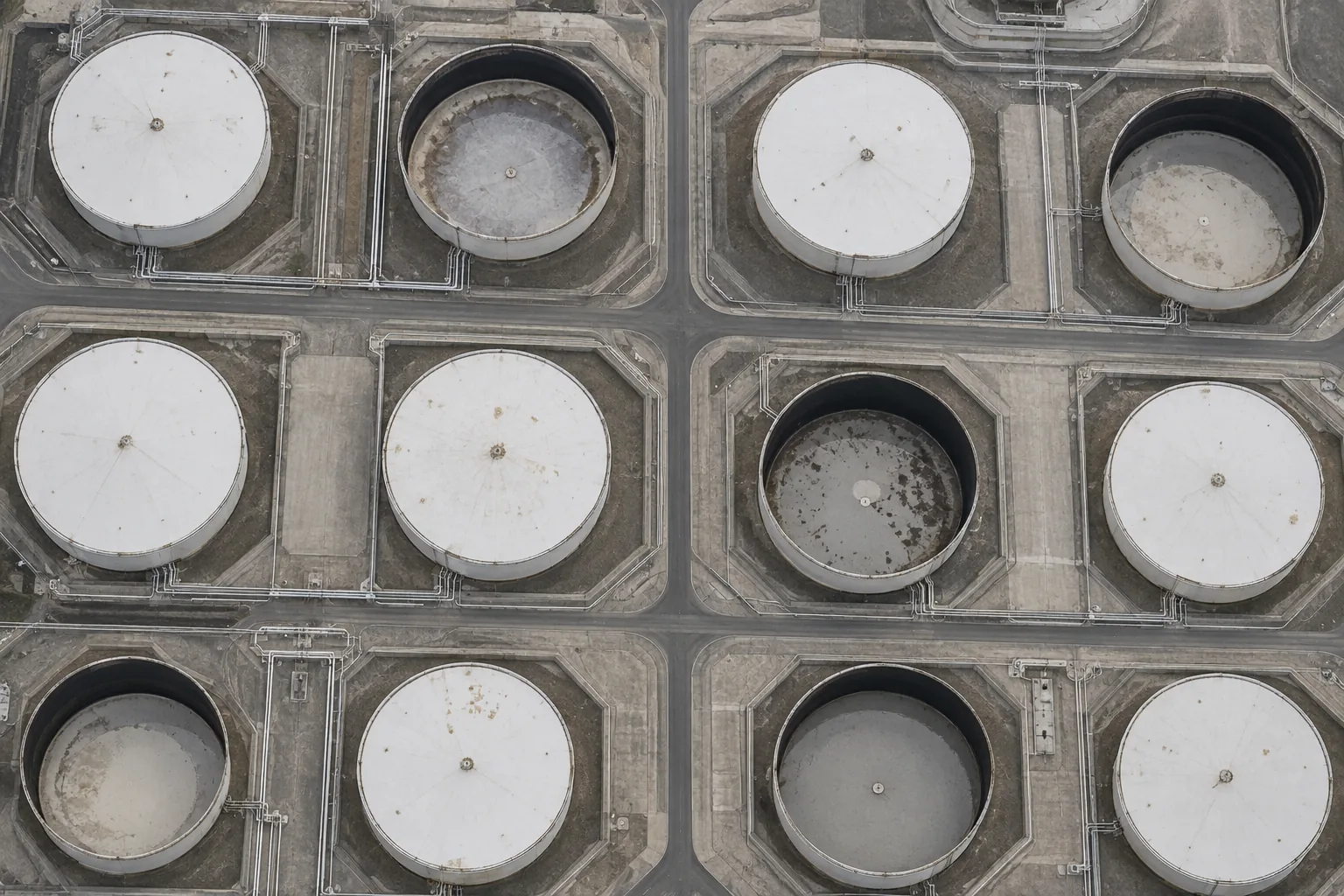
The real cost is optionality. A reserve is an option to put oil into a market at a moment of your choosing, and it can be exercised once per barrel. Every barrel released now is unavailable for the next disruption, and refilling is neither quick nor cheap: you are buying in a market you have just told everyone is short.
There is a logistical cost that gets ignored. Reserve crude is a specific set of grades in specific caverns with specific pipeline connections. A refinery configured for one kind of crude cannot simply run another. So a headline release number overstates the effective relief, because some of those barrels do not suit the refineries able to receive them, and the mismatch is invisible in the announcement.
How this compares with the last time
Coordinated releases are rare and the list is short enough to hold in your head: the Gulf War in 1991, the hurricane damage to American Gulf coast production in 2005, the loss of Libyan supply in 2011, and the invasion of Ukraine in 2022.
The 2022 episode is the useful comparison because it is recent and because it was the largest single national drawdown ever undertaken, at 180 million American barrels released over six months, alongside a separate coordinated agency release.
Two differences stand out. That release was spread across half a year, which is a very different instrument from a rapid injection: it was managing a prolonged adjustment rather than plugging an acute hole. And it was answering a disruption to a producer, where the oil existed and the question was who would buy it and at what price. This one is answering a disruption to a route, where the oil exists, the buyers exist, and the two cannot reach each other.
A reserve is well suited to the first kind of problem and poorly suited to the second, because it substitutes for missing supply and the supply here is not missing. It is stuck.
Who collects
Refiners who take the released barrels, at whatever the sale mechanism yields, which in a rising market is generally favorable to the buyer relative to the alternative of not being able to buy at all.
Consumers collect a partial and delayed price effect. Partial, because the release offsets some of the shortfall rather than all of it. Delayed, because crude has to be moved, refined and distributed, and the pump price is responding to the crude price of a fortnight ago.
And exporters outside the affected region collect the largest transfer of all, which nobody is announcing. A producer whose barrels are not going through Hormuz sells the same volume as last month at a price set by a shortage it is not experiencing. That is where most of the money moves in an episode like this, and it does not appear in any intervention.
Why the price rose anyway
Three reasons, and only the first is about the size of the release.
The release is finite and the disruption is not yet bounded, so the market prices the period after the reserve is exhausted, which is a period with no announced answer.
A coordinated release is also information. Thirty governments agreeing to act together is a statement that they consider the situation serious, and markets read the statement as well as the barrels. An intervention of this scale can confirm a fear at the same time as it addresses it.
And the reserve does nothing about the specific commodity in the most trouble. Strategic reserves hold crude and products. They do not hold liquefied natural gas, because it cannot be stored that way at that scale. There is no strategic reserve for the thing Qatar exports.
The part that does not resolve
What the reserve buys is time, and the only question that matters is what the time is being bought for.
In the disruptions this instrument was designed for, the answer was clear: the interruption had a foreseeable end, and the reserve covered the gap until supply resumed. That is a bridge, and a bridge is worth building when you can see the far bank.
Nobody can currently see it. The strait reopens when shipping is insurable, insurance follows the fighting, and the fighting has no announced terms. So the twenty days are not obviously a bridge to anything, and if they are spent before the disruption ends, the market will be in the same place with the instrument used up.
That is an uncomfortable thing to say about a decision that was almost certainly correct. Releasing was right, and a government that held the reserve back to preserve its options while prices climbed would be making an argument nobody could sustain in public.
So the correct decision has been taken with the only instrument available, against an emergency the instrument was not designed for, and there is nothing else in the cupboard to reach for once it is empty.