
Etsy paid $1.625 billion for Depop in 2021. Last week it agreed to sell it to eBay for about $1.2 billion in cash. That is roughly $425 million less, a little over a quarter of the purchase price, gone in five years.
The obvious reading is that the acquisition went badly. It did not, and the numbers attached to the announcement say so plainly, which makes this a useful object to look at closely: an asset that grew, sold at a loss, by a seller nobody is accusing of distress.
What the thing actually is
Depop is a marketplace for secondhand clothes, run through a phone. A seller photographs a garment, lists it, and posts it when it sells. There is no warehouse, no inventory, no buying team. The company takes a cut.
At the end of 2025 it had around seven million active buyers and more than three million active sellers, and moved roughly a billion dollars of goods across the year, with United States growth close to 60 percent year on year.
Note which of those numbers is unusual. Three million sellers against seven million buyers is a ratio you almost never see on a marketplace. On most platforms sellers are a small professional minority serving a large passive audience. Here, close to half the people on the service are on both sides of it, listing the jacket they are bored of to fund the jacket they want.
That is the asset. It is not a website, and it is not the brand. It is a self restocking supply of inventory that costs the operator nothing to acquire, held in three million bedrooms, photographed for free.
What eBay is buying
Roughly nine in ten of those buyers are under thirty four.
That sentence is the transaction. eBay is a thirty year old company with a well documented demographic problem: a capable marketplace, enormous catalog, and a user base that skews older every year because the people who joined it in 2004 are still there and their children are not. Acquiring younger users organically is the single hardest thing an incumbent marketplace can attempt, and the cost of trying is measured in marketing spend that mostly does not stick.
Run the arithmetic the way a buyer would. About $1.2 billion for seven million active buyers is roughly $170 a buyer, for buyers who are already transacting, in the demographic you cannot otherwise reach, on a platform they chose. Against a customer acquisition cost for a comparable user in a comparable category, that is not obviously expensive. It may be cheap.
It is also about 1.2 times the gross value of goods crossing the platform in a year, which for a marketplace with no inventory risk is a defensible multiple rather than an exuberant one.
So why is the price lower than 2021
Because the price in 2021 was not about Depop either.
In 2021, money was free in a way that is hard to remember accurately. Interest rates were on the floor, e commerce had been pulled forward by two years of shut shops, and the market was paying for growth on the assumption that the pull forward was permanent. Every marketplace, every subscription business, every platform with a good cohort chart was valued on a multiple that embedded those two conditions.
Both then reversed. Rates rose, which raises the discount applied to earnings that arrive in the future and therefore compresses the value of anything whose worth is mostly ahead of it. And the shopping surge partly unwound as physical retail reopened. The de rating that followed was general. It was applied to businesses that were growing and businesses that were shrinking, more or less indiscriminately, because what had changed was the price of money rather than the quality of the assets.
So a company can grow its way through five years, add users, add volume, expand in its most important market at sixty percent a year, and still be worth less in dollars than it was when it was bought, because the multiplier on the front of the equation moved further than the business inside it did.
Anyone reading the headline number as a verdict on the operating performance has confused a change in the discount rate with a change in the company. That is the most common error in the reporting of acquisitions, and it will be made about a great many 2021 vintage deals over the next two years, because a lot of them are going to trade hands at numbers like this one.
The tailwind nobody put in the press release
There is a reason to want this asset now that has nothing to do with demographics, and it is the most straightforwardly commercial argument in the whole deal.
Secondhand goods are already in the country. A jacket resold from a bedroom in Ohio crossed the border once, years ago, at whatever rate applied then. It is not imported when it changes hands, it is not landed, and no duty attaches to the transaction.
That has always been true and it has not always mattered. It matters in a year when the effective tariff rate on imports is at a level not seen in generations and the price of a new garment on a shelf carries that rate inside it. Every increase in the cost of the new thing improves the relative position of the used one, automatically, without the resale platform doing anything at all.
So a buyer looking at this in February 2026 is looking at a business with a structural advantage that widens as trade policy tightens, and narrows again if it loosens. That is not a reason the deal happened, and it is a reason the price was not lower.
What it means if you are running one of these
Two things, neither comfortable.
The first is that a purchase price is a fact about the month it was agreed, and it follows the business around for years afterwards as though it were a fact about the business. Etsy will be described as having lost money on Depop in every account of this deal, and the description will be accurate and will explain nothing.
The second is more practical. If your business was acquired or funded at a 2021 valuation and has performed well since, you may still be under water on paper, and the instinct to prove otherwise by chasing growth at any cost is the wrong response to an arithmetic problem you did not cause and cannot fix from the inside.
Three million bedrooms
The deal is expected to close in the second quarter, and Depop is to keep its name, its platform and, in the language of the announcement, its culture.
Which is the only part of this that cannot be bought with the $1.2 billion, and the only part that does not appear anywhere on the balance sheet.
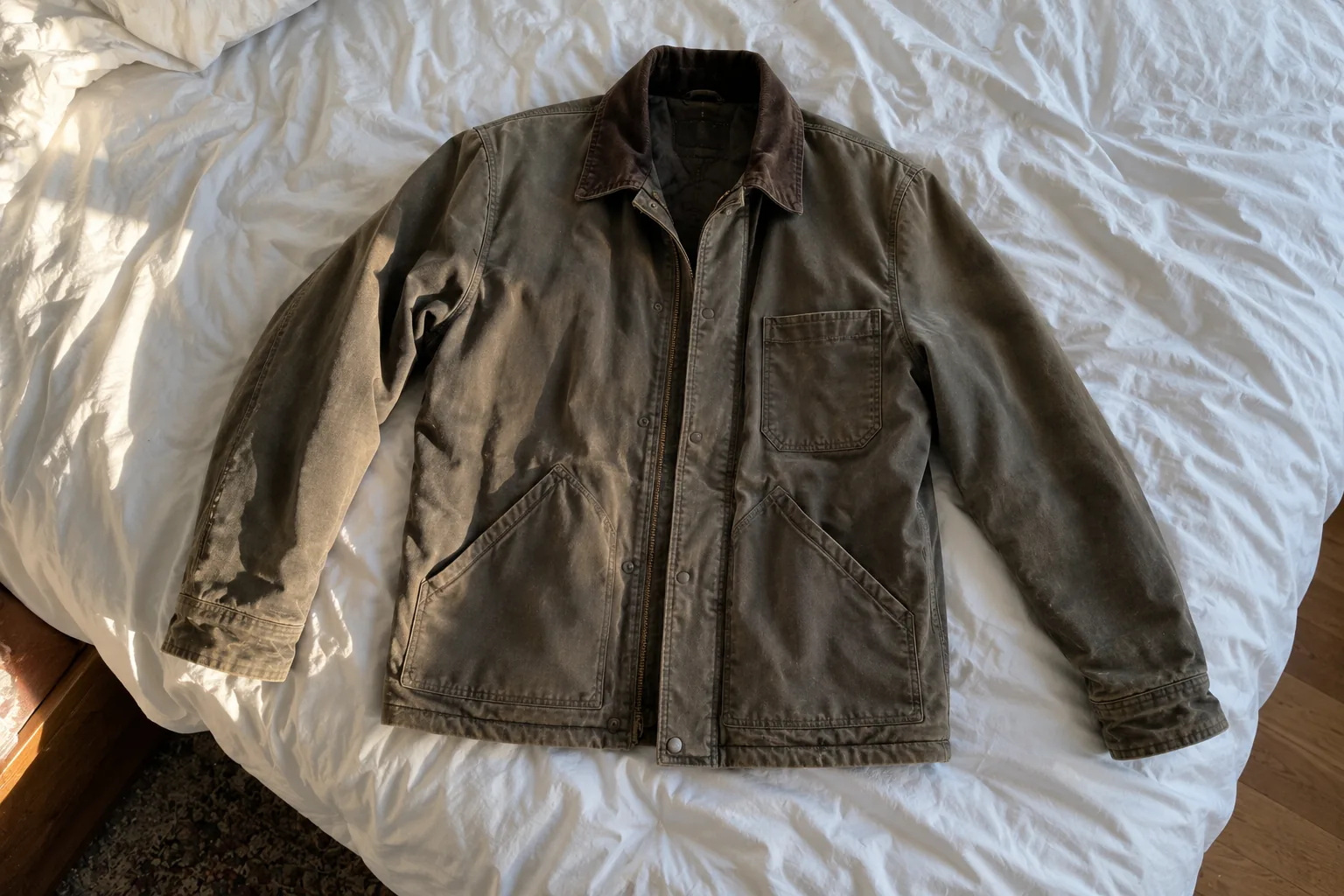
What is being acquired, in the end, is a coat laid out on a duvet in whatever light the bedroom had, photographed from above on a phone with the corner of the bed still in shot, listed between two other things on a Sunday evening, and posted the next morning in a reused mailing bag with the old label peeled off and the seam taped over twice.