A small black notebook, pocket sized, filled in by hand. Jacques Goudstikker had it in his pocket when he left the Netherlands in May 1940, ahead of the German advance, with his wife and their infant son. In it, in his own hand, was a list of about fourteen hundred works of art: what he owned, what he had, where it had come from. He was one of the most significant dealers in Europe and the notebook was the inventory of a business that was about to be taken from him.
He never used it. He died on the ship, days out, falling into an open hold in the dark. The notebook stayed with the family, and everything it listed stayed in the Netherlands, and most of it was sold within months to Hermann Göring and to a German dealer at prices nobody negotiated.
The second record
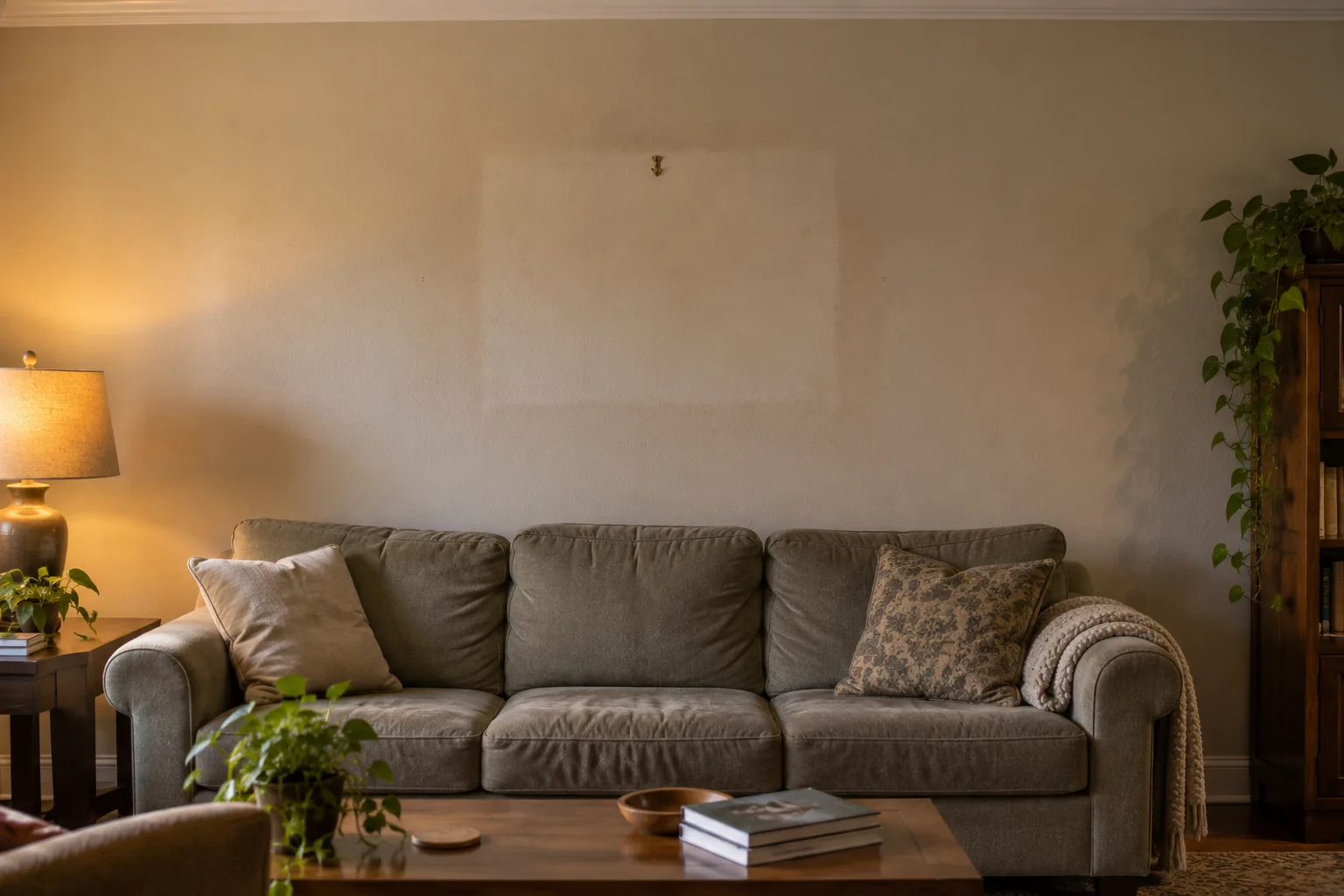
In August 2025 a real estate agency in Mar del Plata, on the Argentine coast, put a house on the market. The listing did what listings do: a set of photographs of the rooms, taken to show the space, uploaded to a website.
One of them showed a living room. Above the sofa, on the wall, there was a painting.
Somebody recognized it. It matched a work on a list of pieces from the Goudstikker collection that had been sought for decades, and the chain that followed ran through Argentine courts for a year. This month a federal judge, Santiago Inchausti, authorized its return to Marei von Saher, Goudstikker’s daughter in law and sole heir. A court ordered examination by Argentina’s National Academy of Fine Arts attributed the work to Giacomo Antonio Melchiorre Ceruti, an eighteenth century Italian painter. It is valued at around two hundred and fifty thousand euros.
The judge’s ruling records how it was located: the property had been listed for sale, and one of the photographs showed a painting in the living room matching one of the works sought for years.
What the two records have in common
Set the notebook and the listing side by side, because the comparison is the whole thing.
Both are inventories of what was hanging in a room. Both were made for entirely practical reasons by people not thinking about history: one to record a business, the other to sell a house. Neither was created to serve justice and both did.
The difference is who could read them. The notebook was a private document in a family’s possession, and for most of the twentieth century that is all it could be. Matching its contents against the world required somebody to already know both, and the number of people who knew both was very small.
The listing was public the moment it was uploaded, indexed, and searchable by anybody with the other half of the pair in their head or in a database. That is the difference eighty five years made, and it is not a difference in the quality of the record. It is a difference in who is standing next to it.
Why this keeps happening now
Restitution cases have been arriving at a rate that would have seemed implausible thirty years ago, and the reason is unglamorous.
The looted art problem was never principally a legal one. The legal frameworks, imperfect as they are, have existed for decades. The problem was location. A painting in a private house in a country far from where it was taken is invisible in a way that is almost total, and it stays invisible for as long as nobody photographs it and publishes the photograph.
What changed is that almost everything gets photographed and published now, incidentally, by people doing something else. Auction catalogs went online. Museum collections were digitized. Estate inventories, insurance records, house listings. Meanwhile the lost object databases became searchable and comprehensive.
The result is that a work can now be found not by anybody looking for it but by the accidental collision of two records that were never intended to meet. That is what happened here, and it is worth noticing that neither side of the collision was an act of investigation.
What the family decided to do with it
The part of this that interests me most is what happens next, because it is not the obvious thing.
Von Saher’s lawyer, Guillermo Brady, has said the family intends the painting to be exhibited in Buenos Aires for at least a year.
The painting is worth a quarter of a million euros. It could be sold. It could go quietly into a collection. Instead it stays in the country where it was hidden, on public view, as an account of how it got there.
That is an unusual choice and a deliberate one. A restituted work returned to a family and then sold is a private settlement. A restituted work left on a wall in the city it was concealed near, with its history attached, converts the object into a record of its own disappearance. It becomes a third document, after the notebook and the listing, and the only one of the three made on purpose.
What is still on the list
Of the roughly fourteen hundred entries in the notebook, a substantial number have been recovered over the decades, in a process that has taken the family through courts in several countries and is not finished.
Many are still out there. Not in museums, for the most part, because museum holdings have been examined. In houses. On walls, above furniture, in rooms that get repainted and rearranged and eventually photographed by an agent with a wide angle lens when somebody decides to move.
The notebook is small enough to sit in a coat pocket, which is why it survived at all. Its pages are ruled, the entries are in ink, and next to a considerable number of the lines there is still nothing written in the margin.